
 Kiev, ave. Lobanovsky, 14


 +3 80 (50) 433-01-01
 Video
Video 3D Tour
5 Tips for Choosing Natural Stone for Facade and Plinth Cladding
In the morning, when you step outside and look at the house, your eyes naturally land on the facade. The stone near the entrance feels cold, slightly damp after the night fog, while the plinth already carries dust and splashes from the path. These areas reveal poor material choices the fastest. After just a few seasons, some finishes fade, others begin to chip at the edges.
Cladding a facade and plinth with natural stone often seems straightforward until the details come into play. What matters is not only how the stone looks in a catalog, but how it behaves in winter, under rain, and in constant contact with the ground. Different stones react differently to moisture, frost, and mechanical stress.
To avoid redoing the facade after a few years, it is worth understanding which stone properties actually matter. Below are practical tips that help avoid common mistakes and approach the choice consciously rather than relying on appearance alone.
Natural stone for facade and plinth: the main challenge of choosing lies in the fact that appearance does not always reflect performance. Natural stone solves durability and protection issues when density, water absorption, and installation conditions are correctly considered. As a result, the homeowner gets cladding that withstands climate exposure and maintains a neat look for many years.
1. Consider operating conditions, not just appearance
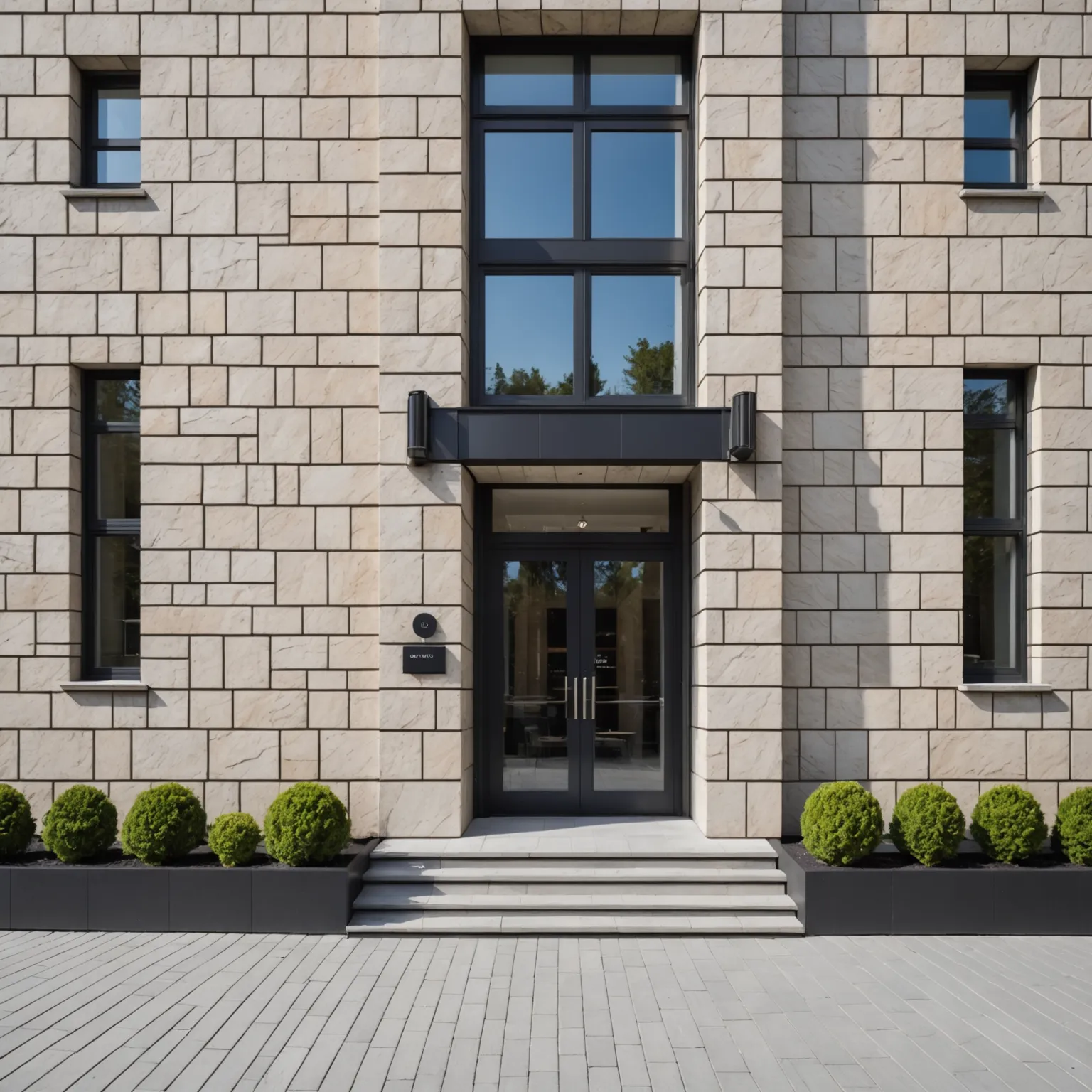
The facade and the plinth function under different conditions, even though they visually form a single whole. The plinth is constantly exposed to moisture, snow, and dirt, while the facade is more affected by wind and sunlight. A stone that looks great on a wall may be too porous for the lower part of the building.
When choosing, it is important to understand exactly where the material will be used. Areas with high moisture require dense stones with low water absorption. In such cases, natural stone does not darken and does not deteriorate internally.
A common mistake is using the same stone everywhere without considering these differences. In practice, it is often better to combine materials or choose universal options that tolerate ground contact. This is why many projects focus on stone for exterior walls with proven performance characteristics.
This approach helps avoid situations where the plinth looks worn after just two seasons while the facade itself still appears presentable.
2. Pay attention to stone density and structure
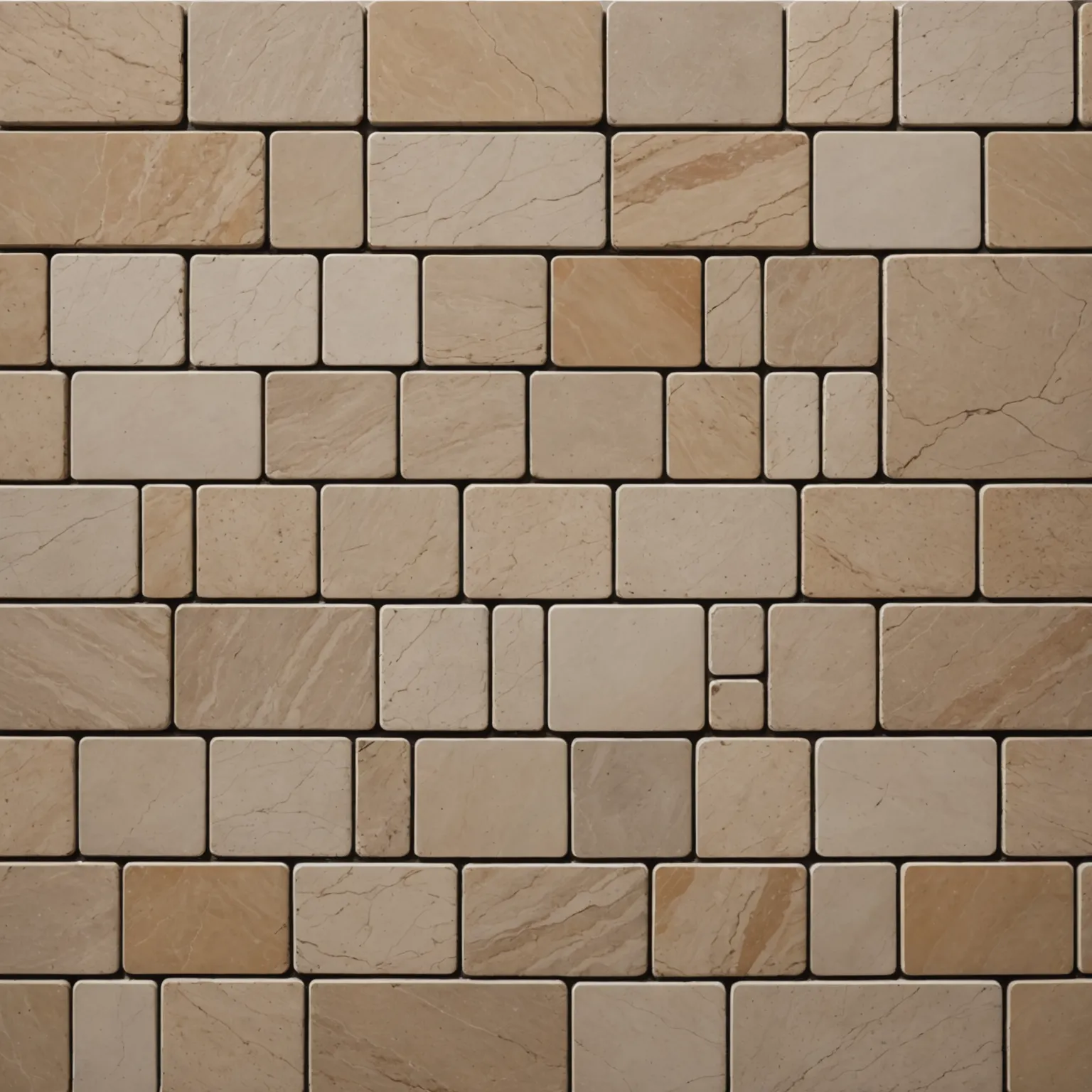
Density directly affects the wear resistance of cladding. The denser the stone, the less water it absorbs and the better it withstands frost. This is especially important in regions with sharp temperature fluctuations.
Surface structure also matters. Strongly layered stones may look attractive, but if installed incorrectly they can begin to delaminate over time. For facades, stones with a uniform structure and stable geometry are generally more reliable.
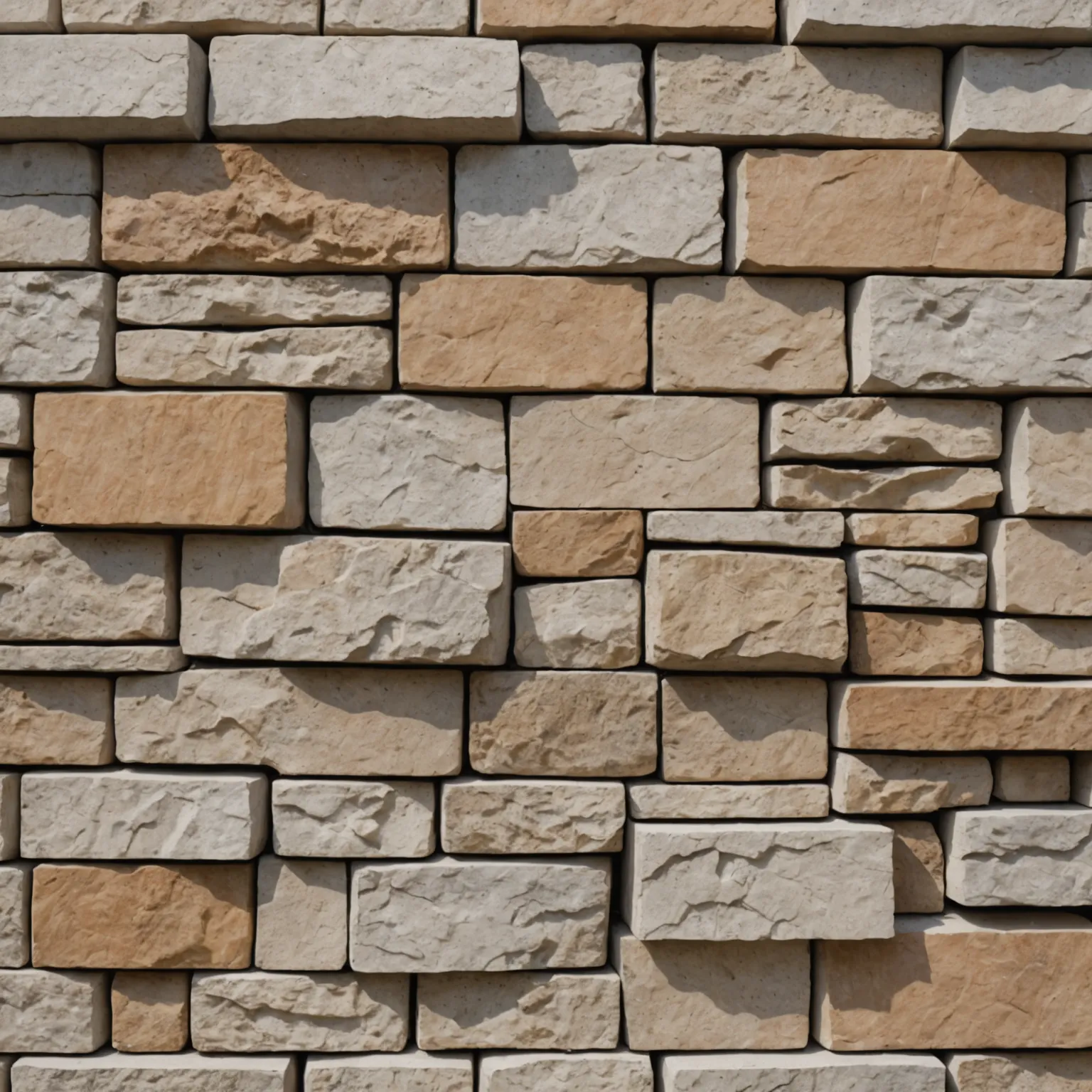
When choosing sandstone or quartzite, for example, it is worth looking beyond color and focusing on grain size. Fine-grained stone lasts longer and is less prone to chipping. That is why many builders prefer dense natural stone varieties that have proven themselves in exterior applications.
Such materials are harder to process, but this is compensated by their service life. A facade made of dense stone ages gracefully rather than problematically.
3. Check resistance to moisture and frost
Water is the main enemy of exterior stone cladding. It penetrates micro-pores, freezes, and gradually destroys the internal structure. That is why water absorption is often more important than decorative qualities.
Even visually appealing stone can lose its appearance quickly if it is not designed for outdoor use. This is especially noticeable on plinths, where moisture lingers the longest. Frost resistance here is critical.
Some stones require additional protective treatments. This increases the budget but extends service life. At the same time, it is important to consider whether such treatments will alter the stone’s color.
For facades and plinths, travertine and dense sedimentary stones are often selected based on real-world performance. As an example, many consider stone with stable outdoor behavior, which can last for decades when installed correctly.
Experienced installers note that most facade stone problems are caused not by material quality, but by using the right stone in the wrong place.
Once the stone is installed and the house starts being used daily, details that were easy to overlook at the selection stage become obvious. This is where the difference between a thoughtful decision and a random choice shows up. The following points focus not on visual effect, but on long-term, everyday performance.
4. Match stone format to the building’s architecture
The size and shape of stone elements strongly influence how a facade is perceived. Large-format stone emphasizes mass and solidity, but on a compact house it can feel visually heavy. Small-format cladding, on the other hand, breaks up large surfaces and demands precise installation.
Proportions matter: plinth height, wall width, corners, steps, and recesses all affect the final look. Stone should support the architecture rather than compete with it. This is especially noticeable around entrances and building corners.
Format also affects practicality. Large slabs are harder to replace if damaged locally, while smaller pieces increase the number of joints. Joints are always potential moisture entry points.
That is why reviewing completed projects and visualizing the stone on a specific building is far more useful than relying on showroom samples alone.
5. Do not overlook substrate preparation and installation
Even high-quality natural stone cannot compensate for a poorly prepared base. Both facade and plinth require a stable, flat, and strong substrate. Any movement will eventually result in cracks.
Waterproofing deserves special attention. For plinths it is essential; otherwise, moisture rises from below and damages the stone from the inside. This is one of the most common reasons for cladding failure.
Adhesives and grouts must be selected specifically for the chosen stone. Universal products are not always suitable, especially for dense or layered materials. Mistakes at this stage significantly reduce service life.
In practice, correct installation has a greater impact on durability than the stone type itself.
When combining materials makes sense
In many cases, combining different stones is the most reasonable solution. A denser stone for the plinth and a more decorative option for the facade helps balance budget and performance.
This approach is common in private construction, offering design flexibility while reducing risks in the most exposed areas.
6. Consider maintenance and long-term care
Natural stone does not require complex maintenance, but it should not be completely ignored. Dust, salt deposits, and moisture marks gradually accumulate, especially on light-colored stones.
Some stones respond well to periodic cleaning and renewal of protective treatments. These procedures are simple, but knowing about them in advance helps maintain a clean appearance.
It is also important to understand how stone ages. Some materials develop a natural patina, while others may lose color unevenly. This effect can either be embraced or minimized.
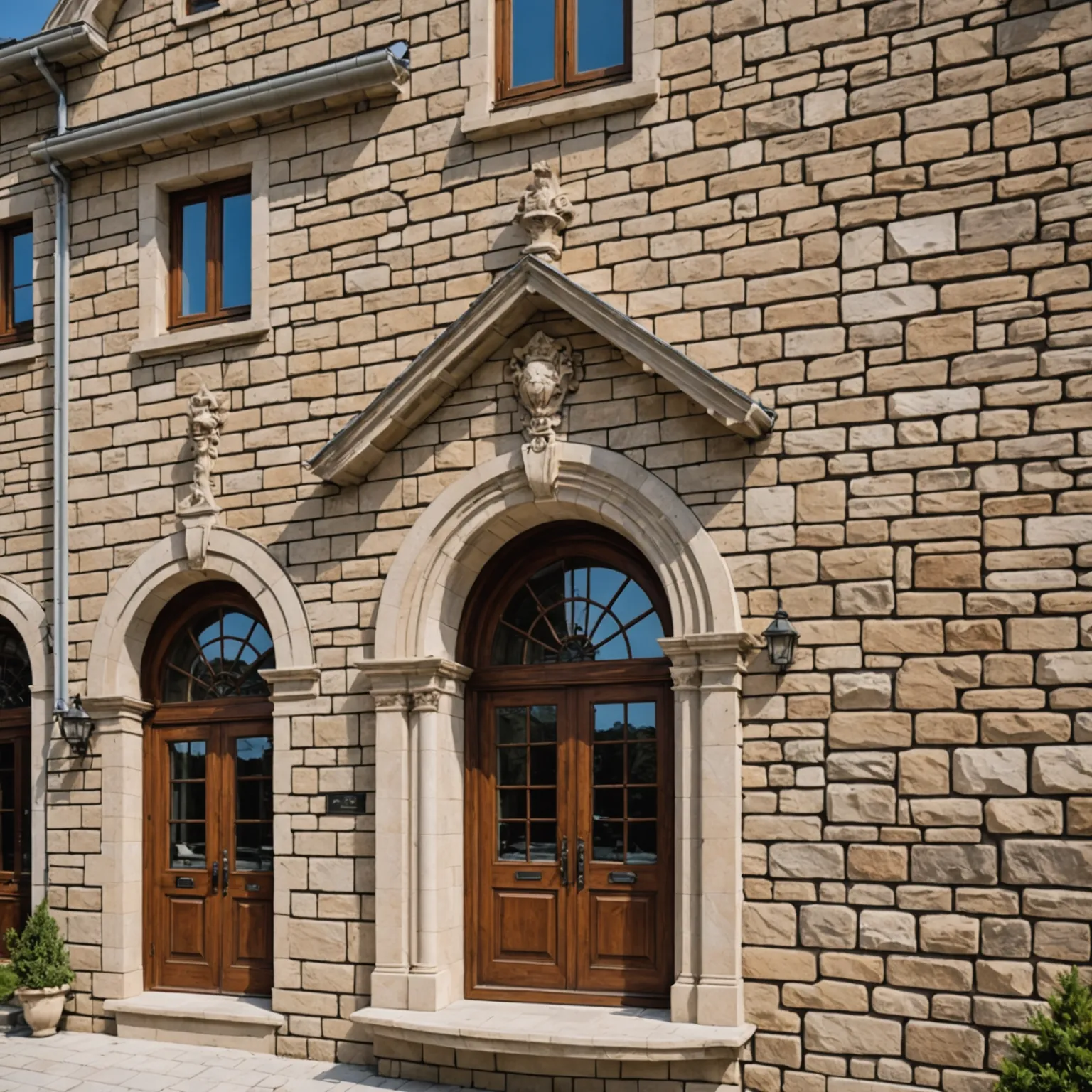
Reviewing real projects, such as finished stone facades, makes it easier to judge how materials look after several years of exposure.
7. Verify supplier reliability and stone origin
Stone quality depends not only on type, but also on quarry origin. Even the same stone category can vary significantly in performance characteristics.
A reliable supplier provides clear information about stone properties and recommended applications. This reduces the risk of choosing unsuitable material for facade or plinth use.
Storage conditions also matter. Stone kept in damp environments may already contain hidden defects that are hard to spot at purchase.
If doubts arise, consulting specialists before buying is the safest approach. Contacting experienced consultants often prevents costly mistakes later.
| Criterion | Facade | Plinth |
|---|---|---|
| Water absorption | Moderate acceptable | Minimal required |
| Density | Medium to high | High |
| Resistance to dirt | Desirable | Critical |
Practical tip: before purchasing, wet several stone samples with water to see how the color changes and how quickly moisture is absorbed.
Mini case: in one private project, the plinth was clad with decorative stone without considering water absorption. After the first winter, cracks appeared and the cladding had to be completely replaced.
- Plinth areas demand maximum density and moisture resistance.
- Stone format should match building scale and proportions.
- Installation quality outweighs stone type in long-term durability.
- Real projects reveal how stone ages in practice.
FAQ
Can the same stone be used for both facade and plinth?
It is possible, but not always practical. Facades and plinths face different exposure levels. If a stone has low water absorption and high density, it may suit both areas. Otherwise, combining materials is usually the safer option.
Is protective treatment necessary for natural stone?
Protective treatments are not always mandatory, but often recommended. They reduce water absorption and simplify maintenance. However, some products may slightly alter the stone’s color, so this should be considered beforehand.
How can I tell if stone suits the local climate?
Focus on frost resistance and water absorption ratings. Stone must withstand repeated freeze-thaw cycles. Proven local use and professional recommendations are the most reliable indicators.
What matters more: appearance or technical properties?
Both matter, but priority depends on application. Facades allow more decorative freedom, while plinths require strict technical performance. The best choice balances aesthetics and function.
How long does natural stone cladding last?
With proper selection and installation, service life spans decades. Structural properties remain stable, while visual changes are often part of natural aging. Installation quality and exposure conditions play key roles.
Is it possible to save money by choosing softer stone?
Savings are possible, but must be calculated carefully. Softer stones may work for facades with proper protection, but are rarely suitable for plinths. Understanding where compromise is acceptable is essential.
Who should I contact for stone selection advice?
Consult professionals with hands-on experience in natural stone projects. They consider real conditions, not just catalogs. You can discuss your project details by calling +380(50)433-01-01.
Does stone color affect facade practicality?
Yes. Light stones show dirt more easily, while dark stones absorb more heat in sunlight. The right choice depends on building orientation, climate, and willingness to perform maintenance.