
 Kiev, ave. Lobanovsky, 14


 +3 80 (50) 433-01-01
 Video
Video 3D Tour
Facade Slate: Features Installation and Operation
A natural stone façade is perceived very differently from plaster or brick. It creates depth through shadow, texture through layering, and a sense of mass that artificial materials struggle to replicate. Facade slate is often selected for private houses where durability and architectural expression matter equally. Behind its striking appearance, however, lies a series of technical decisions that directly influence long-term performance.
Slate forms in layers under natural pressure, and this layered structure defines how it behaves on vertical surfaces. It withstands temperature changes, resists frost, and remains stable under UV exposure. At the same time, it requires accurate installation and careful preparation of the substrate. A mistake at the base stage can compromise the entire façade system.
In contemporary residential projects, slate is used both for full wall cladding and for accent areas such as plinths, entrance zones, and columns. It pairs well with timber, glass, and metal. Yet its performance depends not only on design choices but also on wind exposure, rainfall direction, and local climate conditions. When properly installed, slate becomes a long-term architectural investment rather than a short-term finish.
Facade slate: installation and performance characteristics: The main challenge when selecting a façade material is balancing visual depth with structural reliability. Natural slate addresses this by offering long-term resistance to moisture and frost when installed correctly. Homeowners gain a façade that maintains its texture and color for decades without frequent repainting or cosmetic repairs.
Slate Structure and Its Impact on Installation
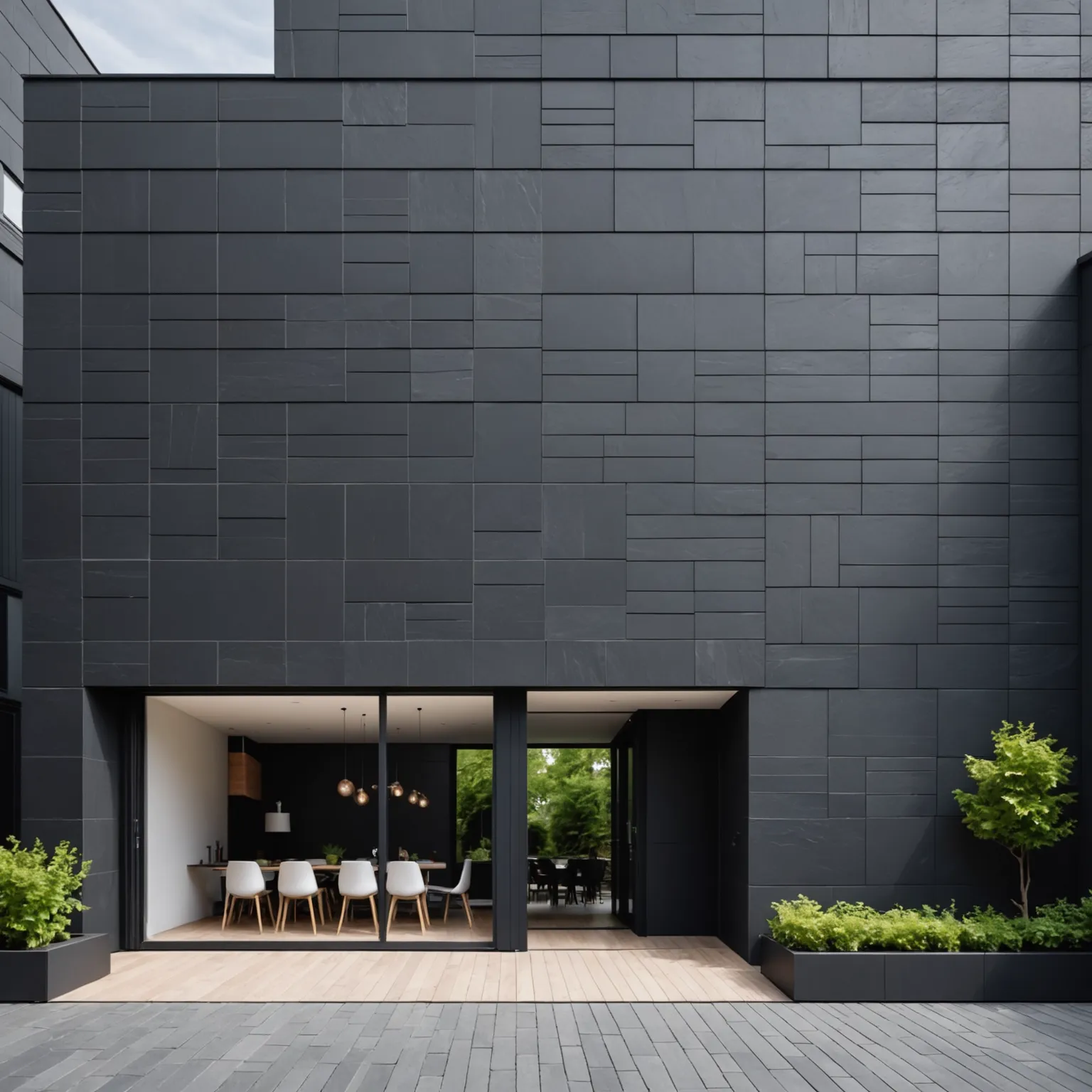
Slate’s natural layering provides compressive strength but requires attention during cutting and fixing. If the direction of layers is ignored, localized splitting may occur. Experienced installers orient each piece carefully to maintain stability. This detail becomes critical on larger façades.
Even within one batch, thickness and density may vary slightly. That affects adhesive choice and fixing strategy. Heavier pieces often benefit from combined adhesive and mechanical fastening. Such reinforcement increases overall system reliability.
The back surface of slate is typically rough, improving adhesion to prepared walls. However, the substrate itself must be stable, dust-free, and structurally sound. Slate highlights irregularities rather than hiding them. Under angled evening light, even minor unevenness becomes visible.
Load considerations are equally important. Stone cladding increases structural weight. In new builds, this is calculated in advance. During renovation projects, additional reinforcement may sometimes be required.
Substrate Preparation and Waterproofing
Before installation begins, the wall surface must be leveled and assessed for strength. Differences of just a few millimeters can create visible alignment issues. Shadow lines emphasize imperfections. Careful preparation simplifies later stages.
Waterproofing is essential, particularly at plinth level. Moisture rising from the ground can weaken adhesive layers over time. Specialized primers and waterproof membranes reduce this risk. They also prevent efflorescence and staining.
In areas with frequent rainfall, drainage elements such as drip edges and flashing reduce water contact. Slate tolerates moisture well, but constantly wet joints can deteriorate. Freeze-thaw cycles intensify this effect.
If the project includes landscape elements, coordinating materials improves visual consistency. For example, matching the façade with natural paving stones creates a cohesive architectural environment. Unified stone solutions enhance the overall impression of the property.
Adhesive Systems and Fixing Methods
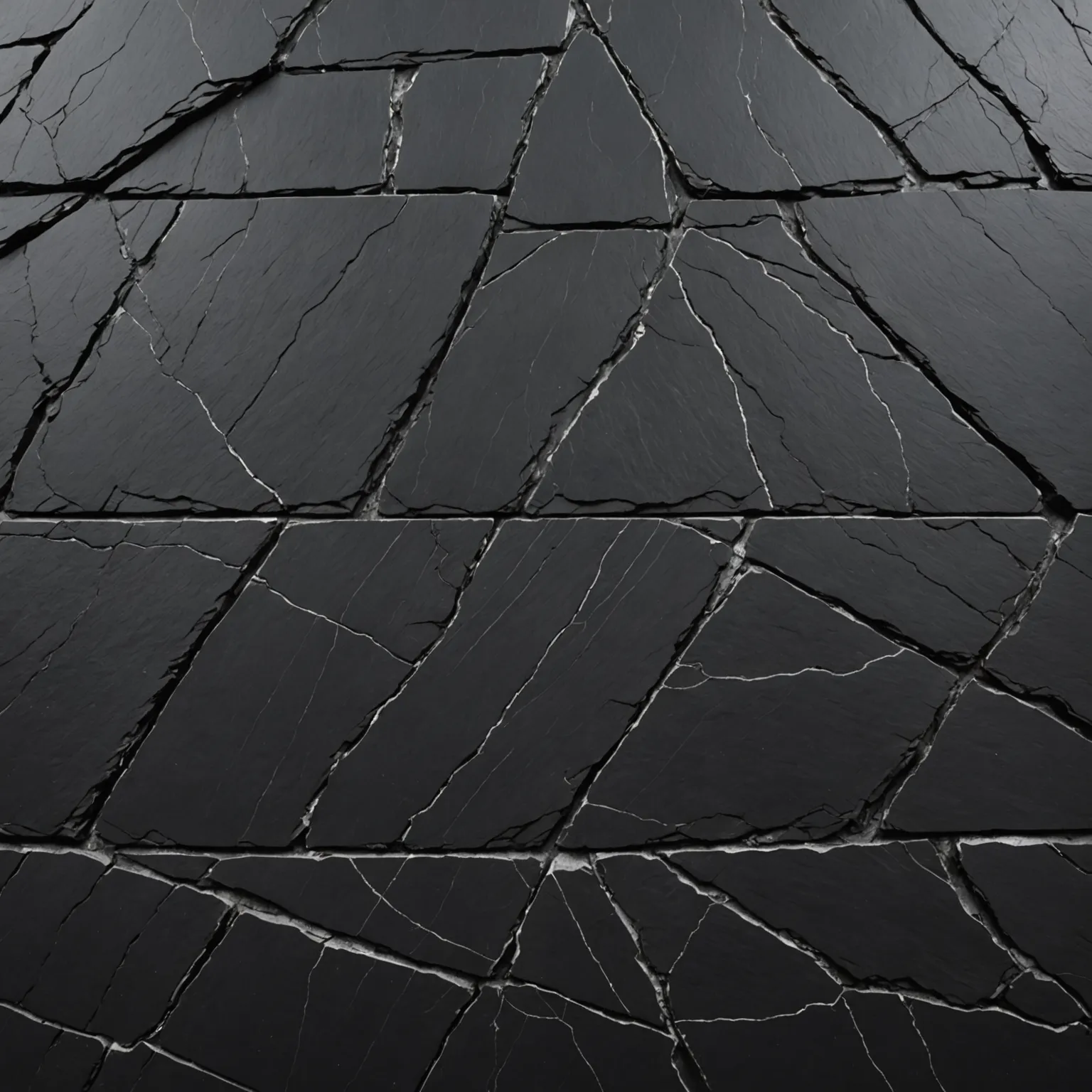
Exterior-grade, frost-resistant adhesives are required for façade slate. These formulations remain flexible under temperature variation. In hot weather, adhesives set faster, limiting adjustment time. Moderate conditions allow more accurate positioning.
Ventilated façade systems rely on a metal substructure that creates an air gap behind the stone. This gap supports moisture evaporation. Although more complex to install, such systems increase durability. They are particularly suitable for larger buildings.
Fixing methods depend on panel thickness and façade area. Smaller sections may rely solely on adhesive bonding. Extensive surfaces often combine mechanical anchors with adhesives. This hybrid approach improves structural safety.
Installers frequently avoid working under direct sunlight or strong winds. Controlled conditions help achieve even joints and stable bonding. Temperature balance influences curing quality.
On construction sites, professionals note that slate performs best when installed in dry, moderate weather. Balanced curing conditions ensure consistent bonding and precise alignment.
When decorative features such as natural pebbles are added nearby, color harmony becomes important. Slate’s graphite and grey tones appear different in sunlight and after rain. Coordinated textures strengthen architectural impact.
Before finalizing material selection, reviewing available formats and textures is helpful. Detailed information can be found on the official website, allowing informed decisions based on project requirements.
Proper long-term performance of slate begins at the planning stage. Ventilation, drainage, and joint protection must function together. When the façade system works as a whole, the stone retains its integrity through seasonal change. Maintenance then becomes preventive rather than corrective.
Seasonal Maintenance Considerations
In spring, façades are typically inspected after winter exposure. Joints are checked for cracks or moisture retention. Early detection prevents structural issues. Small interventions at this stage avoid larger repairs later.
Summer exposure mainly involves dust and sunlight. Slate does not fade easily, yet surface dirt can accumulate. Cleaning with water and soft brushes is sufficient. Aggressive chemicals should be avoided.
Autumn requires attention to drainage systems. Leaves and debris may trap moisture near walls. Prolonged dampness weakens joints before winter. Preventive cleaning is simple but effective.
During winter, mechanical ice removal is discouraged. Though slate is strong, repeated impact may damage edges. Gentle maintenance ensures long-term appearance.
Moisture and Freeze-Thaw Resistance
Slate has relatively low water absorption. This characteristic reduces freeze-thaw damage risk. However, joints remain the most sensitive areas. Proper sealing is essential.
In climates with repeated freezing cycles, installation quality determines performance. Correct adhesive systems maintain flexibility. Inferior materials may crack over time.
Hydrophobic treatments provide additional protection. They limit moisture penetration without altering appearance. Reapplication every few years is often recommended.
Project-specific advice can be obtained through the contact page, where technical recommendations are tailored to local climate and building conditions.
Material Comparison for Decision Making
Slate is often compared with clinker brick and exterior plaster. Each material offers advantages. Slate stands out through natural depth and layered texture.
Plaster is less expensive initially but may require repainting. Clinker is moisture resistant yet visually uniform. Slate provides organic variation that remains stable over time.
Artificial stone is lighter and simpler to install. However, color fading can occur. Natural slate maintains its geological character for decades.
The table below summarizes key differences.
| Parameter | Slate | Clinker | Plaster |
|---|---|---|---|
| Service Life | Several decades with proper installation | High | Moderate, requires renewal |
| Moisture Resistance | High with sealed joints | High | Depends on composition |
| Texture Depth | Natural layered relief | Uniform surface | Smooth or granular |
Thickness and Format Selection
Thickness and Structural Load
Panel thickness influences both weight and visual depth. Thicker pieces create stronger shadow contrast. They also require reinforced fixing systems.
Thinner panels are suitable for decorative accents. Selection should always follow structural assessment. Incorrect thickness may compromise stability.
Visual Impact and Light Interaction
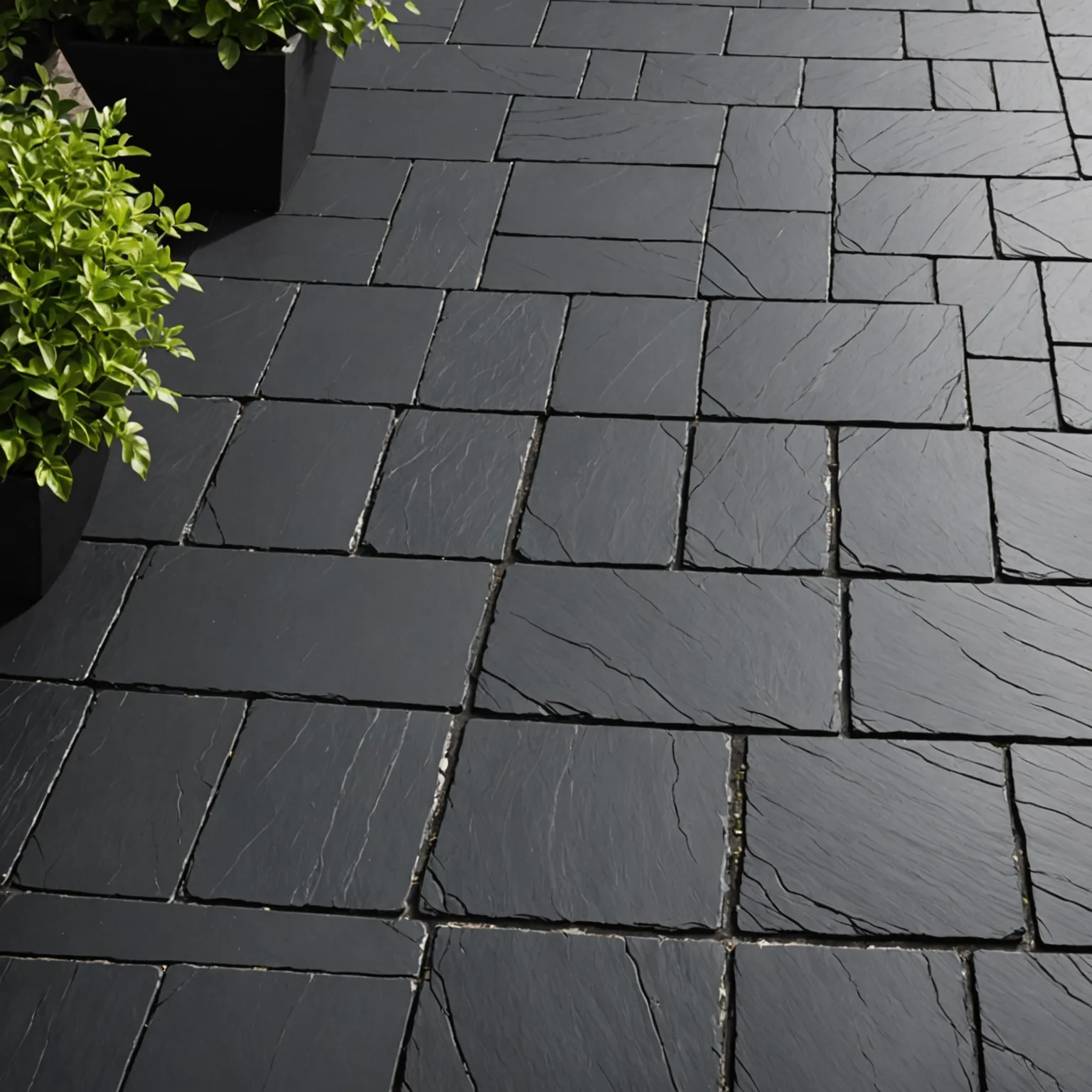
Large panels convey solidity and minimalism. Smaller formats create dynamic patterns. Architectural style determines preference.
Light dramatically affects appearance. Morning light softens tones, while evening illumination deepens contrast. After rainfall, the stone surface appears darker and more saturated.
Long-Term Residential Performance
Private homes expose façades to dust, splash water, and vegetation. Slate withstands such contact but benefits from periodic cleaning. After heavy rain, water traces may remain temporarily.
Tree branches should not constantly brush against walls. Repeated contact can damage edges. Regular pruning prevents abrasion.
Exterior lighting enhances texture. Warm lighting emphasizes relief, while cooler tones highlight structure. Slate becomes an architectural feature rather than a background finish.
When properly installed, slate requires no repainting or seasonal renewal. Its geological character remains stable over decades.
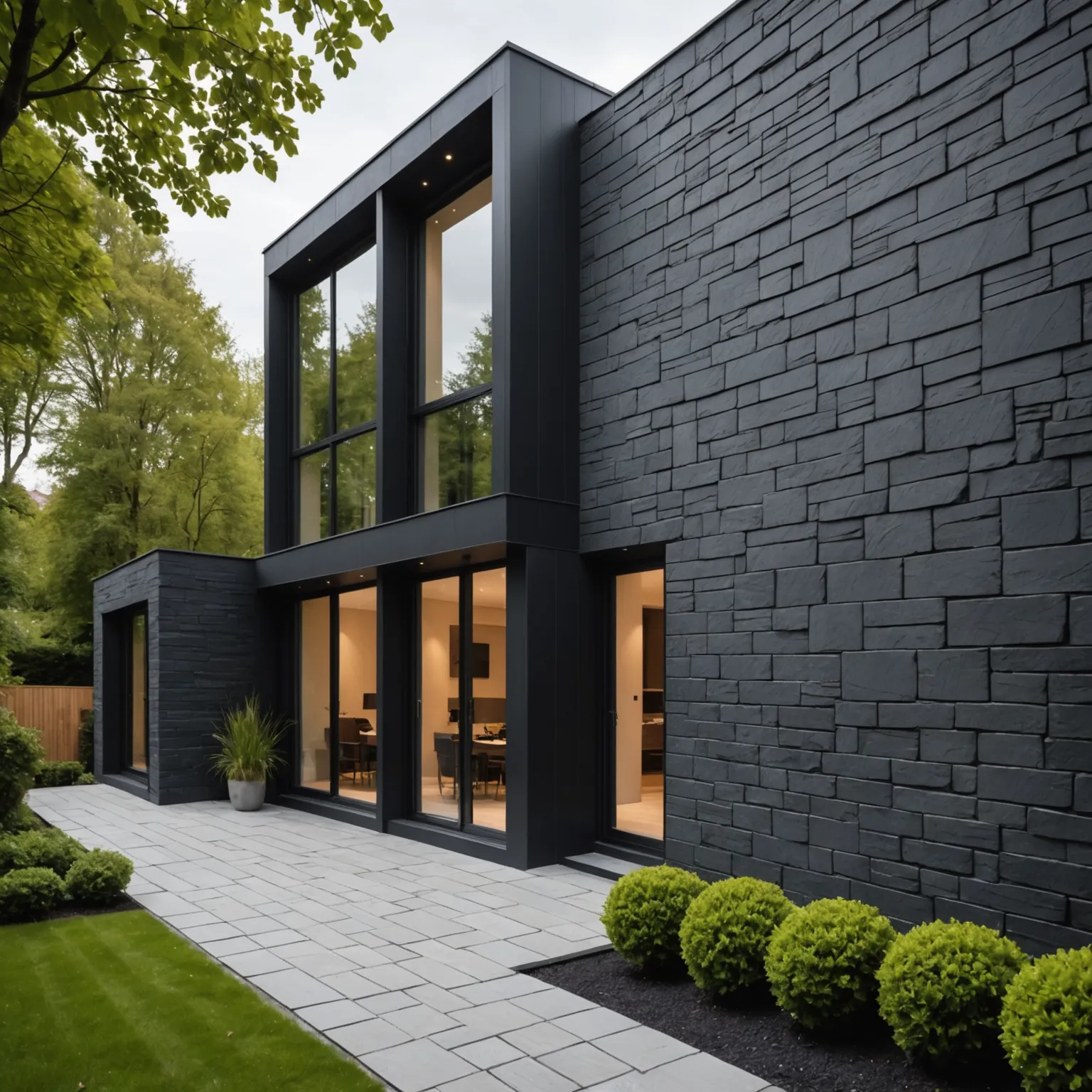
Practical tip: test-lay several panels before full installation. This reveals color variation and helps assess texture under natural light.
On one residential project, after several harsh winters, the slate façade remained intact while nearby plaster surfaces required repair. Long-term material behavior becomes evident over time.
- Proper substrate preparation defines façade longevity.
- Sealed joints protect against moisture infiltration.
- Hydrophobic treatment enhances resistance in wet climates.
- Slate texture evolves visually with changing light conditions.
FAQ
Can facade slate be installed without professional assistance?
While technically possible for small areas, facade slate installation requires understanding of structural load, adhesive selection, and layer orientation. Mistakes in substrate preparation or bonding may lead to detachment. For long-term durability, professional consultation or experienced installation is strongly recommended.
Does slate require periodic sealing?
The stone itself is moisture resistant, yet joints benefit from sealing. In mild climates, minimal treatment may suffice. In regions with frequent rain or frost, hydrophobic protection enhances durability. The decision depends on environmental exposure and maintenance expectations.
How long does a slate façade last?
With proper installation and maintenance, slate façades can last for decades. Resistance to frost, UV radiation, and moisture ensures structural stability. Longevity largely depends on substrate preparation and correct joint sealing rather than the stone itself.
Is slate suitable for plinth areas?
Yes, slate is frequently used for plinth cladding due to its density and moisture resistance. However, effective waterproofing is required to prevent capillary moisture rise. When installed correctly, it performs reliably in ground-level applications.
Where can I get technical consultation?
Technical advice regarding panel thickness, adhesive systems, and installation methods is available by contacting +380(50)433-01-01. Professional consultation ensures that the chosen solution matches structural and climatic requirements.