Kiev, ave. Lobanovsky, 14


 +3 80 (50) 433-01-01
 Video
Video 3D Tour
How to Choose Stone for an Entrance Area: Expert Advice
Early morning after rain often reveals more than any visualization. The entrance steps are damp, the stone feels cool underfoot, and every footstep sounds different depending on the surface. This is where the entrance area proves its real quality. Any mistake in material choice becomes obvious within the first season. That is why stone for an entrance is not a decorative detail but a functional decision.
The entrance zone is exposed to daily foot traffic, sand, water, and winter de-icing chemicals. Temperature fluctuations work on the material year-round. A stone that looks impressive in a showroom can behave very differently outdoors. For this reason, choosing stone for an entrance requires more than a visual assessment.
When selected correctly, natural stone solves several problems at once. It provides safe movement, keeps its appearance over time, and reduces the need for repairs. To achieve this, it is important to understand which properties truly matter in an entrance area.
How to choose stone for an entrance area: the main challenge is balancing appearance with performance. Natural stone addresses wear, slipping, and weather exposure. As a result, the homeowner gets an entrance that remains practical and stable under daily use.
What loads an entrance area must withstand
The entrance area operates under harsher conditions than most parts of a house. Outdoor footwear constantly brings abrasive particles onto the surface, while moisture penetrates the stone structure. In winter, ice and chemicals accelerate surface wear. These factors must be considered together.
Moisture resistance is critical. After rain or snowmelt, the surface must remain safe to walk on. Smooth finishes may look refined but often become slippery outdoors. Experience shows that textured stone performs more reliably in entrance zones.
Temperature changes also affect durability. The stone must tolerate repeated freeze-thaw cycles without cracking. In climates with seasonal frost, this characteristic becomes essential regardless of region.
Point loads should not be overlooked. High heels, moving furniture, bicycles, and strollers all create localized stress. Stone for an entrance must resist both abrasion and impact.
Why natural stone outperforms artificial materials
Artificial surfaces often appear attractive at first but lose their qualities over time. Color fading, surface wear, and deformation are common issues in outdoor use. Natural stone behaves differently due to its density and internal structure.
Its aging process is predictable. Instead of sudden deterioration, the surface develops a natural patina. For private homes, this means the entrance remains visually consistent without frequent renovation.
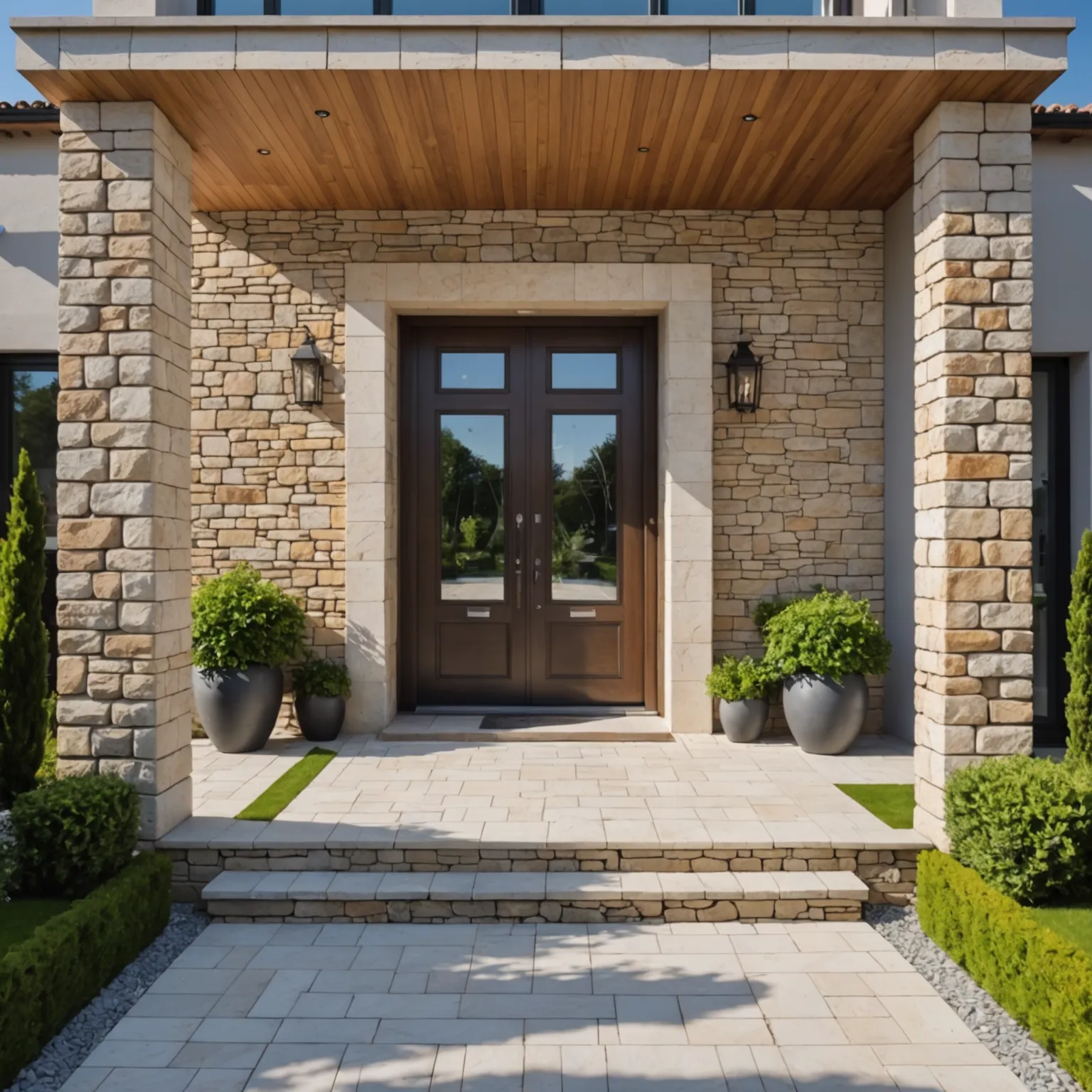
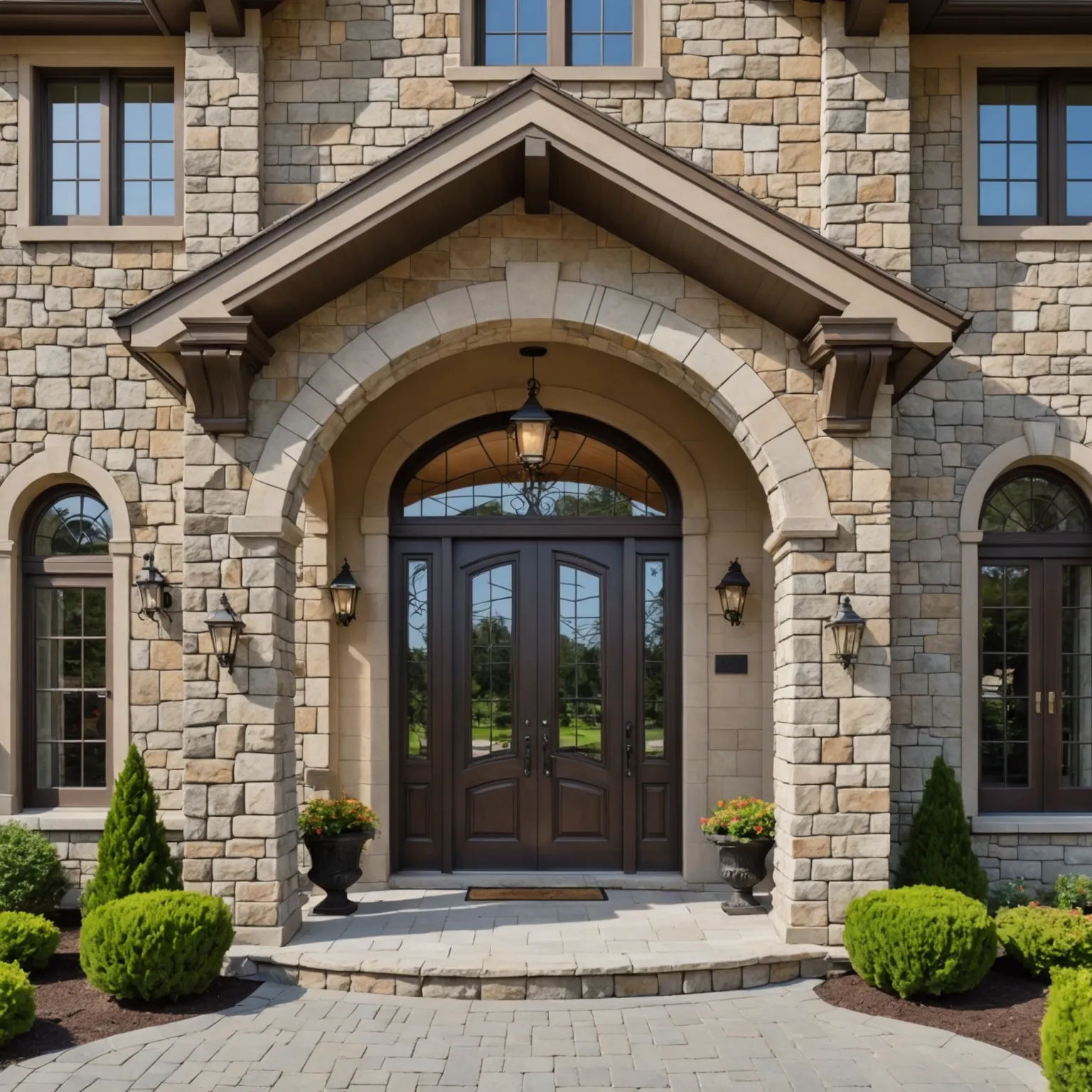
Natural stone integrates easily with wood, metal, and glass. When a facade already uses natural stone facade elements, extending the same material into the entrance creates visual continuity. This approach strengthens the overall architectural concept.
From an environmental perspective, natural stone is also advantageous. It emits no odors, tolerates sunlight, and does not require aggressive chemicals for maintenance.
Surface texture and safety
The surface finish directly affects safety. Polished stone is suitable indoors but becomes risky outside. Even light moisture significantly reduces traction. For entrance areas, this finish is rarely practical.
Thermally treated stone offers a rough yet even surface. It performs well on steps and entrance platforms. At the same time, it maintains a clean and balanced appearance.
Split or cleft textures add character but demand more careful cleaning. Snow and dirt can accumulate in deeper reliefs. A balance between aesthetics and practicality is always required.
Professionals recommend evaluating stone by touch as well as sight. If it feels slippery by hand, it will behave the same underfoot.
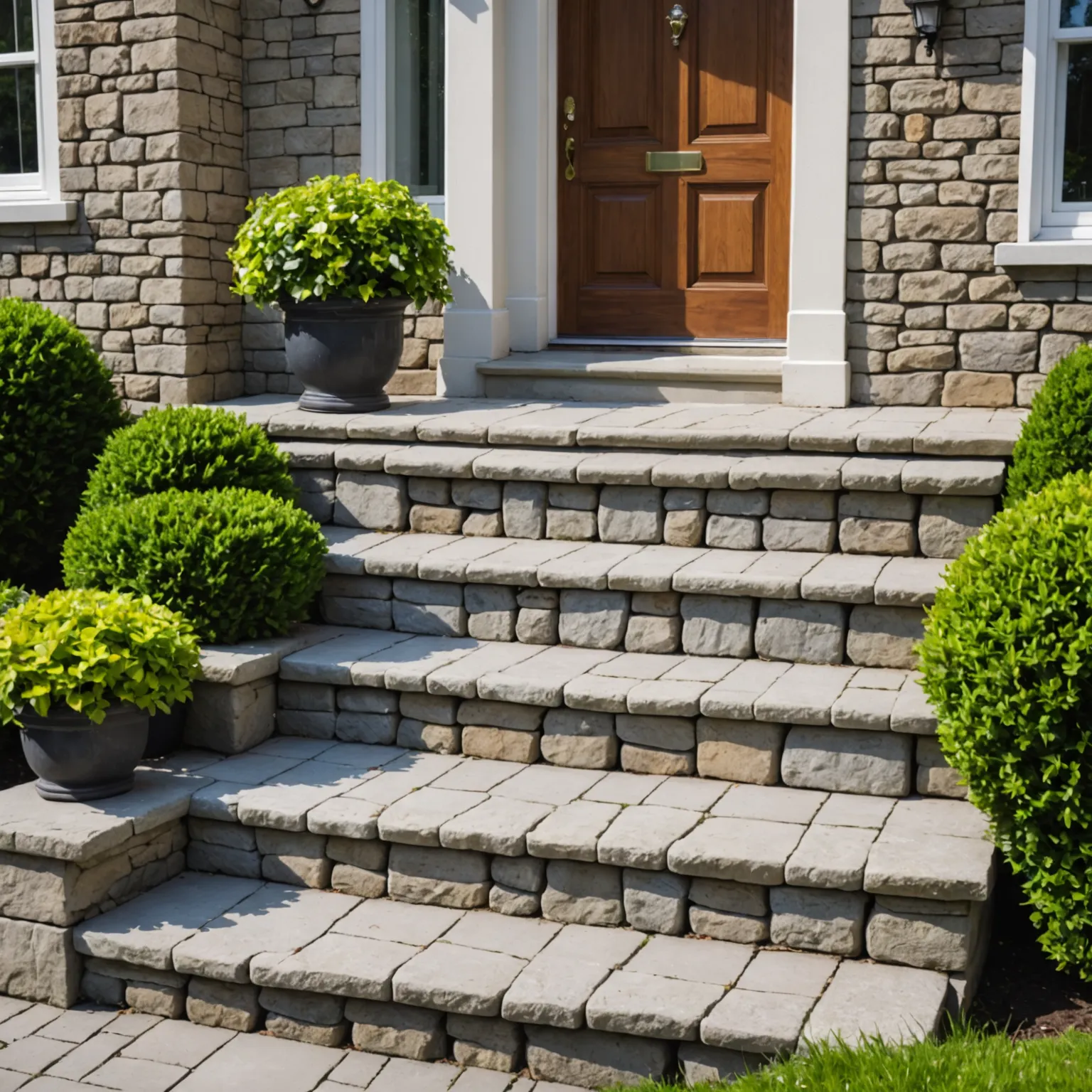
In areas with constant foot traffic, textured stone consistently performs better than smooth finishes.
Even the right stone choice can fail if installation details are ignored. Slab thickness, base preparation, and drainage slopes influence longevity as much as the stone type itself. An entrance area functions as a system where small errors accumulate over time.
Slab thickness and format
Thin slabs designed for interiors are unsuitable for entrances. Under load, they can crack or chip. Practical experience shows that additional thickness provides long-term reliability.
Large-format slabs create a modern look but require perfectly prepared bases. Any void beneath the slab increases the risk of damage. In such cases, medium formats offer greater stability.
Smaller elements adapt more easily to complex stair geometry. They compensate for minor installation inaccuracies. Joints become part of the design and add rhythm.
Stone format should always reflect the building’s architecture rather than trends alone.
Climate and frost resistance
Climate conditions directly influence material selection. Stone must withstand repeated freeze-thaw cycles without structural damage. This is especially important for open entrance areas.
Some stone types require additional protective treatments. This is not a drawback but a characteristic of the material. With proper maintenance, such solutions remain reliable for years.
Water absorption plays a key role. Lower absorption means reduced risk of winter damage. Dense stone varieties are often preferred for entrance zones.
Even covered entrances remain exposed to temperature changes. Frost resistance should never be overlooked.
Integration with surrounding areas
An entrance does not exist in isolation. It connects the house to walkways and the yard. The stone should logically extend the overall landscape design.
For example, when pathways use natural stone paving, continuing similar textures at the entrance creates cohesion. This approach feels intentional and balanced.
Color tone also matters. Cooler shades emphasize contemporary architecture, while warmer tones add visual comfort. An unsuitable tone can disrupt facade harmony.
Edge treatment of steps affects both safety and durability. Properly finished edges reduce chipping and improve appearance.
Common mistakes when choosing stone
One frequent mistake is relying solely on showroom samples. Outdoor conditions change perception significantly. Lighting, moisture, and dirt alter how stone looks and feels.
Another issue is underestimating installation quality. Even premium stone can fail on a poorly prepared base. Such problems usually appear after the first season.
Overly complex textures are sometimes chosen without considering maintenance. As a result, the entrance quickly loses its neat appearance. Simpler solutions often prove more practical.
Ignoring architectural context is also risky. The entrance should complement the building, not compete with it.
Comparison of popular stones for entrances
| Stone type | Wear resistance | Slip resistance | Maintenance |
|---|---|---|---|
| Granite | High | Low when textured | Minimal |
| Quartzite | High | Medium | Low |
| Sandstone | Medium | Low | Regular |
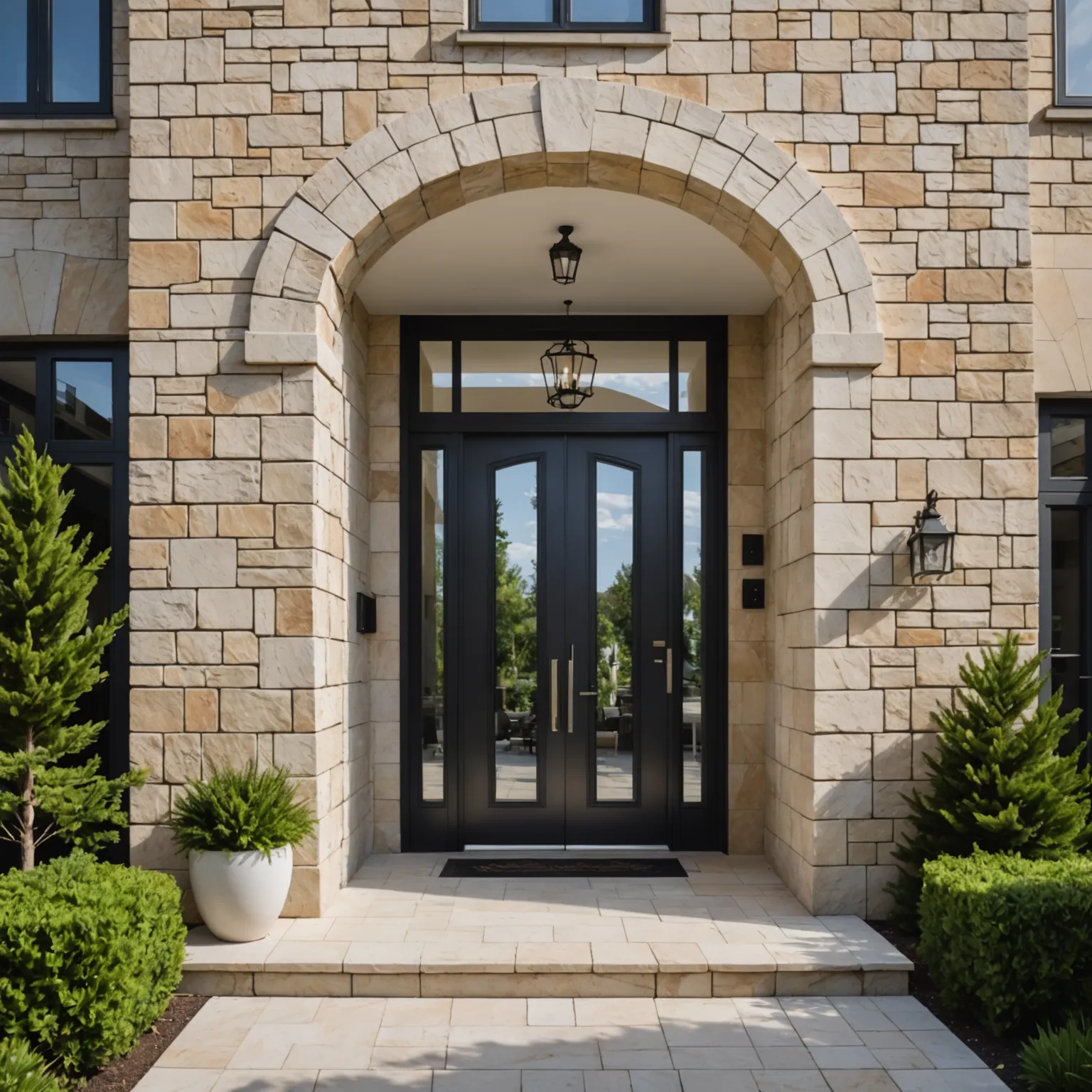
Replacing smooth slabs with thermally treated stone eliminated slipping issues during the first winter.
Testing a stone sample outdoors after rain provides more insight than technical descriptions alone.
- Entrance areas experience the highest load.
- Surface texture matters more than visual gloss.
- Climate and installation define longevity.
- Facade harmony enhances overall perception.
FAQ
Can polished stone be used for entrances?
Polished stone looks refined but often becomes slippery in entrance areas. In dry weather it may be acceptable, but rain and frost increase risk. Such surfaces work only under full cover and low traffic. Textured finishes are safer for open entrances.
Is additional stone protection necessary?
Some stone types benefit from protective treatments that reduce water absorption. On one hand, this extends service life; on the other, it requires periodic renewal. The decision depends on stone type and exposure conditions. Planning this early helps avoid issues.
How often does an entrance need maintenance?
Maintenance frequency depends on stone type and finish. Seasonal cleaning and joint inspection are usually sufficient. With proper installation, major work is unnecessary for years. Avoid aggressive chemicals to preserve the surface.
Can different stone types be combined?
Combining stone types is possible and often effective. Physical properties and color compatibility must be considered. Contrast can enhance design but may disrupt balance if misused. Thoughtful planning is essential.
Is price more important than stone characteristics?
Price alone does not indicate suitability. Less expensive stone may require frequent repairs, while higher-quality material lasts decades. Evaluating long-term cost provides a clearer picture. This approach reduces unexpected expenses.
How can stone quality be checked before purchase?
Taking a sample and testing it outdoors is the most reliable method. Observe how it reacts to moisture and temperature. Quality stone does not crumble or discolor. This simple test reveals practical behavior.
Does stone color affect practicality?
Color influences how visible dirt and wear appear. Light shades need more frequent cleaning, while darker tones hide marks better. At the same time, light stone visually expands space. The choice depends on priorities.
Is professional consultation worth considering?
For complex entrance designs, expert advice helps avoid costly mistakes. Specialists consider climate, traffic, and construction details. This is especially useful for non-standard projects. Informed decisions lead to better long-term results.