Kiev, ave. Lobanovsky, 14


 +3 80 (50) 433-01-01
 Video
Video 3D Tour
Aesthetics and Durability: Travertine Entrance Areas in Private and Commercial Construction
Morning. A private house is still quiet, but the entrance area is already in use. Someone steps outside, a courier leaves a parcel, rain leaves a thin film of moisture on the stone. This is the zone that takes the most stress every single day, and this is exactly where poor material choices become obvious first.
Travertine is selected for entrance groups not because it looks good in catalog photos, but because of how it behaves in real conditions. Moisture, dirt, temperature swings, hard shoe soles — all of this interacts with the surface constantly. An entrance is a working area, not decoration.
In both private and commercial construction, travertine is used where tactile comfort, stability, and restrained aesthetics matter. It does not dominate the space, but it quietly sets its tone.
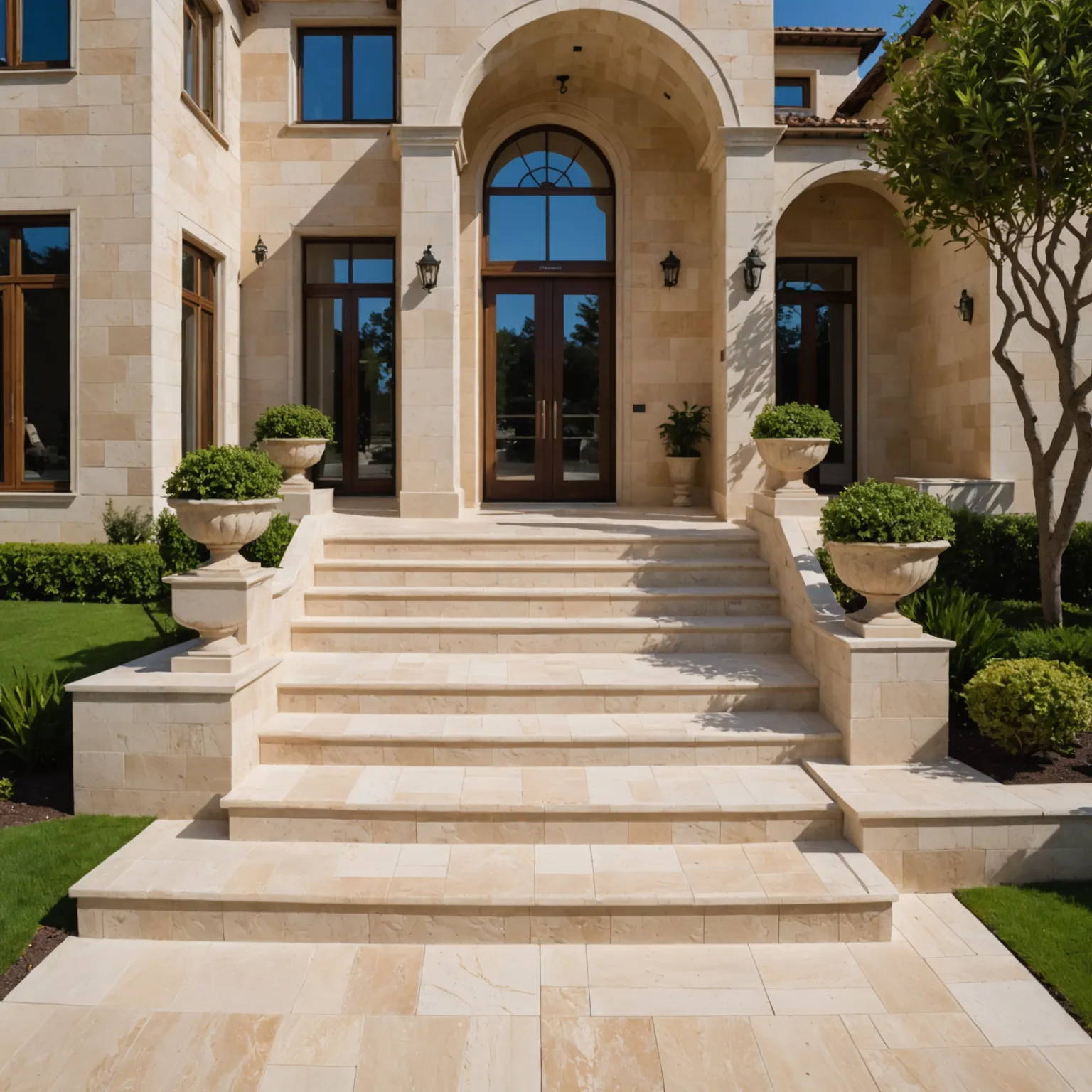
Travertine entrance group: the key challenge is combining appearance with daily practicality in a high-load area. Natural stone solves this through a structure resistant to wear and weather changes. The owner gets a surface that ages evenly and does not require frequent reconstruction.
Why travertine is chosen for entrance areas
Travertine has a porous structure that works to its advantage when properly processed. The surface maintains grip even after rain or snow. For steps and entrance platforms, this is a critical factor.
The stone remains comfortable to the touch. In summer it does not overheat, and in winter it avoids sharp cold sensations. This is immediately noticeable in everyday use.
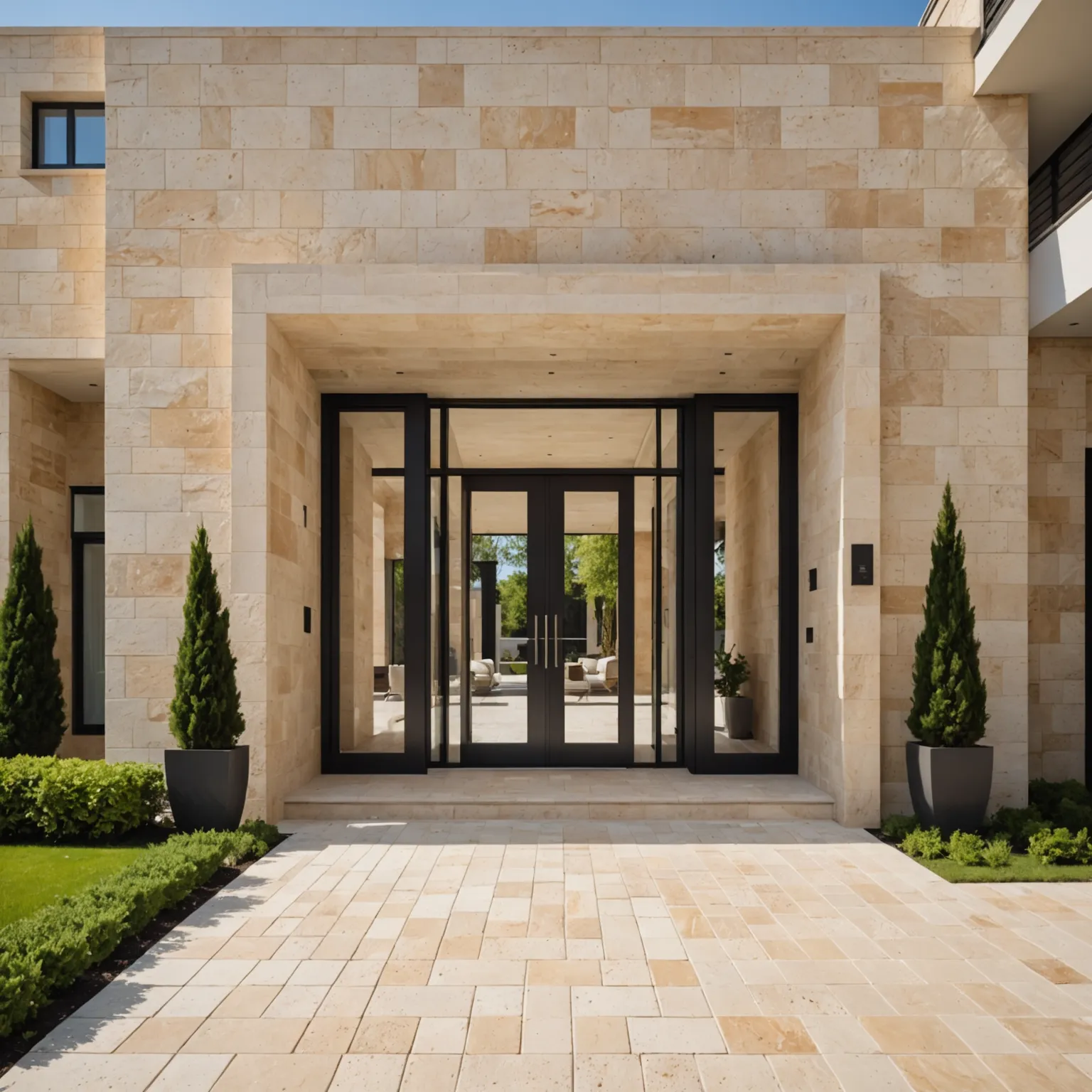
Visually, travertine pairs easily with wood, metal, and glass. That is why it is often used in projects where the entrance connects with the overall architectural concept of the building. The stone supports the facade rather than competing with it.
When installed correctly, travertine performs for decades without the need for localized repairs, reducing long-term maintenance costs.
Private housing: a practical perspective
In private homes, the entrance group is an exterior continuation of the interior. Foot feel, sound of steps, and visual continuity with the yard all matter. Travertine provides a stable surface and a softer acoustic response.
The material performs well in climates with frost, thaw cycles, and high humidity. It maintains color consistency without requiring aggressive cleaning chemicals.
Travertine is often combined with other stone types, especially when nearby zones use sandstone or quartzite. This helps define zones without visual overload.
For homes with active outdoor use, the stone is easy to clean from sand and dirt using basic water rinsing.
Commercial buildings and pedestrian traffic
In commercial projects, wear resistance becomes the primary concern. Entrance areas may handle dozens or hundreds of people daily. Travertine withstands this load when slab thickness is selected correctly.
For offices and public spaces, visual consistency is crucial. The stone does not develop uneven dark patches and does not require constant restoration.
High-traffic projects usually use matte or brushed finishes. These surfaces mask wear traces and retain a neat appearance longer.
If the building serves a representational purpose, such as a showroom or open gallery space, travertine works as a neutral background that does not distract from the content.
Installers note that properly finished travertine in entrance zones wears evenly, without sudden chipping or hazardous slick spots, even under constant use.
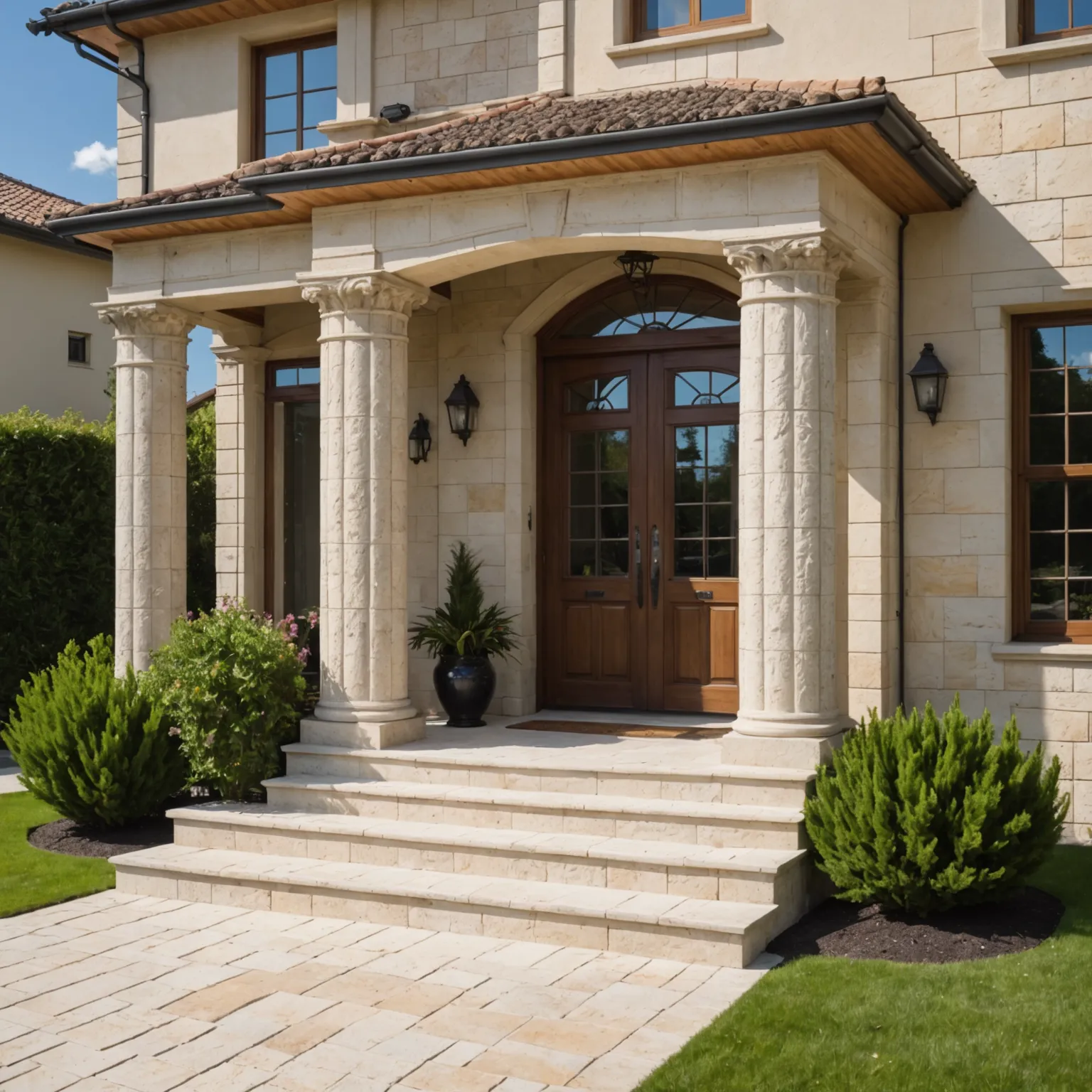
Even under heavy daily use, a travertine entrance group does not look worn when the right decisions are made at the planning stage. This applies not only to the stone itself, but also to slopes, joints, edge detailing, and drainage. These details are rarely visible at first glance, yet they determine how the entrance will look years later.
In professional projects, travertine is treated as a structural element rather than surface decoration. It must function together with stairs, porch construction, doors, and facade systems. Only then does the material show its real value.
Surface finishes and processing options
For entrance areas, sawn or brushed travertine is used most often. These finishes preserve the natural texture while providing reliable grip. Polished surfaces may look striking, but outdoors they are applied selectively.
The chosen finish directly affects maintenance. Matte textures hide dust, footprints, and minor wear more effectively. This is particularly relevant for commercial entrances.
Step edges benefit from rounded or chamfered profiles. Such detailing reduces chipping and keeps the geometry clean over time.
Lighting conditions should always be considered. Depending on the angle of light, the same travertine surface can appear warmer or cooler.
Installation details that define longevity
Even premium travertine fails without a stable base. The substrate must be rigid and resistant to movement, especially on stair structures.
A proper slope away from the door is essential. It allows water runoff and reduces ice formation in winter. Small differences in angle have a big impact.
Joints should never be minimized excessively. Stone reacts to temperature changes and needs room for expansion. This prevents cracking.
Private homes often use hidden drip edges, while public buildings rely on reinforced corner protection.
Travertine compared to alternative materials
Travertine is commonly compared with granite or porcelain stoneware for entrance applications. Each material behaves differently in real use, which becomes clear over time.
| Criteria | Travertine | Granite | Porcelain Stoneware |
|---|---|---|---|
| Grip | Stable with matte finish | Depends on surface | Series-dependent |
| Visual character | Warm and natural | Cold and strict | Imitative |
| Repair options | Local repair possible | Difficult | Limited |
Practical advice: for outdoor steps, choose travertine with filled pores. This reduces water absorption and simplifies maintenance during the first years of use.
Real-life usage scenarios
In private houses, travertine often becomes part of the daily route between home and yard. It handles dirt, garden tools, and seasonal stress without sudden visual degradation.
In commercial buildings, the stone works with constant pedestrian flow. If visitors do not notice the surface, it means it performs correctly.
In humid conditions, regular but simple cleaning is enough. Travertine does not require complex treatment when selected properly.
This is why it is frequently used in hotels, business centers, and public facilities.
Mini case: an office building entrance with travertine steps required only renewal of protective treatment after eight years, without replacing any slabs.
When travertine is the right solution
Travertine is not universal, but for entrance areas it often proves optimal. Especially when tactile comfort and visual restraint are priorities.
The stone does not attempt to look more expensive than it is. Over time, it develops an even, natural patina.
For projects where the entrance defines the first impression, travertine supports long-term perception.
Project specifics can always be clarified through the contact section with technical guidance.
Maintenance and care in daily use
Routine care for travertine is straightforward. Acid-based cleaners should be avoided, as they damage the stone structure.
Daily cleaning requires only water and neutral solutions. In commercial buildings, this fits standard cleaning schedules.
Protective treatments are renewed every few years, depending on load and climate.
These measures extend the lifespan of the entrance without major intervention.
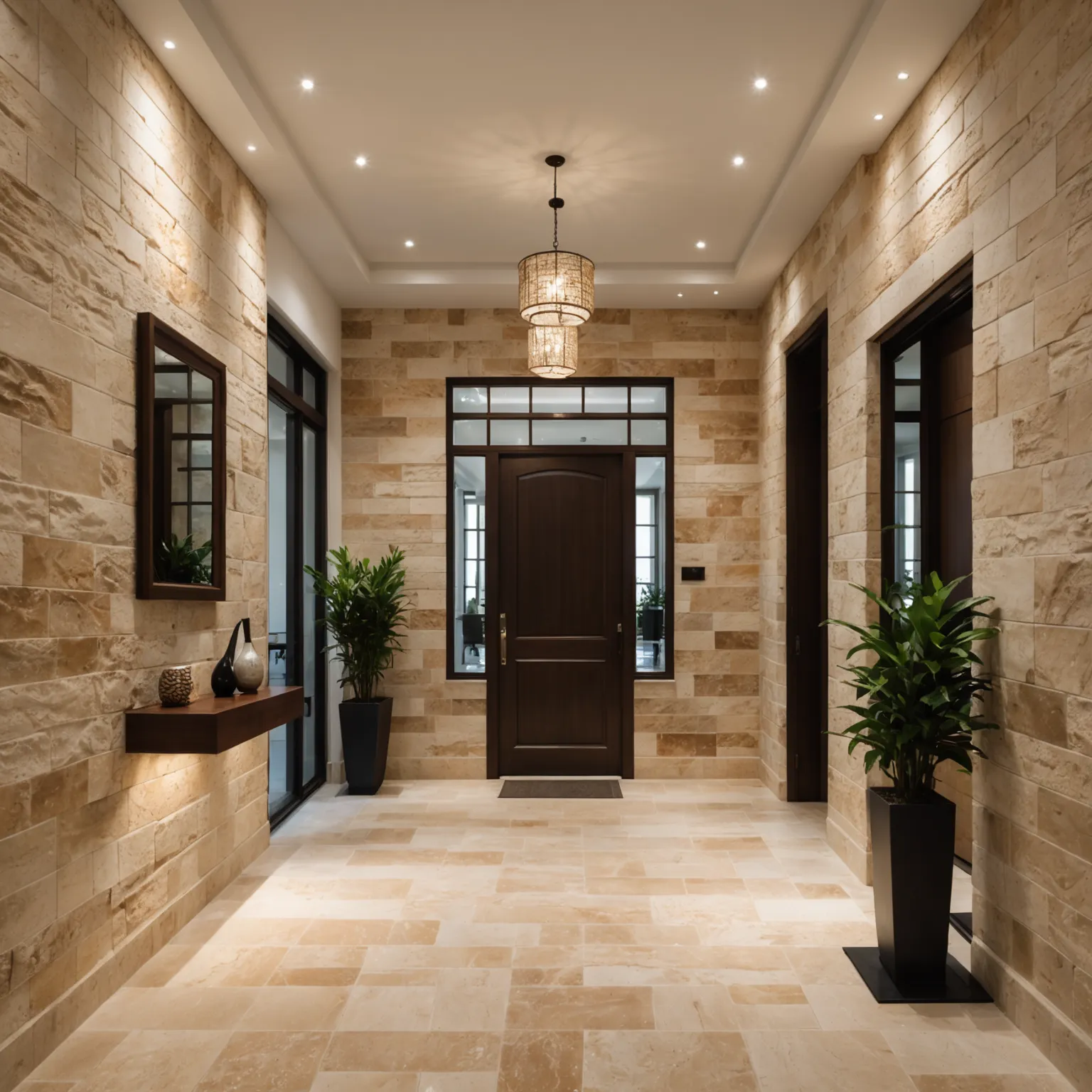
Field observation: most travertine issues arise not from the stone itself, but from savings on substrate preparation and installation.
- Travertine performs reliably in entrance areas when properly finished.
- Matte textures reduce slipping and visible wear.
- Slopes and joint design are critical.
- The material suits both private and commercial projects.
FAQ
Is travertine suitable for outdoor steps?
Travertine works well for outdoor steps when the correct finish and thickness are selected. Matte or brushed surfaces provide grip, and proper installation reduces damage from frost and moisture.
Does travertine become slippery after rain?
Matte travertine maintains traction after rain, while polished surfaces may be slippery. This is why non-polished finishes are preferred for entrance areas.
How often does a travertine entrance need maintenance?
Routine cleaning follows standard schedules. Protective treatments are renewed every few years depending on traffic and exposure conditions.
Can travertine be combined with other materials?
Travertine pairs well with wood, metal, and other stone types, allowing balanced and functional entrance compositions.
Is travertine suitable for commercial buildings?
Travertine is suitable for commercial use when load calculations and installation standards are followed. It maintains a stable appearance under high traffic.
What slab thickness is recommended for entrance areas?
Thickness depends on the substrate and expected load. Steps and public entrances typically require thicker slabs.
Does climate affect travertine selection?
Climate influences finish choice and protective treatment. In freezing regions, water absorption and drainage must be considered carefully.
Where can I get professional advice on travertine?
Professional guidance is available by phone at +380(50)433-01-01, where project conditions and entrance load can be discussed.