Kiev, ave. Lobanovsky, 14


 +3 80 (50) 433-01-01
 Video
Video 3D Tour
Pebble Mosaics: Art in Landscape Design
An early morning in the courtyard of a private house. The surface underfoot is still cool, the gate creaks softly, and small pebbles rustle quietly with each step. In moments like this, it becomes clear how a material works not only visually but also through everyday use. Pebble mosaic in landscape design is not a decorative trick for effect, but a conscious choice for spaces that are lived in every day.
Pebbles are shaped by water over many years, which gives them naturally smooth edges without sharp corners. This immediately solves several practical issues: the surface feels comfortable even when walking barefoot, it remains slip-resistant after rain, and it blends calmly into its surroundings. For this reason, natural pebble mosaics are increasingly used in courtyards, terraces, entrance areas, and outdoor relaxation zones.
When installed correctly and with the right pebble size, such a surface can last for decades without losing its appearance. It does not require complex maintenance or frequent renewal. The stone remains exactly as nature formed it, which is what homeowners value when durability and long-term comfort matter.
Pebble mosaic: art within landscape design: the main challenge lies in balancing visual appeal with everyday practicality. Natural pebbles solve this by combining organic form, moisture resistance, and structural stability. The result is a safe, tactile, and long-lasting surface that performs reliably in daily use.
Why pebbles became the foundation of mosaic surfaces
Pebbles differ from most decorative stones because they require no mechanical shaping. Water has already done this work, smoothing edges and relieving internal stress within the stone. This significantly reduces the risk of chipping or cracking during long-term use.
Thanks to their rounded form, loads are distributed evenly, and the surface remains stable even when wet. That is why pebbles are often chosen for areas near pools, fountains, and garden paths. Unlike polished stone, they do not become dangerously slippery.
The color range of pebbles is entirely natural: shades of gray, beige, brown, and graphite combine easily without harsh contrasts. This allows mosaic patterns to feel balanced and visually calm rather than overwhelming.
Another key advantage is environmental neutrality. Natural stone contains no synthetic additives, does not fade, and does not release odors even in hot weather. For private gardens and residential courtyards, this aspect is especially important.
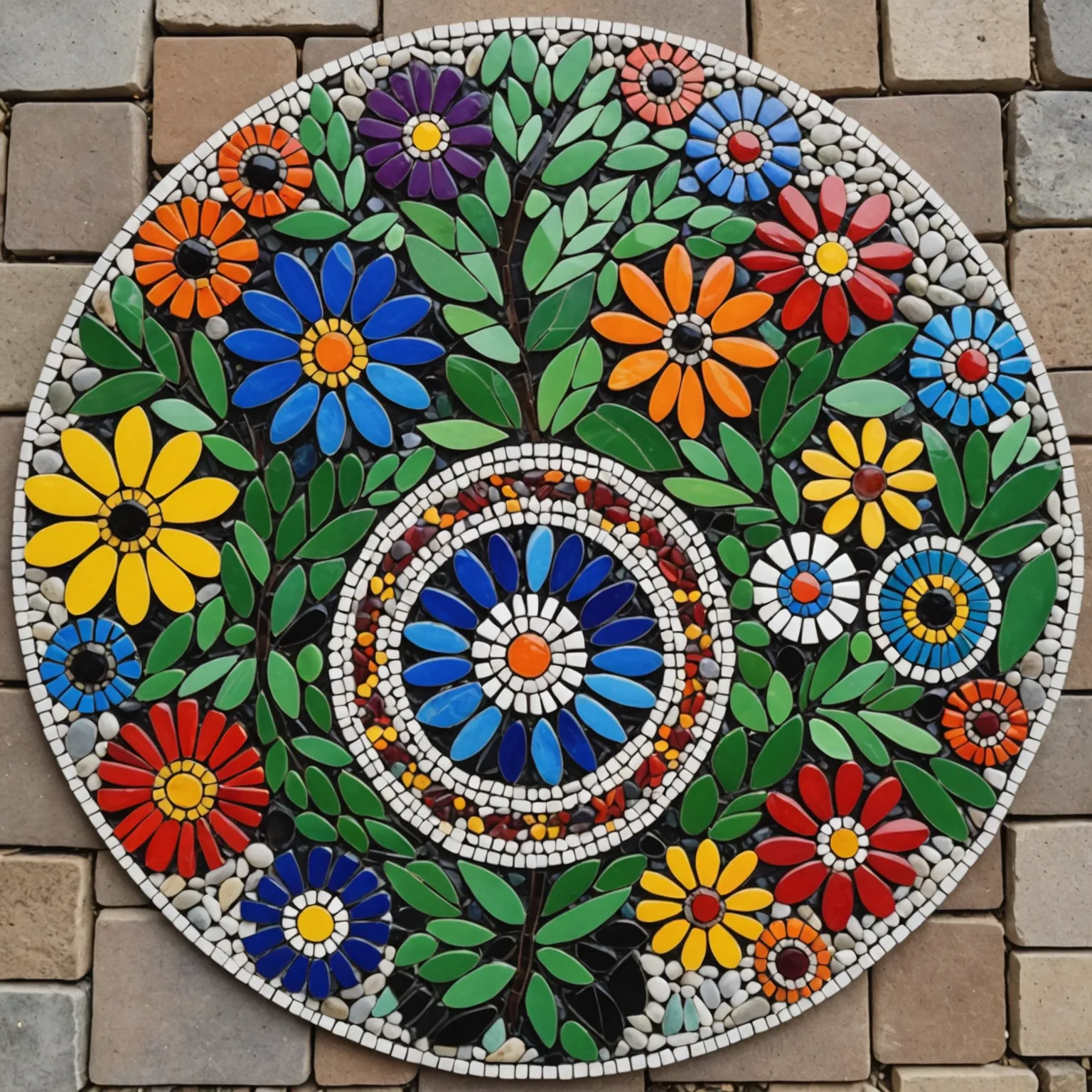
How pebble mosaics function in landscape spaces
In landscape design, restraint often matters more than complexity. Pebbles allow accents to be created without disrupting the overall composition. They emphasize the shape of paths, platforms, and steps without drawing excessive attention.
Very often, pebble mosaics are used as transition elements between zones: lawn to terrace, house to garden, pathway to seating area. Their natural texture makes these transitions feel smooth and visually coherent.
If needed, pebbles can be combined with other materials such as wood, concrete, or clinker. In these combinations, pebbles act as a softening element, balancing strict geometry with organic texture.
In practice, homeowners often note that pebble mosaics do not become visually tiring over time. Unlike bright tiles or complex patterns, they are perceived as part of the natural environment rather than a decorative statement.
Where pebble mosaics are most appropriate
The most common application is garden paths and courtyards. Here, pebbles handle temperature changes, moisture, and mechanical loads well. With proper installation, the surface remains stable for many years.
Entrance areas and steps are another practical choice. The surface remains slip-resistant in wet or cold conditions, while maintaining a neat appearance without constant cleaning.
Within the property, pebbles are often used for patios, barbecue areas, and relaxation zones. Walking barefoot on such a surface provides a subtle massage effect that many people appreciate.
They can also be combined with other stone types, for example using sandstone and quartzite for borders or steps. This adds depth and structure to the overall composition.
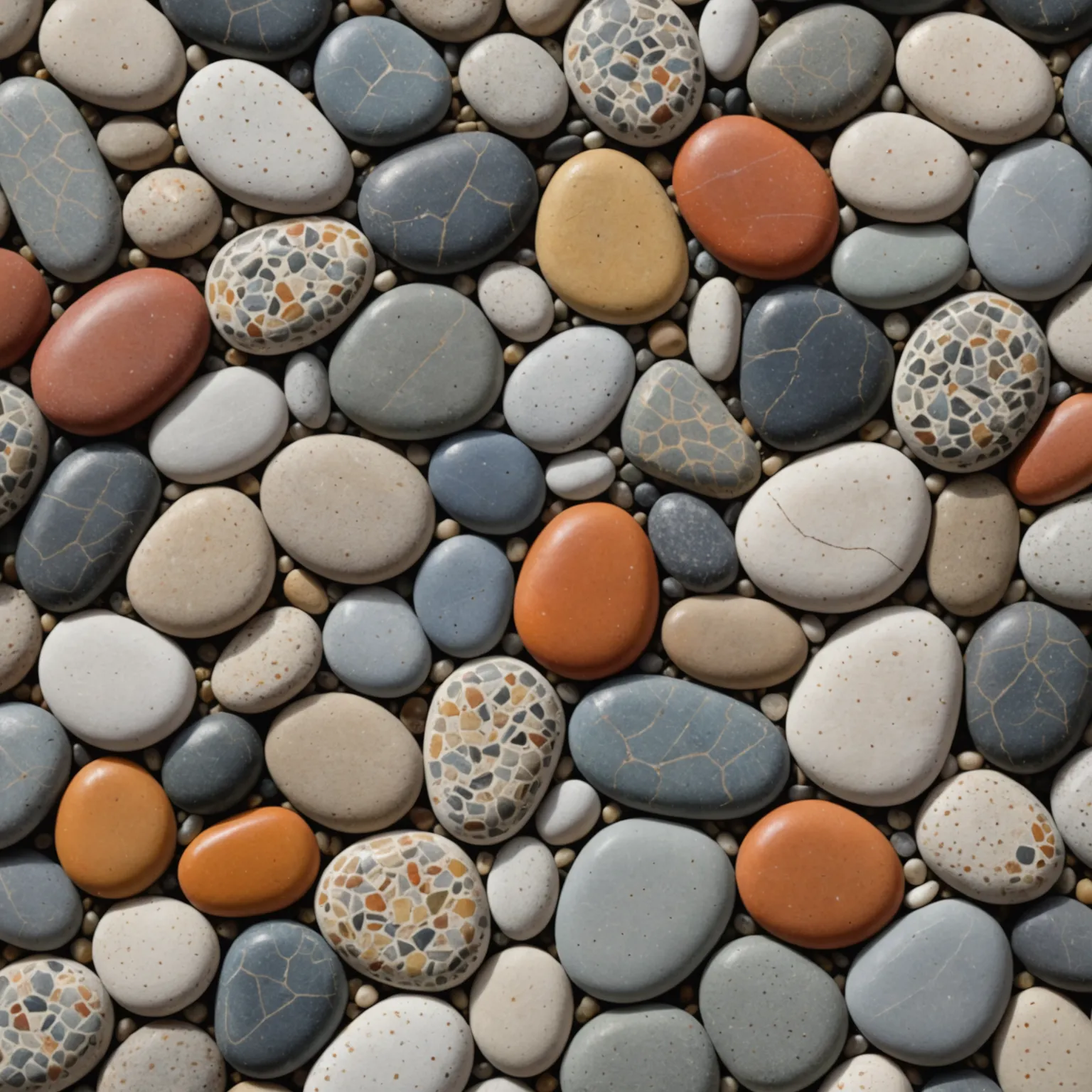
From professional practice: pebble surfaces integrate best where water features and greenery are present, visually tying different parts of the landscape into one cohesive space.
During planning, it is useful to review completed projects with natural stone to better understand how pebble mosaics behave in real environments.
On sun-exposed areas, pebbles remain comfortable underfoot because they do not overheat like dark tiles. This makes them suitable for summer use.
Another advantage is localized repair. If a small area is damaged, there is no need to dismantle the entire surface; individual elements can be replaced without affecting the whole design.
From a long-term perspective, pebble mosaics remain relevant regardless of changing trends. Their natural appearance ensures they age gracefully.
Pebble surfaces also work well alongside façades. They pair naturally with natural façade stone, visually connecting the building with its surrounding landscape.
When working with pebble mosaics, it is important to consider not only visual impact but also technical preparation. The quality of the base determines how the surface will perform over time. Pebbles reward patience with long-term stability.
Preparing the base for a pebble mosaic
The base must be rigid and stable, without movement or unevenness. Reinforced concrete screeds are commonly used, especially in high-traffic areas. This prevents future deformation.
Before installation, the surface must be thoroughly cleaned of dust and debris. Even minor contamination can eventually lead to detachment. Proper drainage slopes should also be planned in advance.
Waterproofing is critical in areas exposed to moisture. Only stone-compatible systems should be used to avoid discoloration or efflorescence over time.
After preparation, the base must dry completely. Only then will the mosaic function as a unified surface rather than a collection of separate stones.
Selecting pebble size and pattern
Pebble size influences both appearance and comfort. Smaller pebbles create a smoother surface, while larger ones produce a more pronounced texture. The choice depends on the function of the area.
Medium-sized pebbles are typically chosen for walkways, balancing stability and comfort. Relaxation areas allow for freer compositions with larger stones.
Color selection should account for surrounding elements such as façades, roofs, and vegetation. Natural tones integrate more easily into existing landscapes.
Patterns may be random or directional. It is important to evaluate how they read from a distance, not just up close.
Installation: a handcrafted process
Pebble mosaics are almost always installed by hand. Each stone is placed individually, requiring attention and experience. Automation would compromise the final quality.
Adhesives designed specifically for natural stone are used. They remain flexible enough to accommodate temperature changes.
Joints are filled with moisture- and frost-resistant grouts. The grout color is chosen to support, not dominate, the stone.
After installation, the surface should remain untouched for several days to allow all layers to stabilize properly.
Common installation mistakes
The most frequent issue is saving on base preparation. Even high-quality pebbles cannot compensate for a moving substrate. Using generic adhesives without considering stone properties is another common error.
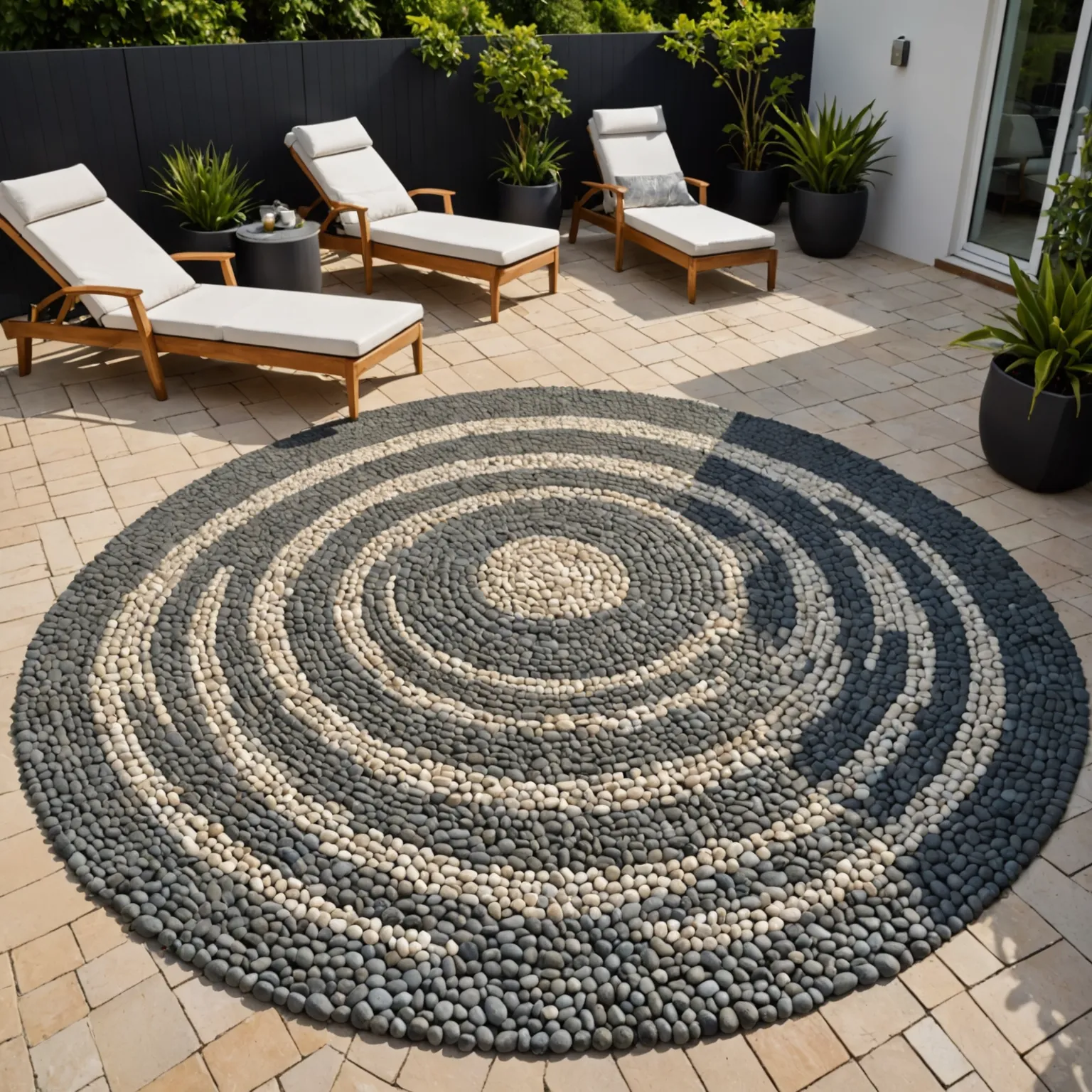
Maintaining a pebble mosaic surface
Pebble mosaics require minimal maintenance. Periodic rinsing with water is usually sufficient to remove dust and organic residues.
In high-use areas, renewing a protective sealer every few years helps enhance color and reduce water absorption.
During winter, aggressive chemical de-icers should be avoided. Mechanical cleaning or neutral products are safer for natural stone.
With proper care, pebble mosaics retain their appearance for decades without major repairs.
Comparison with other surface materials
| Criterion | Pebbles | Tiles | Concrete |
|---|---|---|---|
| Slip resistance | High | Medium | Medium |
| Natural appearance | High | Medium | Low |
| Repair options | Localized | Limited | Complex |
Practical advice: if unsure about pebble size, create a small test section of 1–2 m². This allows you to evaluate comfort and visual effect before full installation.
When pebble mosaics are especially justified
This material works best in projects where connection to nature is a priority. It integrates smoothly into the landscape without appearing artificial.
On uneven terrain, pebbles help soften elevation changes that would require complex cutting with tiles.
When budgets are limited, reviewing current natural stone offers can help source materials for specific zones without compromising quality.
In quiet residential spaces, pebble mosaics reduce footstep noise and contribute to a calmer outdoor atmosphere.
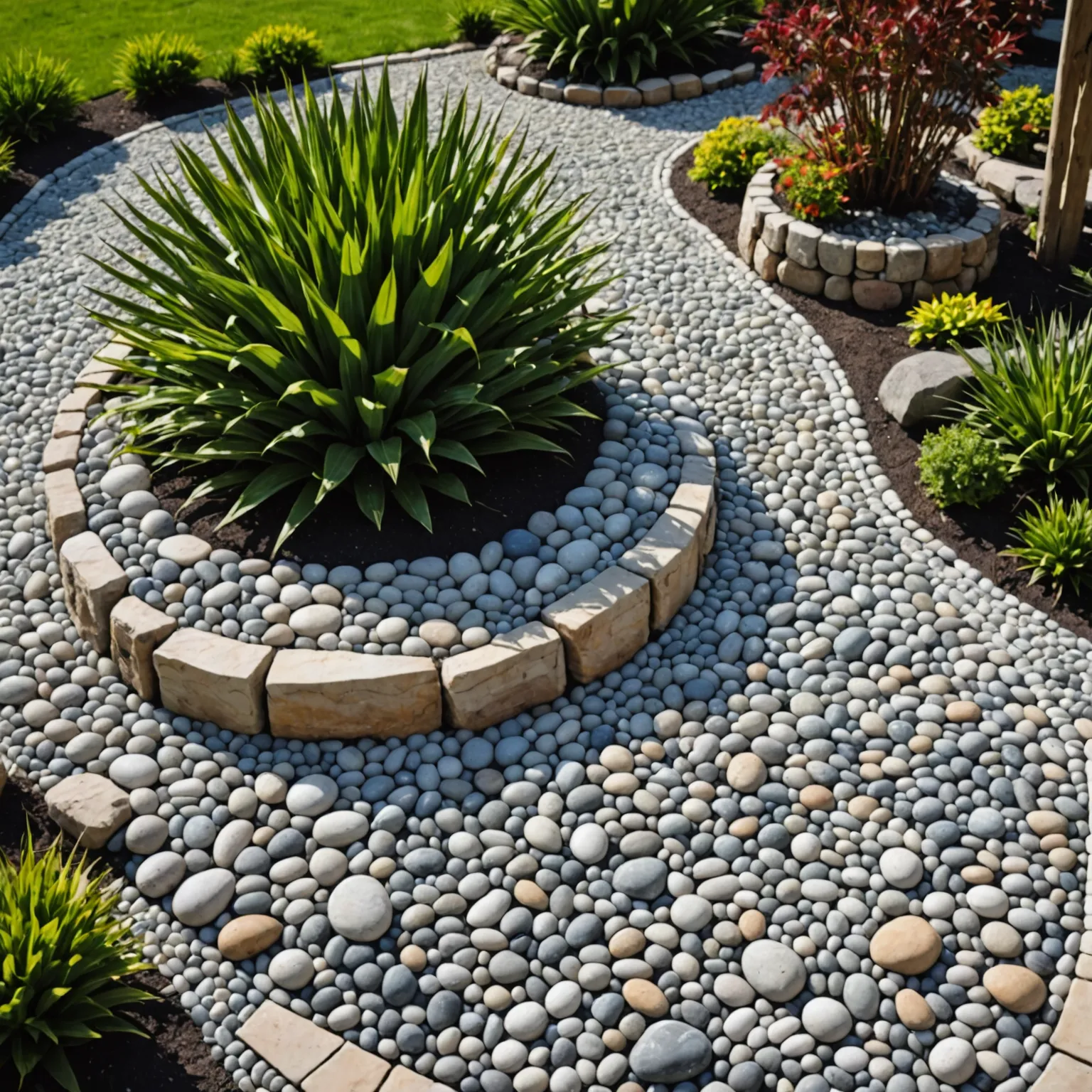
Small case example: in a private courtyard with heavy foot traffic, a pebble pathway required no repairs over five years, while an adjacent tiled surface was replaced twice.
- Pebbles retain their natural form without processing.
- The mosaic resists moisture and temperature changes.
- The surface is safe and comfortable for daily use.
- Localized repairs are possible without full replacement.
FAQ
Is a pebble mosaic suitable for cold climates?
Yes, when the base is properly prepared and frost-resistant materials are used, pebble mosaics handle freeze-thaw cycles well. Adequate drainage is essential to prevent water accumulation in joints.
Can pebble mosaics be installed самостоятельно?
Small areas can be handled by homeowners, but achieving consistent results without experience is difficult. For larger surfaces, professional installation is recommended.
How slip-resistant is a pebble mosaic?
The textured surface of pebbles provides good grip even when wet. Compared to smooth tiles, the risk of slipping is significantly lower.
How should pebble color be selected?
Color should complement the surrounding environment. Light tones visually open the space, while darker tones emphasize structure. Mixing similar shades often works well.
Does a pebble mosaic require special maintenance?
Routine water cleaning is usually sufficient. Sealers can be applied every few years if needed. Harsh chemicals should be avoided.
Can pebbles be combined with other materials?
Yes, pebbles pair well with wood, concrete, and natural stone. These combinations help define zones while maintaining visual balance.
Where can I get professional advice on material selection?
For guidance on pebble size and quantity, consulting specialists is recommended. Detailed advice is available through the contact page.
Does plot size affect mosaic selection?
Yes, larger areas benefit from calmer patterns and medium-sized pebbles, while smaller spaces allow for more expressive designs without visual overload.
If additional questions arise regarding material combinations or technical details, the contact page is the best place to request project-specific guidance.