Kiev, ave. Lobanovsky, 14


 +3 80 (50) 433-01-01
 Video
Video 3D Tour
Travertine facade
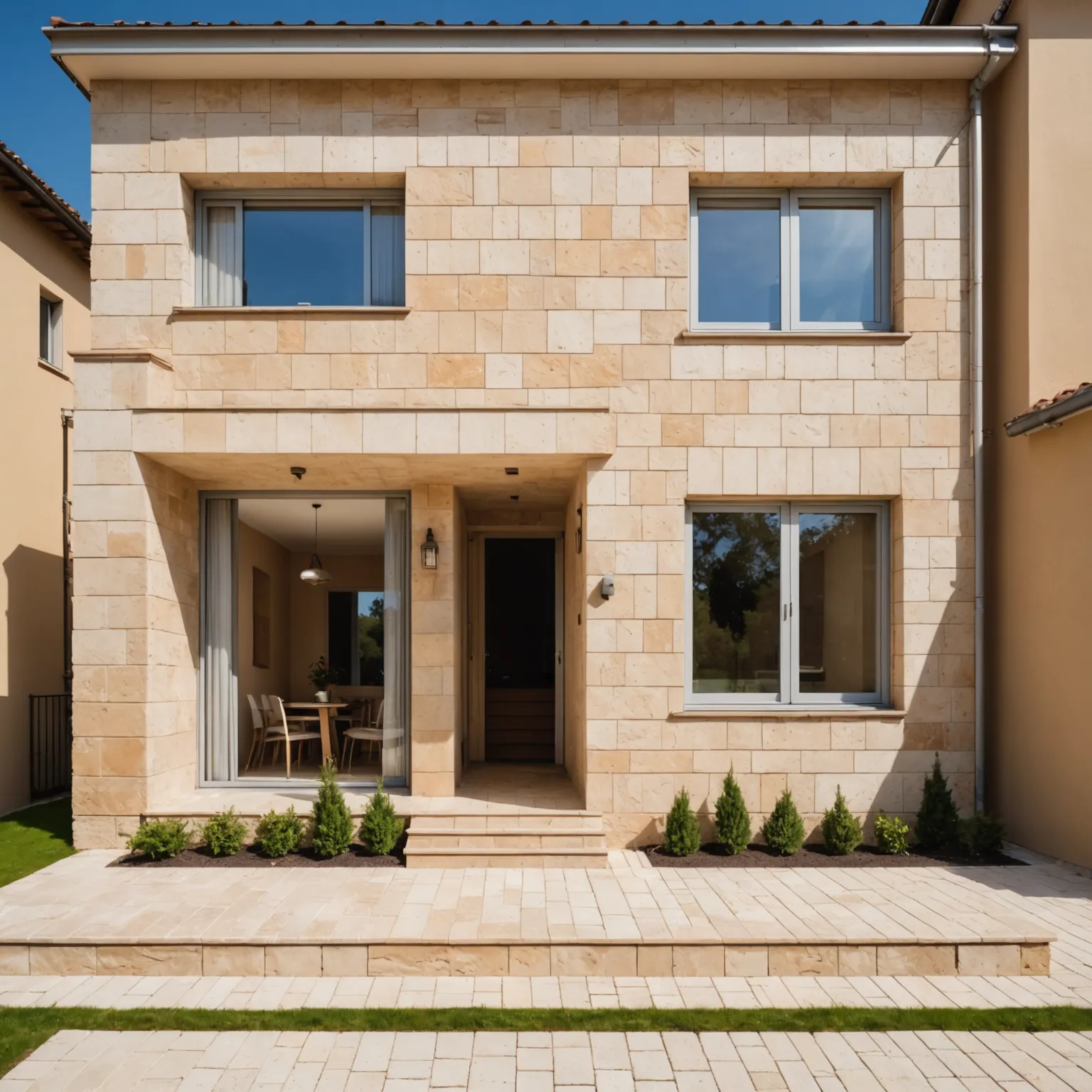
Travertine façades combine noble aesthetics, long-term performance, and day-to-day practicality. Its natural porosity, layered texture, and warm palette—from milky and beige to walnut and subtle rose—give exteriors a “living” look with premium curb appeal. Below you’ll find key benefits, the most popular surface finishes, selection tips, a quick installation guide, and a comparison table to help you choose the right configuration. Explore materials at the KievStone store and the dedicated travertine category.
Why choose travertine for façades
- Aesthetics & prestige. Organic veining and a soft color palette deliver a refined Mediterranean vibe.
- Durability. With proper detailing, cladding performs for decades while retaining color and texture.
- Freeze–thaw & moisture resistance. Handles seasonal humidity and temperature swings when designed correctly.
- Fire-safe & eco-friendly. A natural, non-combustible material with no harmful emissions.
- Serviceability. Individual panels can be replaced without dismantling entire elevations.
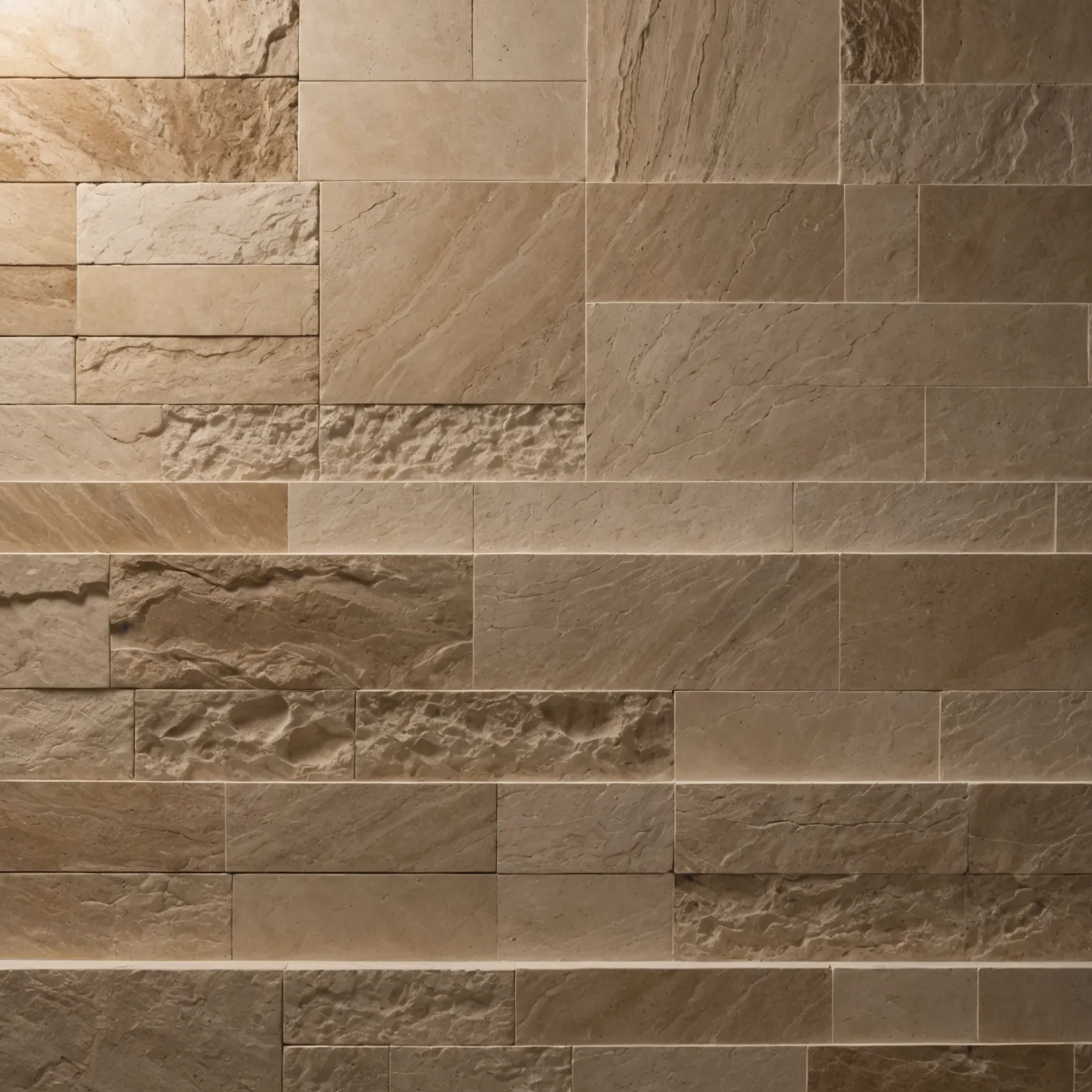
Surface finishes and where they fit
Honed travertine
Matte, even surface with a delicate sheen that highlights layering. Understated and upscale, it works with most architectural styles. See options in the honed collection.
Tumbled (rounded-edge) travertine
Softened edges and a lightly “aged” feel—ideal for Mediterranean, classic, and rustic façades. Warm, welcoming character. Browse the tumbled collection.
Split-face (chiseled) tiles
Bold relief with a “rocky” effect that adds depth, especially striking with architectural lighting on plinths, columns, or entry portals.
Finish comparison
| Finish | Look & feel | Best for | Care |
|---|---|---|---|
| Honed | Matte, refined, uniform | Modern and classic architecture | Simple wash; periodic hydrophobing |
| Tumbled | Soft-edged, gently “aged” | Mediterranean & rustic concepts | Minimal; seasonal cleaning is enough |
| Split-face | Pronounced relief, rocky texture | Accent zones: plinths, pilasters | Rinse dust/moss; refresh sealer as needed |
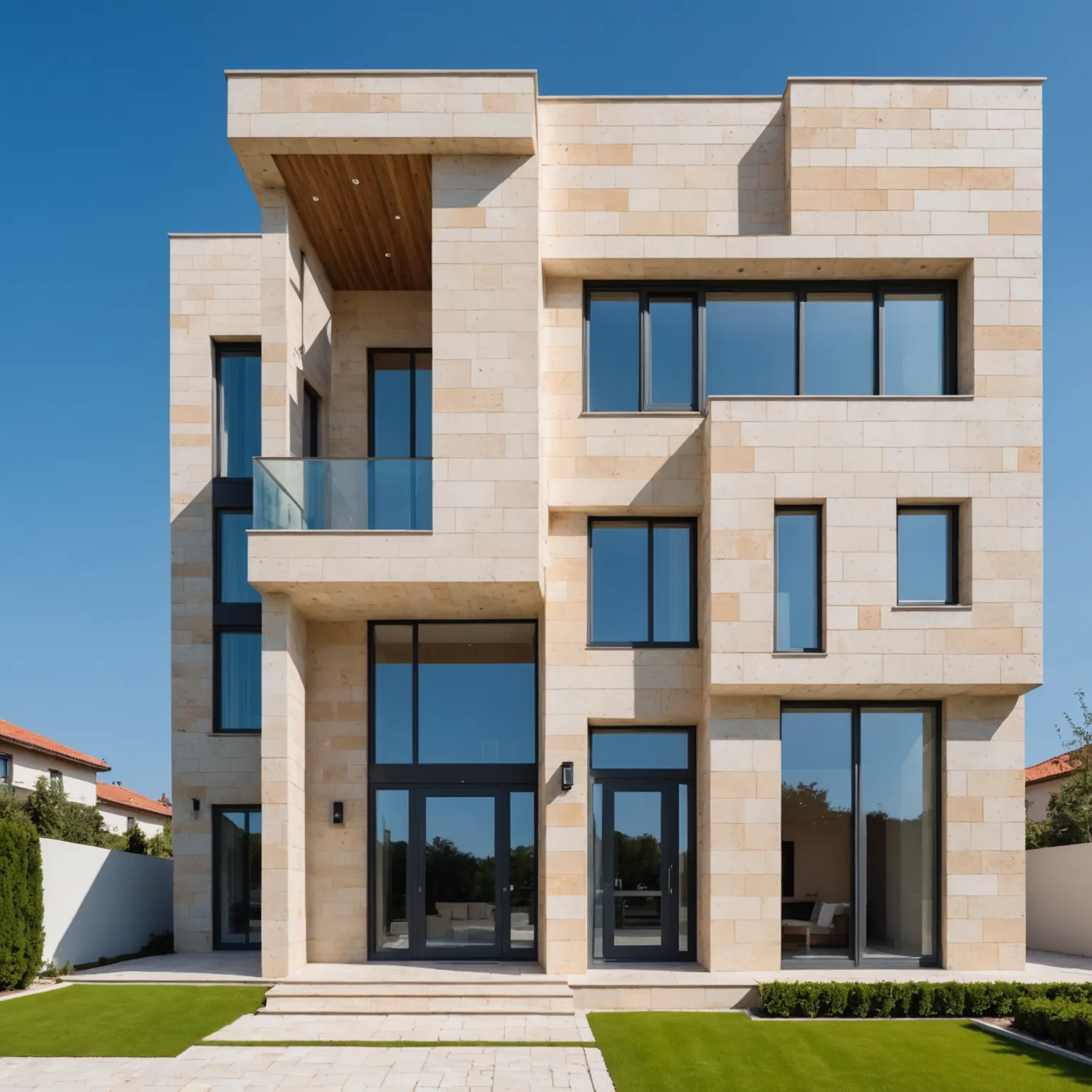
Color and format selection
Light beiges visually expand volumes and brighten elevations; walnut and caramel tones feel grounded and substantial. Façades use everything from small tiles to large panels; mixing sizes and running-bond layouts create rhythm and subtle motion across the plane.
Installation: quick guide
- Substrate. Verify load capacity and flatness; level and ensure proper water/thermal layers per design.
- Fixing scheme. Choose either a “wet” system (adhesive/mortar) or a ventilated rainscreen—based on panel format and architecture.
- Pore strategy. Leave pores open for a “lively” texture or fill them to boost resistance to moisture and soiling.
- Protective treatments. Recommend hydrophobing; consider anti-graffiti products in risk zones.
Historic note: travertine has been a façade staple since antiquity—the Roman Colosseum famously features light travertine cladding.

Smart pairings
- Wood & metal. Warm stone contrasted with dark metal or timber adds drama.
- Glass. Large glazing areas amplify texture and bring in light.
- Lighting. Side or under-washing reveals pores and layering beautifully at night.
Where to view and how to order
Start with curated samples and ready collections: browse travertine, and refine by finish in the honed line or the tumbled line. For availability and logistics, contact KievStone—we’ll help match format, shade, and fixing scheme to your architecture.
FAQ
Is travertine suitable for façades in freeze–thaw or humid climates?
Yes—when the assembly is properly designed and installed. Specify façade-grade travertine with controlled water absorption and consistent density, and detail the wall to manage moisture. A ventilated rainscreen (or a correctly engineered “wet” system) helps the wall shed water and dry quickly. Use flashing, drips, and end dams on sills and parapets, seal movement joints, and protect the plinth from splashback and de-icing salts. Decide early whether pores will be left open for a lively texture or filled to reduce water uptake; combine this with a breathable hydrophobic sealer. With these measures, travertine cladding retains both appearance and strength for decades.
Which finish should I choose—honed, tumbled, or split-face—and how does it impact upkeep?
Honed travertine offers a matte, even surface that reads refined and is the easiest to keep clean—an all-round choice for modern and classic façades. Tumbled (rounded-edge) travertine feels warm and slightly “aged”; its gentle relief hides minor substrate imperfections but may catch dust more readily—pair it with hydrophobing and well-sloped drips. Split-face tiles create bold shadow lines for plinths, columns, or accent walls and look spectacular under lighting; they simply need periodic rinsing to remove airborne dust. In every case, prefer breathable sealers compatible with natural stone so moisture can escape without trapping salts within the stone.
What panel thickness and format are recommended, and what fixing method should I use?
For adhesive (“wet”) systems on sound substrates, 20–30 mm slabs are common; for ventilated façades, 12–20 mm panels with certified mechanical anchors/klymers are typical (the exact spec depends on panel size, wind loads, and the subframe). Popular formats include 300×600, 400×800, and 600×900 mm; larger panels reduce joint count but raise flatness and handling requirements. Use exterior-grade, deformable adhesives (e.g., C2TE S1 class) and 3–6 mm joints with elastic grout; add movement joints every 6–9 m vertically and horizontally. Heavier units and high-load zones should always receive mechanical restraint, even in adhesive assemblies, for long-term security.
How do I clean and maintain a travertine façade, and do I need to seal it regularly?
Routine care is simple: seasonal rinsing with water or neutral cleaners (pH 7–9) and visual checks of joints and flashings. Avoid acids, bleach, and harsh abrasives that can etch carbonate stone. A breathable hydrophobic sealer reduces wetting and soiling; refresh it every 2–3 years or when water no longer beads on the surface. Where pores are filled, staining and efflorescence are less likely; open-pore finishes just need slightly more discipline in cleaning. Keep de-icing salts away from the plinth and ensure correct sill slopes. For localized stains, use a stone-safe poultice after testing on an inconspicuous spot.