Kiev, ave. Lobanovsky, 14


 +3 80 (50) 433-01-01
 Video
Video 3D Tour
Travertine for Terraces and Pool Areas
A terrace and the area around a swimming pool are constantly exposed to sun, water, and temperature fluctuations. Tiles can overheat, composite boards may fade, and concrete often starts to crumble along the edges after several seasons. Choosing the right surface is never just about appearance. It must remain safe after rain, resist cracking in winter, and look natural next to water and greenery. That is why travertine is increasingly selected for outdoor living spaces.
This natural stone has been used in private construction for decades. It does not look artificial or overly polished. Walking barefoot on travertine in summer feels comfortable, even at midday. Its subtle pores and soft texture create a living, organic surface that blends seamlessly with landscaping elements.
Travertine for terrace and pool areas: the main challenge when selecting outdoor paving is balancing safety, moisture resistance, and long-term visual stability. Natural stone reduces overheating, improves grip near water, and withstands seasonal temperature changes. Homeowners gain a durable surface, predictable performance, and fewer repair concerns over time.
Why Travertine Works for a Terrace
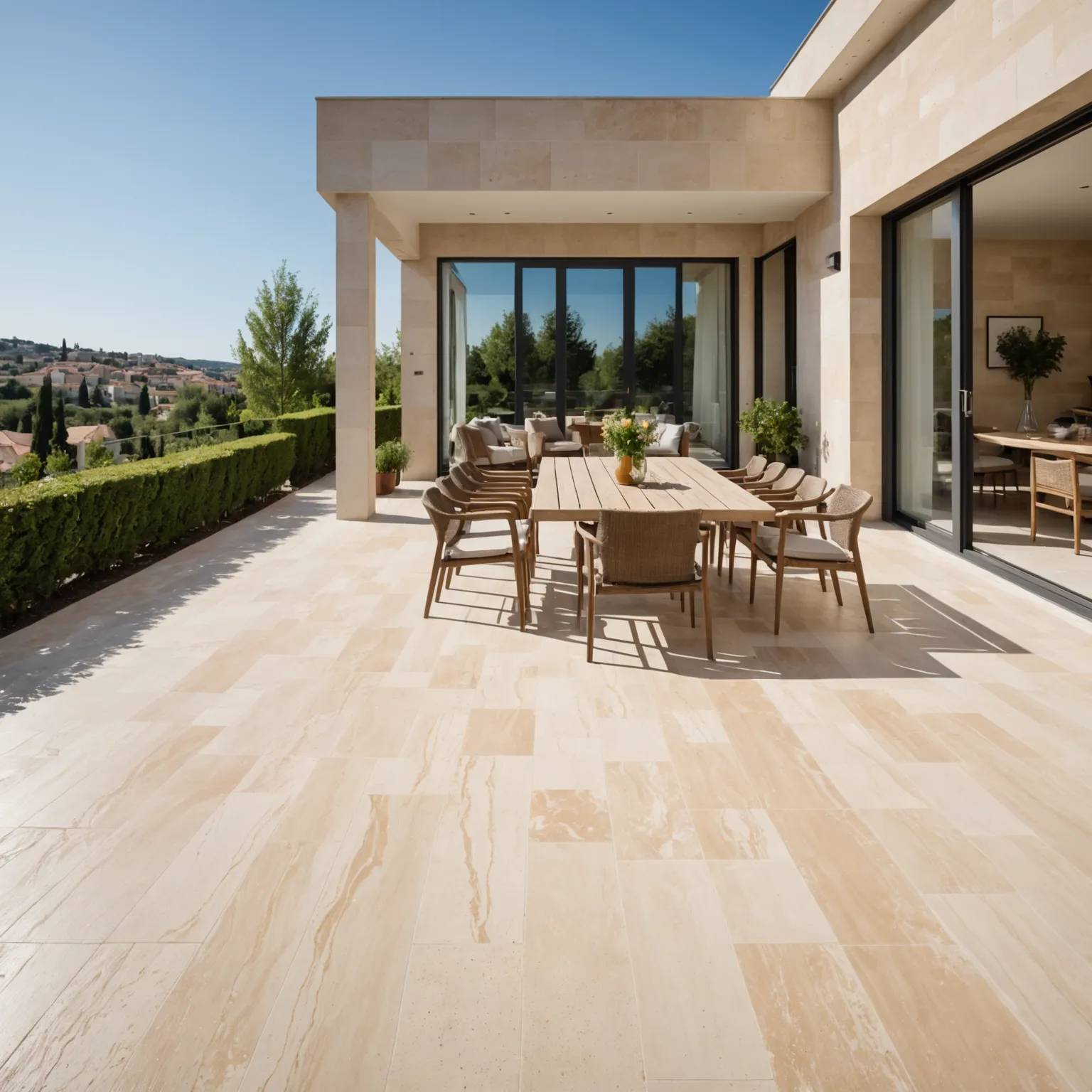
Terraces absorb direct sunlight for hours every day. Many ceramic and concrete materials become extremely hot under these conditions. Travertine behaves differently due to its porous structure. It does not accumulate excessive heat, making it comfortable for barefoot use even during peak summer temperatures.
Another advantage is its natural surface texture. After rain or irrigation, water does not create a slippery film. The stone allows moisture to evaporate efficiently, reducing the risk of slipping. Early in the morning, dew settles gently on the surface without turning it into a hazard.
Travertine integrates easily into different architectural concepts. When a house façade incorporates natural façade stone, extending the same material onto the terrace creates visual continuity. The outdoor space feels intentional rather than added later.
Installers often note that when the base is prepared correctly, travertine remains stable for decades. It does not produce hollow sounds underfoot and does not shift seasonally. The result is a solid, grounded feeling when walking across the terrace.
Experienced installers observe that with proper drainage and slope, travertine surfaces survive winter cycles without delamination or structural issues.
Performance Around the Pool
The pool area presents additional challenges. Besides constant moisture, surfaces are exposed to cleaning chemicals and splashes. Travertine handles these conditions well when treated with appropriate sealants. The stone maintains its natural appearance without becoming glossy or artificial.
Temperature contrast is common near pools. Cool water meets heated surfaces under direct sun. Travertine tolerates these rapid changes without developing microcracks. This stability is one of the reasons it is widely used in outdoor recreational spaces.
Unlike composite materials, travertine does not fade unevenly. Over time, it may develop a gentle patina rather than visible discoloration. The surface continues to look cohesive, even after years of exposure.
Projects that use travertine slabs for poolside paving typically consider slab thickness and format carefully. Heavier, thicker pieces provide additional stability in high-traffic areas. This ensures reliable performance during active use.
Texture, Shades, and Landscape Integration
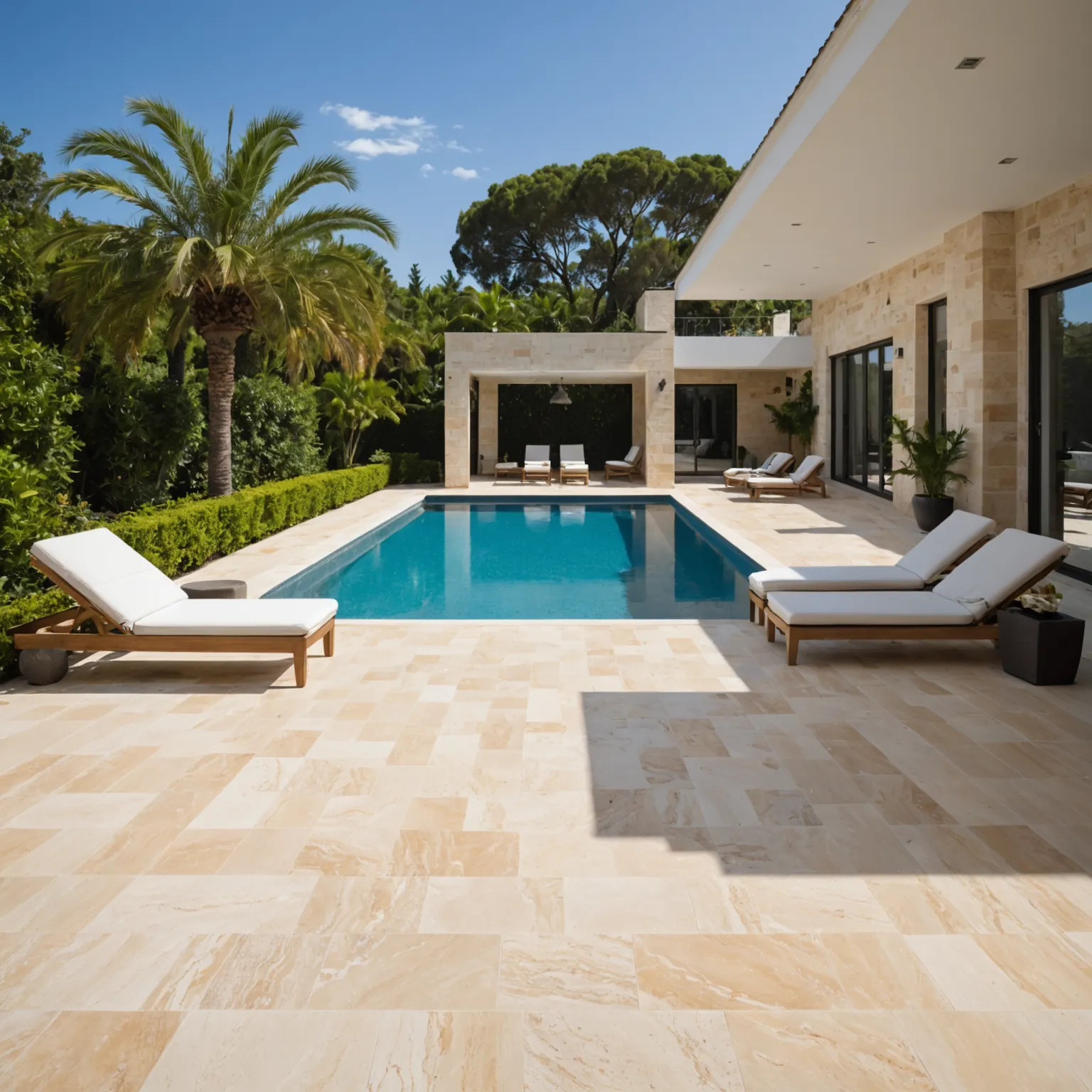
Travertine is known for its warm, natural palette. Beige, sand, cream, and light grey tones harmonize with grass, water, and surrounding greenery. In evening light, the stone can take on a deeper golden hue.
Surface treatment affects both aesthetics and functionality. Honed finishes appear smoother, while brushed or tumbled finishes enhance grip. Around pools and terraces, slightly textured finishes are often preferred for safety.
Travertine pairs well with other natural materials. When combined with wooden decking or accents made from slate elements, the overall composition feels layered and balanced. The contrast between textures adds depth without overwhelming the space.
The format of the slabs also influences the visual rhythm. Large slabs create a calm, monolithic effect. Smaller modules introduce movement and work well in complex layouts. The choice depends on the size of the property and architectural design.
Subbase and Installation Considerations
Any durable outdoor surface begins with a properly constructed base. For terraces and pool decks, a reinforced concrete slab with a defined slope is essential. Without adequate drainage, water accumulation may compromise the system over time. Slope ensures natural runoff after rainfall.
Drainage layers are particularly important on clay-heavy soils. A well-prepared substructure minimizes seasonal movement and moisture retention. This protects both the adhesive layer and the stone itself.
Outdoor-rated adhesives and grouts must be used. Interior products are not suitable for freeze-thaw conditions. Travertine requires frost-resistant bonding systems and water-resistant joint materials to maintain structural integrity.
When installed according to professional standards, travertine does not require frequent adjustments. It remains dimensionally stable and retains its clean lines for years.
Maintenance and Protection
Travertine is a natural stone, so surface sealing is recommended. Sealers reduce moisture absorption and make cleaning easier. This is particularly useful in pool environments where splashes are frequent.
Routine maintenance involves rinsing with water and using neutral cleaning products. Acid-based cleaners should be avoided. Harsh brushes can damage the surface texture and should not be used.
During winter, mechanical snow and ice removal is preferable to chemical deicers. Aggressive salts may affect the stone’s surface. With simple care, travertine retains its performance characteristics.
Over time, the surface may develop subtle tonal variations. This natural aging process enhances character rather than diminishing value.
Comparison with Alternative Materials
Outdoor spaces are often finished with concrete pavers, clinker, or composite decking. Each option has advantages and limitations. Concrete is cost-effective but may crack. Composite boards are easy to install yet can overheat and fade.
Travertine requires more attention during installation but offers superior long-term stability. It does not warp, peel, or lose structural strength after a few seasons.
To better understand design possibilities, reviewing completed projects in the project gallery helps visualize texture combinations and layout approaches.
The table below compares key characteristics of common outdoor materials.
| Feature | Travertine | Concrete Pavers | Composite Decking |
|---|---|---|---|
| Heat Retention | Moderate | High | High |
| Slip Resistance | Good with textured finish | Medium | Medium |
| Service Life | 20+ years | 10–15 years | 8–12 years |
| Aging Behavior | Natural patina | Surface wear | Color fading |
Real-World Experience
Heat and Rain Performance
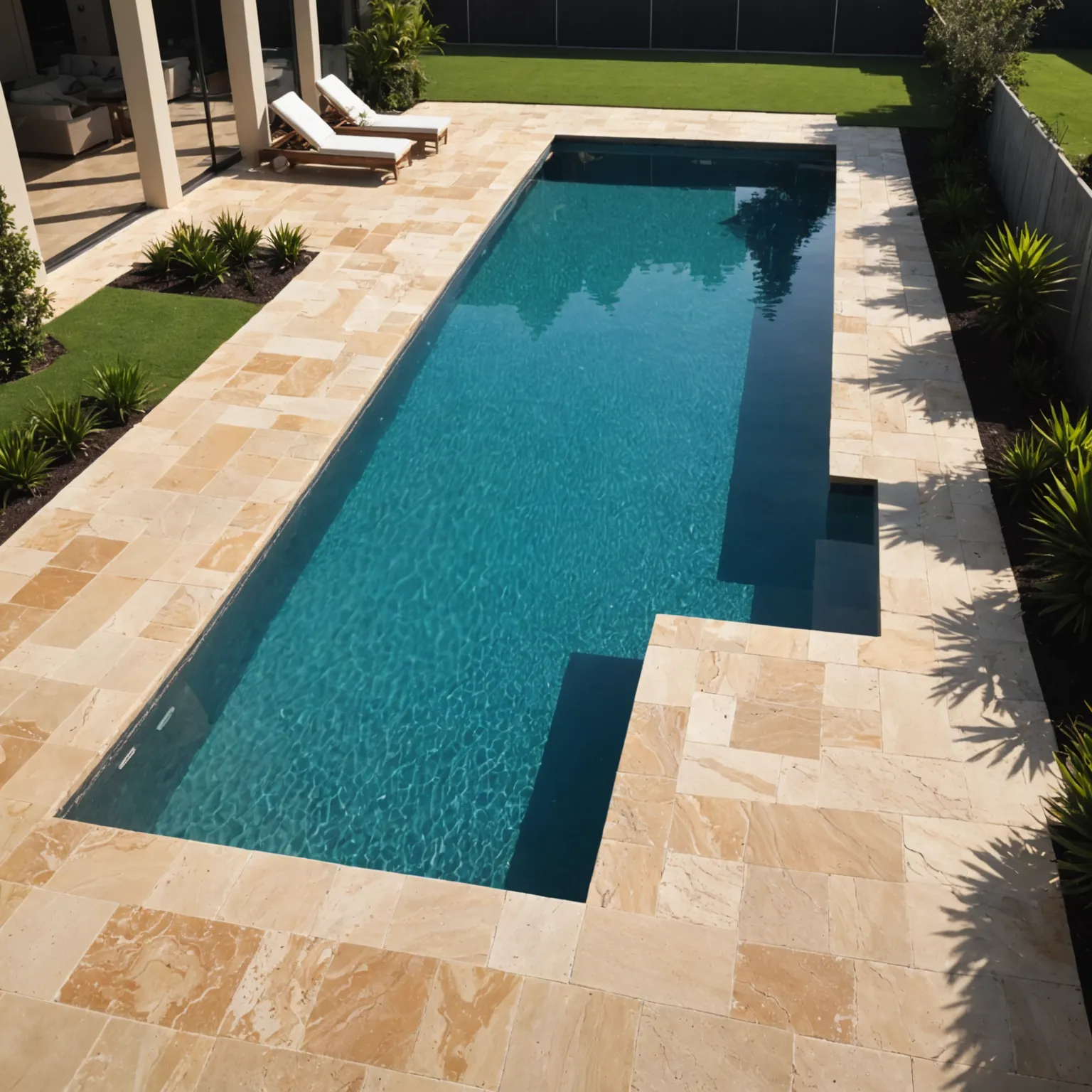
On hot afternoons, travertine remains manageable under bare feet. Children running from the pool do not encounter scorching surfaces. The stone feels dense and stable rather than hollow.
After rainfall, water disperses quickly when proper slope is present. Puddles are minimized, and the surface dries efficiently. This enhances everyday safety.
Travertine does not emit synthetic odors when heated. Its natural composition maintains a neutral presence in the outdoor environment. As evening temperatures drop, the surface cools gradually.
Long-term users often report minimal structural change after years of use. Edges stay intact, and joints remain clean with correct installation.
In one residential project, a travertine pool deck has been in use for over eight years with no structural repairs required, only minor tonal deepening from natural exposure.
Selecting Slab Thickness and Format
Thickness selection depends on expected loads. Standard residential terraces can use medium-thickness slabs. Areas with heavy outdoor kitchens or furniture may require thicker elements for added durability.
Large-format slabs create a seamless, expansive appearance. Smaller formats introduce pattern variation and flexibility in complex layouts. Both approaches are valid depending on design goals.
Color evaluation should consider natural lighting conditions. Outdoor sunlight can alter perception significantly. Viewing physical samples on-site provides better clarity than catalog images.
For technical guidance and project-specific consultation, the contact section provides direct communication with specialists who can advise on format and installation parameters.
Practical tip: always examine a wet sample before final selection. This reveals how the stone will appear near a pool or after rainfall.
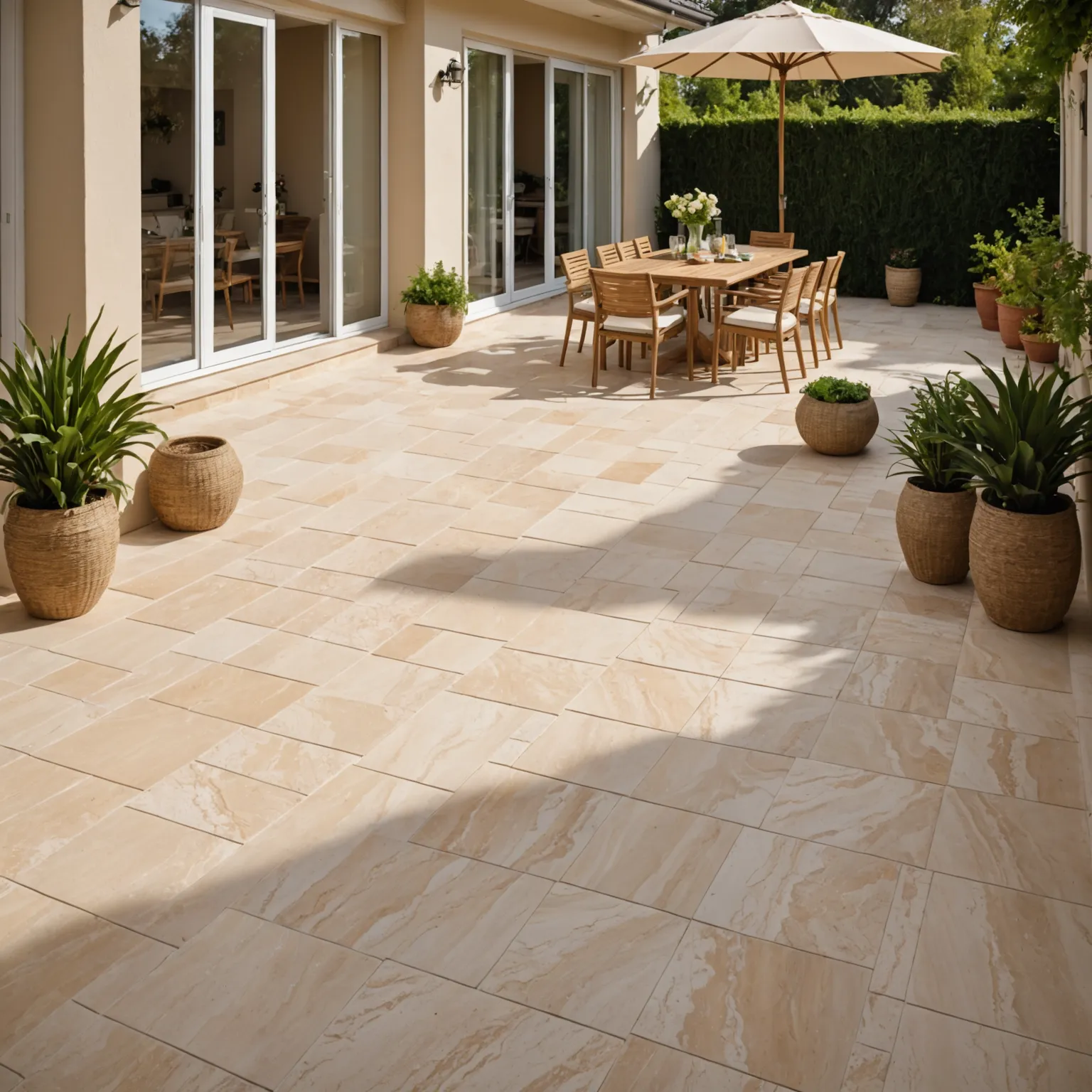
- Travertine reduces surface overheating compared to many artificial materials.
- Textured finishes enhance grip near water.
- With proper installation, service life exceeds two decades.
- Natural shades integrate smoothly with landscaping.
FAQ
Is travertine suitable for year-round outdoor use?
Yes, travertine performs well in freeze-thaw climates when installed correctly. Proper drainage and frost-resistant adhesives are essential. Mechanical snow removal is recommended instead of chemical deicers. With these precautions, the surface maintains its strength and structure through seasonal changes.
Does travertine become slippery around pools?
Slip resistance depends on finish type. Textured or brushed finishes provide reliable grip near water. Highly polished surfaces, on the other hand, may reduce traction and are not typically recommended for pool decks. Selecting the appropriate surface treatment is key to safety.
How much maintenance does travertine require?
Maintenance is straightforward. Regular rinsing and neutral cleaners are sufficient for most situations. Avoid acidic products and harsh scrubbing tools. Periodic resealing helps reduce moisture absorption and preserves appearance over time.
Can travertine be combined with other materials?
Yes, travertine integrates well with wood, metal, and other natural stones. On one hand, its neutral tones allow easy blending. On the other, its texture adds depth and character. Balanced design ensures cohesive visual results.
What is the expected lifespan of travertine paving?
When installed on a properly prepared base, travertine can last over 20 years. It does not lose structural integrity quickly and resists surface deterioration. Natural aging enhances character without compromising performance.
How do I choose the correct slab thickness?
Thickness depends on load requirements and base preparation. Standard residential terraces require moderate thickness, while heavy-use areas may need thicker slabs. Professional consultation helps align thickness with structural conditions and expected usage.
Will the color of travertine change over time?
Subtle tonal deepening may occur due to sun exposure. This is a natural process rather than a defect. Structural integrity remains intact, and many homeowners appreciate the evolving appearance of genuine stone.
Is travertine appropriate for larger public spaces?
Yes, provided load calculations and subbase preparation meet engineering standards. Travertine can withstand frequent foot traffic and environmental exposure. Careful planning and professional installation ensure reliable long-term performance.