Kiev, ave. Lobanovsky, 14


 +3 80 (50) 433-01-01
 Video
Video 3D Tour
Travertine Window Sills
In the early morning the house is still cool, the glass slightly fogged, and soft daylight settles on the windowsill. At moments like this, materials are felt rather than examined. Travertine is recognised immediately: the surface is warm to the touch, quietly textured, without artificial shine. A travertine windowsill does not draw attention to itself, yet it sets the tone for the entire window area. It is not a decorative accent for a photo, but a working surface used every single day.
When people talk about travertine windowsills, the conversation often stops at appearance. In reality, daily behaviour matters more. The stone must handle temperature differences, moisture from condensation, and occasional impacts. Travertine behaves predictably: it does not crack from cold glass in winter and does not warp under summer heat. With proper processing, such a windowsill remains stable for decades.
Many homeowners come to travertine after living with MDF or plastic. Swollen edges, stains that never fully disappear, surfaces that age too fast — these experiences push the choice toward natural stone. Travertine solves these issues through its material properties, not promises. That is why it is increasingly used not only in private houses, but also in city apartments.
Travertine windowsills: the key challenge is combining visual calm with everyday durability in the window zone. Natural stone eliminates swelling, deformation, and moisture-related damage common to coated materials. The result is a stable surface that ages naturally and remains easy to maintain over many years.
How travertine performs around windows
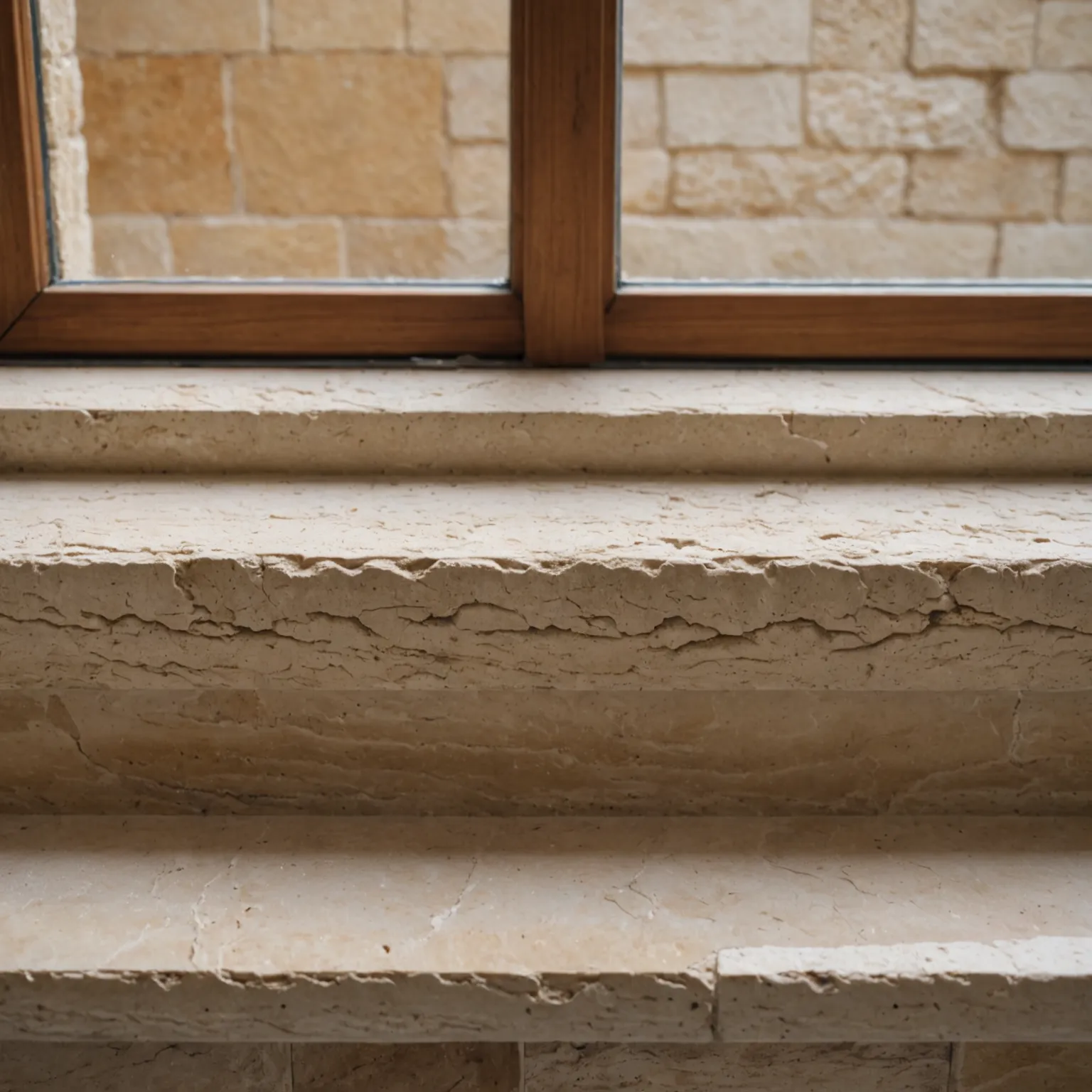
The window area is constantly exposed to external influence. Cold glass in winter, direct sunlight in summer, condensation throughout the year. Travertine is naturally porous, and this structure allows it to absorb stress without internal tension. That is why it reacts calmly to temperature shifts when installed correctly.
Installation plays a decisive role. The slab must rest evenly on its base without voids. When properly supported, even wide windowsills behave as a single solid element. This becomes especially important with panoramic glazing or deep window openings.
In everyday use, travertine requires no special routines. A soft cloth and neutral cleaner are sufficient. Water marks or traces from plant pots do not penetrate deeply when the surface is properly sealed. This removes many of the practical issues familiar to wooden or laminated alternatives.
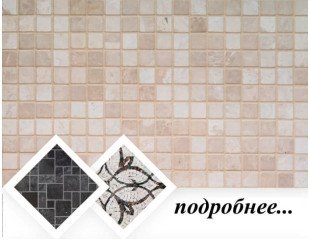
For projects where colour consistency matters, it is easier to work with a curated selection such as travertine collections. This helps avoid tonal differences and keeps the interior visually cohesive.
Texture and colour: why travertine never feels flat
Travertine is rarely uniform, and this is precisely its value. Subtle veins, natural pores, and tonal variation give each slab its own character. Daylight reveals one mood, evening light another. The surface reacts to light instead of reflecting it mechanically.
The colour range remains restrained: beige, cream, light sand tones. These shades work equally well with wood, plaster, stone, or modern metal frames. Travertine does not demand stylistic loyalty — it adapts quietly.
Surface finish influences everyday comfort. Polished travertine looks striking but shows water traces more easily. Honed or matte finishes are more forgiving in daily use, especially where windows are opened frequently. The stone retains its natural presence without looking staged.
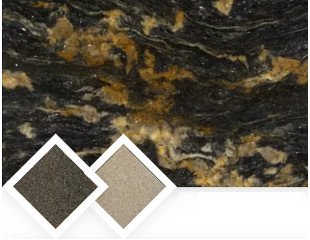
When combining materials, travertine pairs well with slate elements, which add contrast without visual conflict. In such cases, slate solutions are often used as accents while travertine remains the calm base.
Installers often note that travertine forgives small everyday mistakes. Minor scratches or marks do not feel like damage — they become part of the natural surface over time.
Thickness and edge profile: details that define comfort
Slab thickness affects both appearance and reliability. Thin windowsills look light but require perfectly prepared bases. Thicker slabs tolerate minor irregularities and feel more solid, especially in older buildings with uneven walls.
Edge profiles influence safety and perception. Straight edges emphasise clean geometry, while rounded edges soften the window zone and reduce accidental impacts. Both options are equally practical when finished properly.
Non-standard openings are common: bay windows, angled walls, deep reveals. Travertine is easy to shape, allowing precise adaptation to real geometry. Accurate measurements remain essential to ensure proper support.
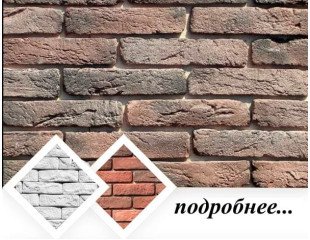
For more complex compositions involving reveals or accent walls, stone veneer offers flexibility without excess weight. In such cases, stone veneer works well alongside travertine windowsills.
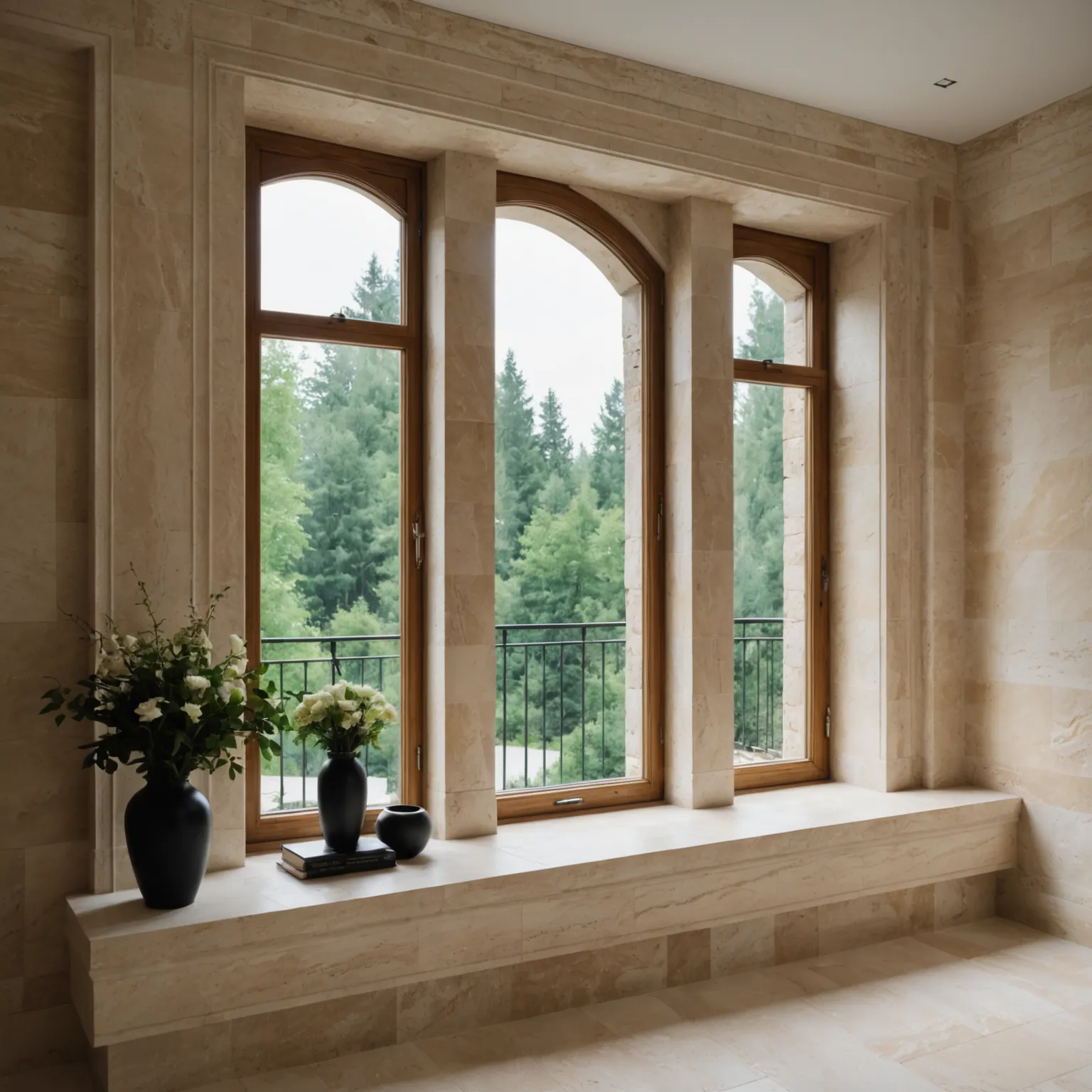
The second part focuses on how a travertine windowsill behaves after installation. It quickly becomes a small stage by the window: a place for a book, a cup of coffee, drying gloves after rain. At this point, marketing terms lose relevance. What matters is how the stone fits daily life without demanding caution.
Everyday care without complication
Travertine does not require special maintenance when properly prepared. Routine cleaning with neutral products is enough. There is no need for polishing or aggressive chemicals. The stone benefits from simplicity.
Water is unavoidable near windows. Condensation, plant trays, open ventilation. Travertine remains dimensionally stable, though prolonged standing water may temporarily alter surface tone. Once dry, the surface returns to normal, especially when sealed.
Household stains are best removed promptly, as with any light surface. Travertine does not chip like laminate and tolerates moisture better than wood. The key restriction is avoiding acidic cleaners that can react with natural stone.
For long-term use, periodic resealing may be considered, depending on intensity of use. Advice tailored to a specific interior can be obtained through direct consultation.
Practical advice: for windowsills with plants, honed or matte finishes are preferable. Water traces and dust are less visible, and the surface ages naturally.
Travertine as part of interior composition
Travertine integrates well with materials that have their own texture: wood, plaster, concrete, brick. It does not require perfect colour matching. Slight contrast often enhances its presence.
In modern interiors, travertine acts as a neutral anchor. In classic spaces, it adds weight without ornamentation. Compared to granite, it feels warmer; compared to marble, more forgiving in daily use.
Where windowsills are visually prominent, the stone surface interacts with light throughout the day. This changing perception adds depth without visual noise.
When planning larger window zones or logistics, delivery conditions should be considered early. The delivery and return terms help set realistic expectations.
Examples of travertine applications
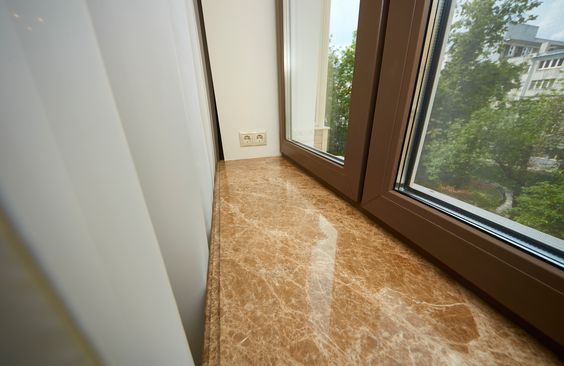
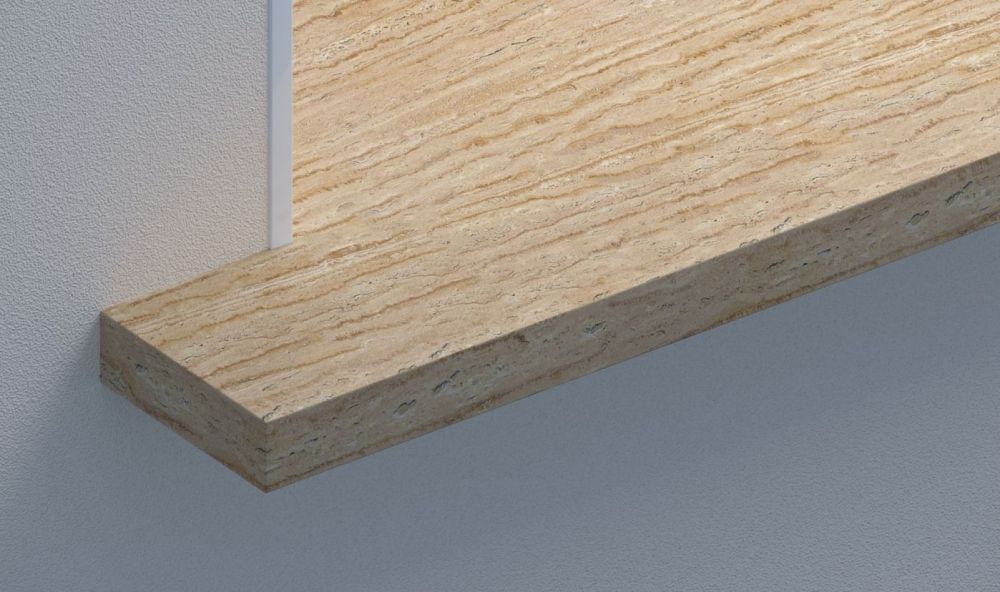
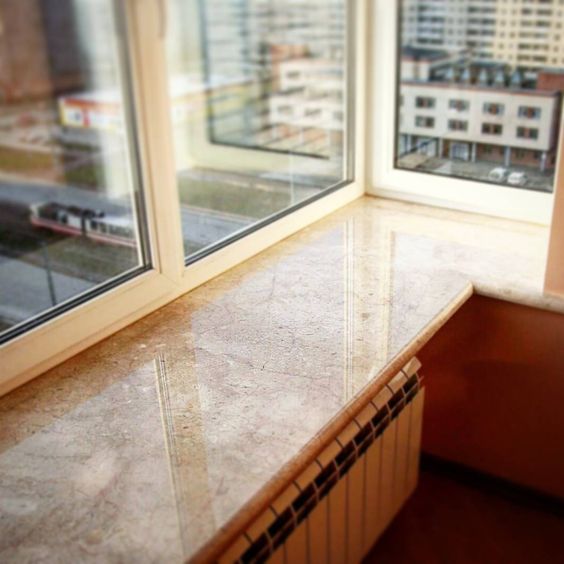
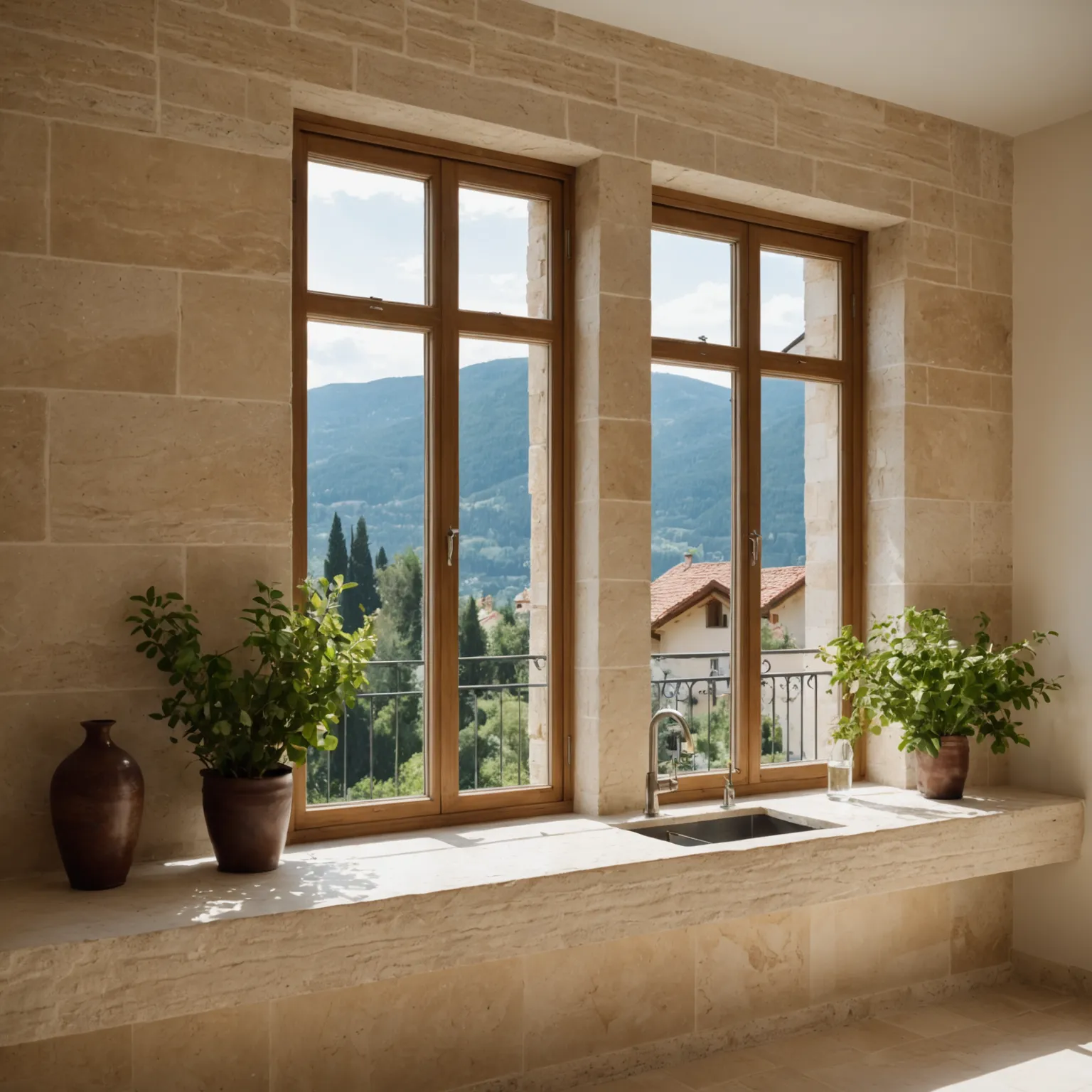
Functional window zones
Modern interiors often extend the windowsill beyond its traditional role. It becomes a shelf, a seating area, or a continuation of a work surface. Travertine supports this use through dimensional stability.
Ergonomics matter. Stone does not flex, so depth and height must be planned carefully. When done correctly, the window zone feels intentional rather than improvised.
In family spaces, travertine handles everyday wear calmly. Marks from toys or minor impacts do not compromise the surface. Over time, the stone maintains its integrity better than coated alternatives.
On sunny exposures, travertine retains colour stability. It does not yellow or fade noticeably, even with large glazed areas.
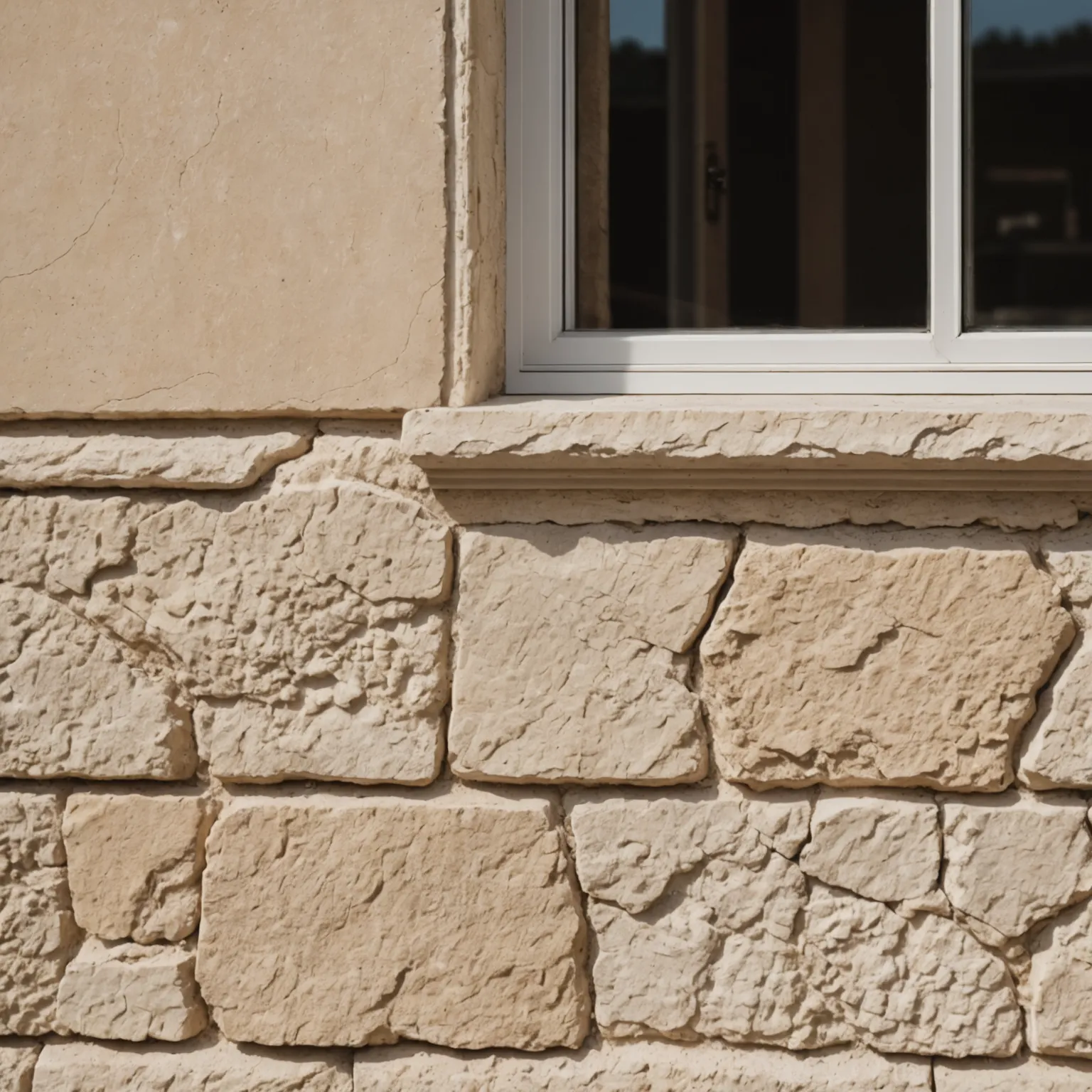
Material comparison in real use
Compared to granite, travertine feels warmer and visually softer. Marble offers elegance but reacts more strongly to household acids. Engineered stone provides uniformity but lacks the depth of natural texture.
Travertine is often chosen for balance. It combines natural appearance with everyday resilience. It is not fragile, nor overly industrial.
When the windowsill serves more than a decorative purpose, travertine proves especially practical. The choice depends on lifestyle rather than trends.
| Material | Moisture response | Touch | Long-term change |
|---|---|---|---|
| Travertine | Stable | Warm, matte | Natural ageing |
| Granite | Very resistant | Cold | Minimal change |
| Marble | Sensitive | Smooth | Surface dulling possible |
Field observation: in active households, travertine windowsills are rarely replaced during major renovations. They remain a stable element around which the interior evolves.
In one apartment with panoramic glazing, travertine windowsills were installed over ten years ago. Since then, wall finishes and flooring have changed, yet the stone remains intact, without cracks or worn edges. This quiet durability is often what defines long-term satisfaction.
- Travertine tolerates temperature shifts around windows.
- Matte finishes reduce visible water marks.
- Proper installation matters more than slab thickness alone.
- Natural ageing enhances texture rather than degrading it.
FAQ
Does travertine absorb water on windowsills?
Short-term contact with water is not a problem for travertine. The stone does not swell or deform, and with proper sealing moisture does not penetrate deeply. Prolonged standing water may temporarily darken the surface, but this usually disappears after drying.
Is travertine suitable for kitchen windows?
Yes, travertine performs well near kitchen windows. It handles temperature changes and moisture reliably. While acidic cleaners should be avoided, normal household care is sufficient. Matte finishes are recommended for active use.
Can you sit on a travertine windowsill?
Yes, if the slab thickness and support are properly designed. Travertine does not flex, so structural support must be continuous. With correct installation, it safely handles seating loads.
Which edge profile is more practical?
Straight edges offer clean lines, while rounded edges provide additional safety. Both are practical when finished properly. The choice depends on interior style and usage.
Does travertine change colour over time?
Travertine may develop a warmer tone as it ages, but it does not fade significantly. This natural maturation is often considered a benefit rather than a flaw.
Are special cleaning products required?
No special products are required. Neutral cleaners work well. Avoid acidic or abrasive substances to preserve the surface.
Can travertine be made in custom shapes?
Yes, travertine is easy to process into custom forms, including bay windows and angled openings. Accurate measurement and proper support are essential.
How does travertine compare to engineered stone?
Engineered stone offers uniformity, while travertine provides natural depth and texture. In window applications, travertine often feels warmer and more organic over time.