Kiev, ave. Lobanovsky, 14


 +3 80 (50) 433-01-01
 Video
Video 3D Tour
Travertine Countertops
Travertine is increasingly chosen for countertops not because of fashion, but because of a clear balance between appearance and everyday use. This stone does not feel cold or overly “architectural”. Its porous structure adds warmth and a sense of lived-in texture to the space. In kitchens and bathrooms, it feels like part of the architecture rather than a separate furniture element. That is why travertine countertops are often planned at the design stage, not added later.
In practice, homeowners usually have to choose between visual impact and daily comfort. Glossy surfaces quickly show marks, while overly dense stones can make interiors feel heavy. Travertine sits comfortably between these extremes. It does not dominate the space, yet it constantly supports a sense of balance and calm, especially under changing natural light throughout the day.
Another important aspect is how the material ages. Travertine does not look “tired” after a few years. Minor traces of use are perceived as natural patina rather than damage. In interiors where character matters more than sterile perfection, this quality becomes a clear advantage.
Travertine countertops: the main challenge is combining expressive appearance with practical daily use. Natural travertine solves this through warm texture, stable geometry, and predictable behavior in everyday conditions. The owner gets a working surface that blends naturally into the interior and remains comfortable to use over many years.
Why travertine works well for countertops
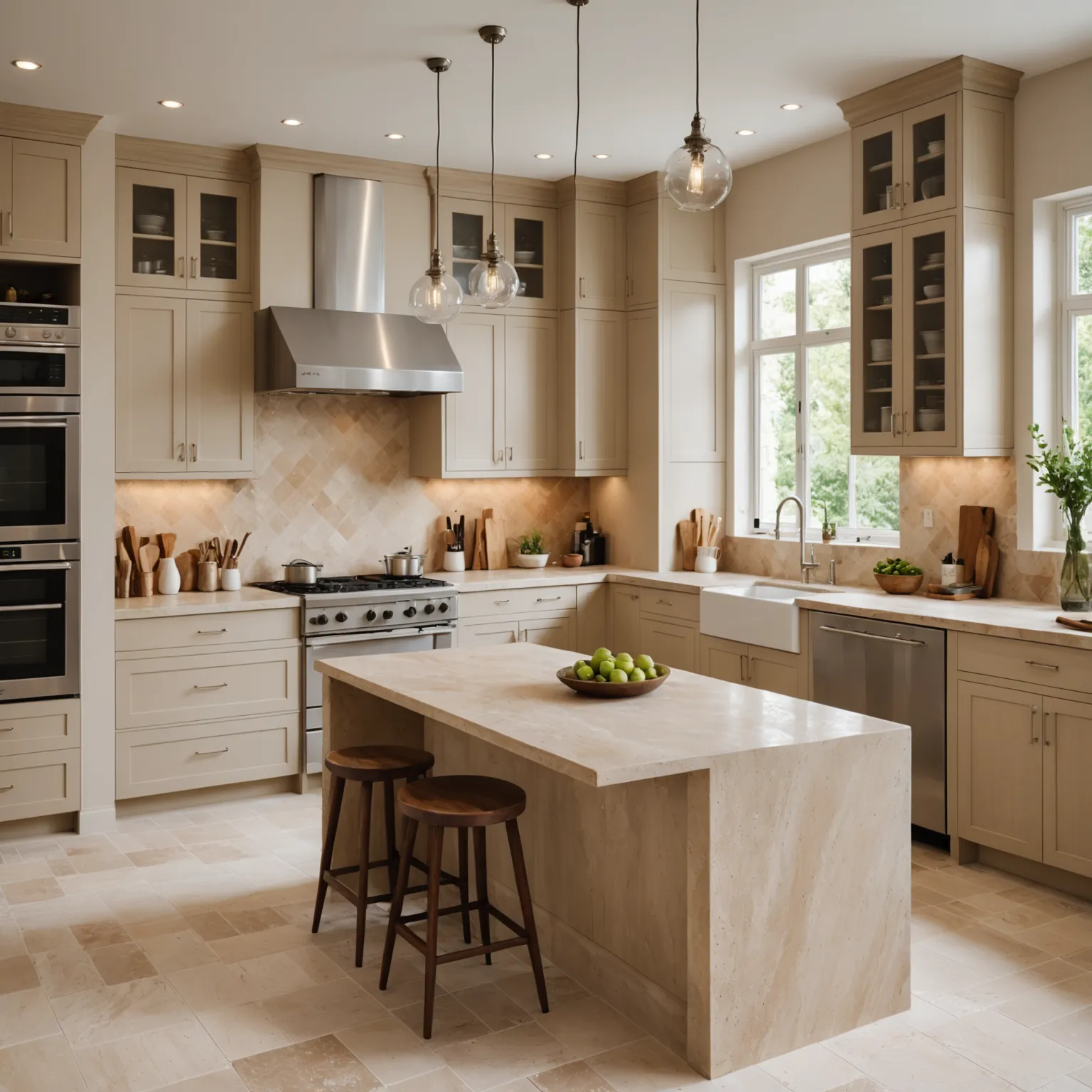
Travertine forms in layers, and this directly influences how it behaves in an interior. It does not create sharp reflections and interacts with light softly. In kitchens, this is especially noticeable in the morning and evening when lighting changes. The stone does not compete with appliances or furniture but visually connects them into a single composition.
In terms of density, travertine is less compact than granite, yet it feels visually lighter. Even with a substantial thickness, the countertop does not look bulky. This allows the material to be used in smaller spaces without overwhelming the room.
From a technical point of view, travertine is easy to process. Edges, sink cutouts, and openings for cooktops can be finished cleanly and accurately. For this reason, travertine is often chosen for complex shapes and custom layouts.
If the interior already includes marble elements, a travertine countertop feels like a natural continuation of the design rather than an unrelated accent.
Daily surface behavior in real use
One of the most common concerns is porosity. In reality, properly treated travertine does not absorb stains the way many people expect. Protective sealers work within the stone rather than forming a visible film. The surface remains natural to the touch.
In everyday use, this means a relaxed attitude toward water, dishes, and typical kitchen tasks. The stone does not require constant supervision, but it also does not tolerate aggressive treatment. If coffee or wine spills, wiping the surface promptly is enough.
Over time, travertine does not deteriorate — it evolves. Light traces of use spread evenly and do not stand out visually. In homes with an active daily rhythm, this quality feels natural rather than problematic.
In projects where paving stone finishes are used outdoors on terraces or entrance areas, travertine indoors creates a logical visual connection between exterior and interior spaces.
Visual character and material combinations
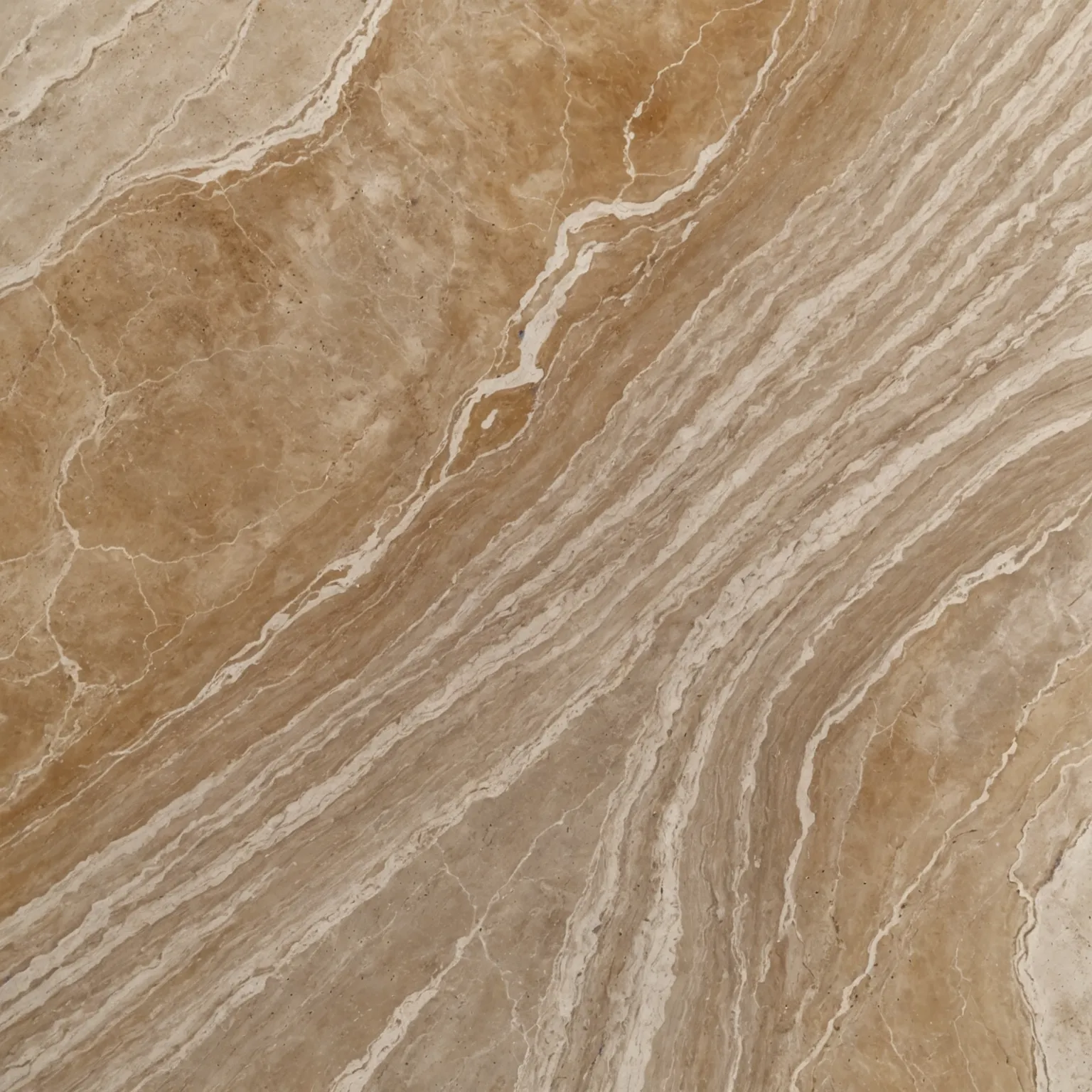
Travertine rarely has a uniform color. This variation is one of its main strengths. Subtle tonal shifts, veins, and micro-pores create depth and visual interest. On large surfaces, this looks alive and does not require additional decoration.
The stone pairs well with wood, matte metal, and textured plaster. In interiors without gloss and chrome, it reveals its character especially well. Even minimalist furniture appears more thoughtful against a travertine surface.
Scale also matters. In bright kitchens, travertine enhances the feeling of space. In warmer interiors, it adds calm and balance. It does not pull attention toward itself but works as a stable visual background.
When decorative accents made of natural pebbles are used, travertine supports the same natural logic without breaking the overall harmony.
Craftsmen’s observation: in homes where travertine countertops are used daily, owners rarely consider replacing them during interior updates. The stone remains relevant even after furniture and finishes change.
Technical details and long-term behavior become especially important once the countertop moves from a concept to a finished installation. At this stage, expectations meet real conditions: humidity, temperature changes, and daily habits. Travertine responds well to these factors when the installation is done correctly. Problems usually come not from the stone itself, but from shortcuts during preparation.
Installation and processing considerations
The performance of a travertine countertop depends heavily on how it is installed. An improperly prepared base or unsuitable adhesive can cause micro-movements over time. These issues rarely appear immediately and often become noticeable only after seasonal temperature or humidity changes. That is why installation quality outweighs marketing descriptions.
Thickness selection is not purely aesthetic. In kitchens with regular use, a structural reserve is necessary even if a thinner edge is desired visually. Skilled installers often create a visually slim edge while keeping additional thickness where support is critical. This approach balances design and durability.
Sink and cooktop areas require special attention. Cutouts and edges must be sealed correctly so that moisture and steam do not work against the stone. When these details are handled properly, travertine remains stable without darkening or deformation.
In projects where several stone elements must align in tone and texture, early coordination saves time and prevents mismatches. Consulting through the contact page helps clarify technical details before work begins.
Maintenance without extremes
Travertine does not require complex maintenance routines, but it also does not tolerate neglect. Regular dry or lightly damp cleaning is usually sufficient. Neutral cleaners without aggressive acids are all that is needed for daily care. In practice, this is no more demanding than maintaining a quality wooden surface.
Protective sealing should be renewed based on surface behavior rather than a fixed schedule. If water stops beading and begins to absorb more quickly, it is time to refresh the protection. This typically happens every few years, not every season.
It is important to understand that travertine is not meant to look brand new forever. Its value lies in natural aging. Subtle changes in tone are part of the material’s character, not flaws.
When ordering with delivery, packaging and transport conditions matter. Clear information on the delivery page helps avoid misunderstandings before installation even starts.
Where travertine is a good fit and where it is not
Travertine countertops perform best in residential spaces with predictable use. Kitchens, bathrooms, and bar areas in private homes are typical examples. In these environments, the stone shows its strengths without constant stress.
Commercial spaces with high foot traffic or aggressive use have different requirements. Denser materials are often preferred there, where visual subtlety is less important than resistance. Travertine can still be used, but only with strict control over conditions.
Looking ahead matters. Family size changes, daily routines evolve, and usage patterns shift. Choosing stone with these future scenarios in mind reduces the risk of disappointment.
When conditions are evaluated realistically, travertine becomes a deliberate choice rather than a compromise.
Comparison with alternative materials
Travertine is often compared with marble, quartz, and granite. Each material has its own character, and no option is universally superior. Travertine stands out for visual softness and tactile warmth, while being less dense than granite.
Quartz is stable and predictable but lacks natural variation. Granite is extremely durable but visually heavier. Marble is expressive yet more demanding in care. Against this background, travertine occupies a comfortable middle ground.
In real life, decisions are rarely made based on specifications alone. Daily experience and visual comfort often matter more than technical charts.
| Material | Visual impression | Care level |
|---|---|---|
| Travertine | Warm, natural | Moderate |
| Marble | Expressive, contrasting | High |
| Granite | Solid, heavy | Low |
Real-world experience
In real interiors, travertine rarely becomes a source of issues. Most concerns arise from expectations rather than material limitations. When chosen consciously, the stone behaves exactly as intended.
This is especially clear in homes where the countertop is used daily but without extremes. Travertine handles routine activity calmly and does not demand constant attention.
Practical advice: when in doubt, choose a matte or lightly brushed finish. On such surfaces, signs of use appear natural and do not become visually distracting.
Examples from private projects
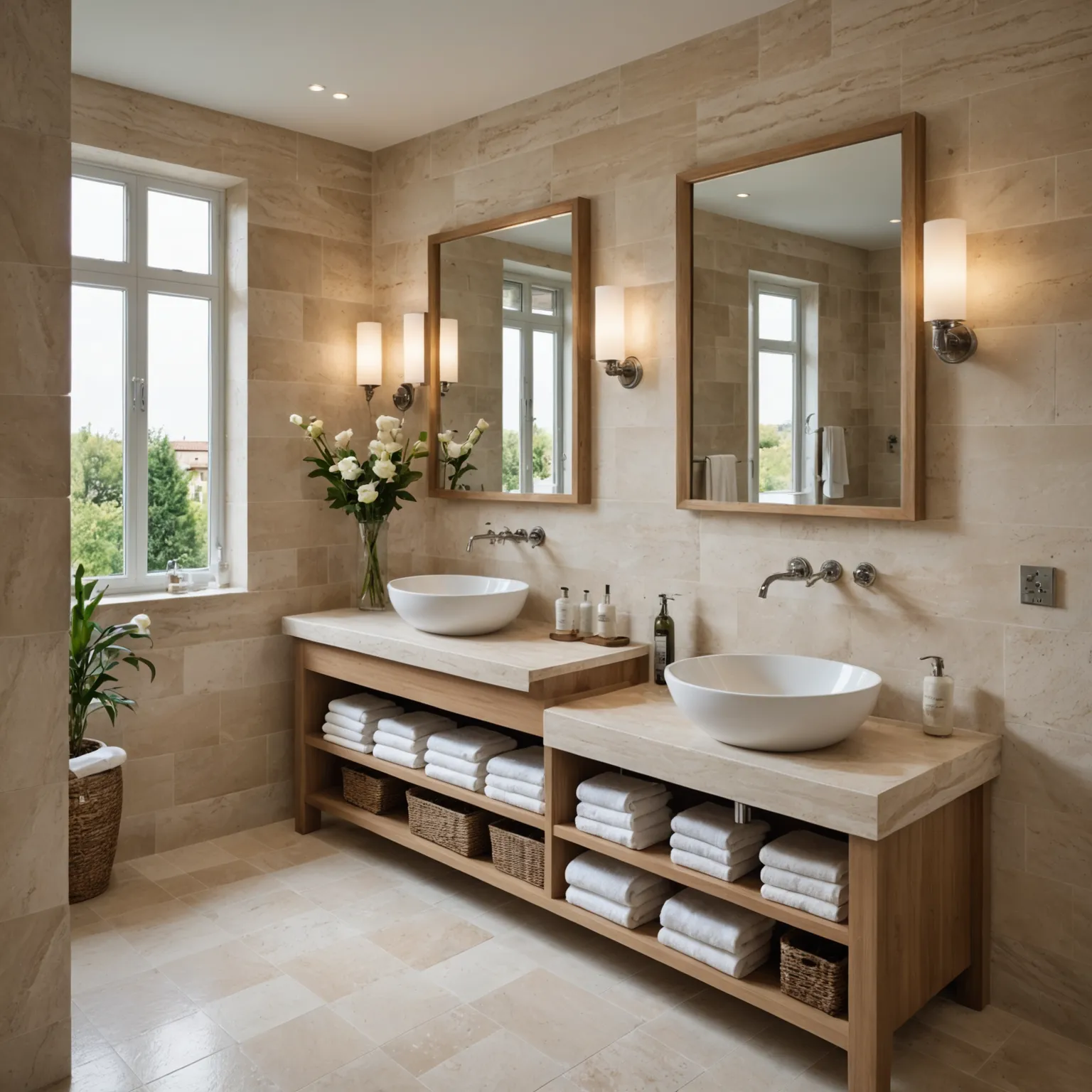
In one country house project, a travertine countertop was installed in a kitchen with direct access to a terrace. During summer, doors remain open most of the time, allowing dust and moisture inside. After several years, the surface retained its integrity, and minor marks became part of the home’s character.
Mini case: in a family with two children, a travertine countertop has been used daily for more than seven years. During this time, kitchen fronts and appliances were replaced, but the stone remained intact without cracks or delamination.
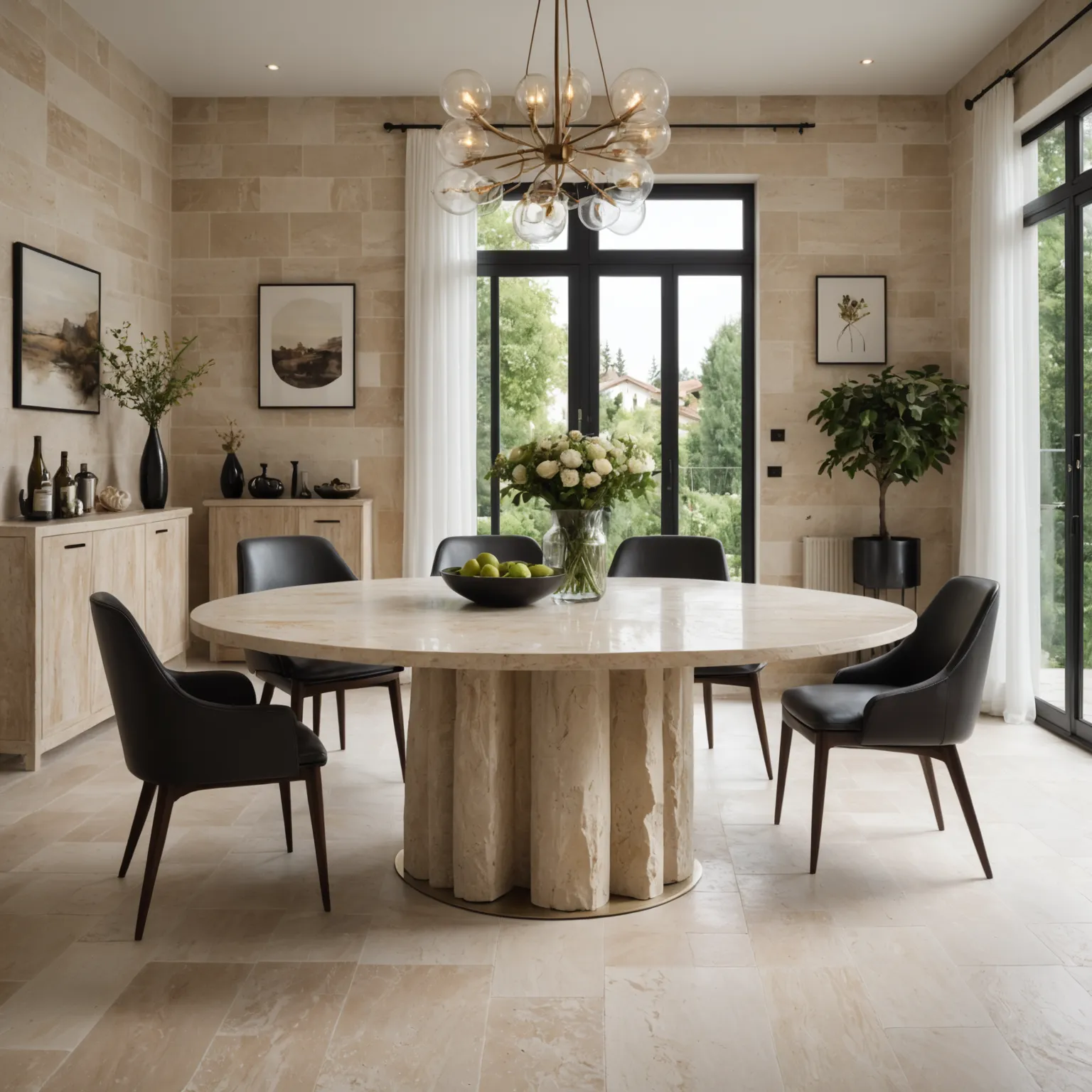
- Travertine is chosen for balance, not extremes.
- Installation quality matters more than stone grade.
- The material ages naturally and predictably.
- Conscious choice leads to long-term satisfaction.
FAQ
Is travertine suitable for heavily used kitchens?
Yes, provided the stone is properly sealed and installed. Travertine handles daily kitchen activity well when aggressive cleaners and mechanical abuse are avoided. It is a natural material, not an industrial composite, and should be treated accordingly.
Will stains appear over time?
With correct sealing, permanent stains are unlikely. At the same time, subtle tonal changes may occur and are considered normal for travertine. Some owners appreciate this natural aging, while others prefer more uniform materials.
How does travertine compare to marble in everyday use?
Travertine is visually calmer and generally less reactive to acids than marble. Marble can be more dramatic but often requires more attentive care. In daily use, many homeowners find travertine more forgiving.
Can travertine be used in bathrooms?
Yes, travertine performs well in bathrooms when properly sealed. Moisture is not an issue as long as protective treatment is maintained and basic care guidelines are followed.
How often should sealing be renewed?
Typically every few years, depending on usage intensity. If water begins to absorb rather than bead, it is time to refresh the sealer. This is maintenance, not a sign of failure.
Does travertine work in light interiors?
Yes, especially in light and warm interiors. Travertine enhances spatial openness and avoids visual heaviness, making it suitable for smaller kitchens and bathrooms.
Is ordering a travertine countertop complicated?
The process is straightforward. Measurements, edge treatment, and timelines are agreed in advance. For consultation and estimates, many clients prefer direct contact, including by phone at +380(50)433-01-01.
When is travertine not the best choice?
In environments with extreme mechanical load or aggressive chemical exposure, alternative materials may be more suitable. In most residential scenarios, however, travertine remains a balanced and reliable option.