Kiev, ave. Lobanovsky, 14


 +3 80 (50) 433-01-01
 Video
Video 3D Tour
How to choose a chalet-style fireplace for a modern interior?
The day in a mountain-style home often starts with the soft crackle of firewood and a slow, steady warmth spreading through the room. A chalet-style fireplace is not just a heating element here, but the emotional center of the interior. You notice the texture of stone under your fingers, the faint scent of wood, the calm rhythm of the space. In such an atmosphere, choosing the right fireplace becomes a matter of feeling, not decoration.
Modern interiors increasingly combine clean lines with natural materials. Chalet style fits this approach perfectly, but only when every detail is considered carefully. A fireplace should feel grounded and authentic, as if it has always been part of the house. The wrong material or proportions can instantly break that balance.
Most mistakes happen at the selection stage. A poorly chosen stone or oversized structure often leads to costly alterations later. Understanding how chalet fireplaces work in real interiors helps avoid these problems from the start.
How to choose a chalet-style fireplace for a modern interior: the main challenge is combining visual weight with a sense of comfort. Natural stone solves this by offering thermal stability, natural texture, and long-term durability. The homeowner gains a functional centerpiece that maintains warmth and atmosphere over time.
Architectural features of chalet-style fireplaces
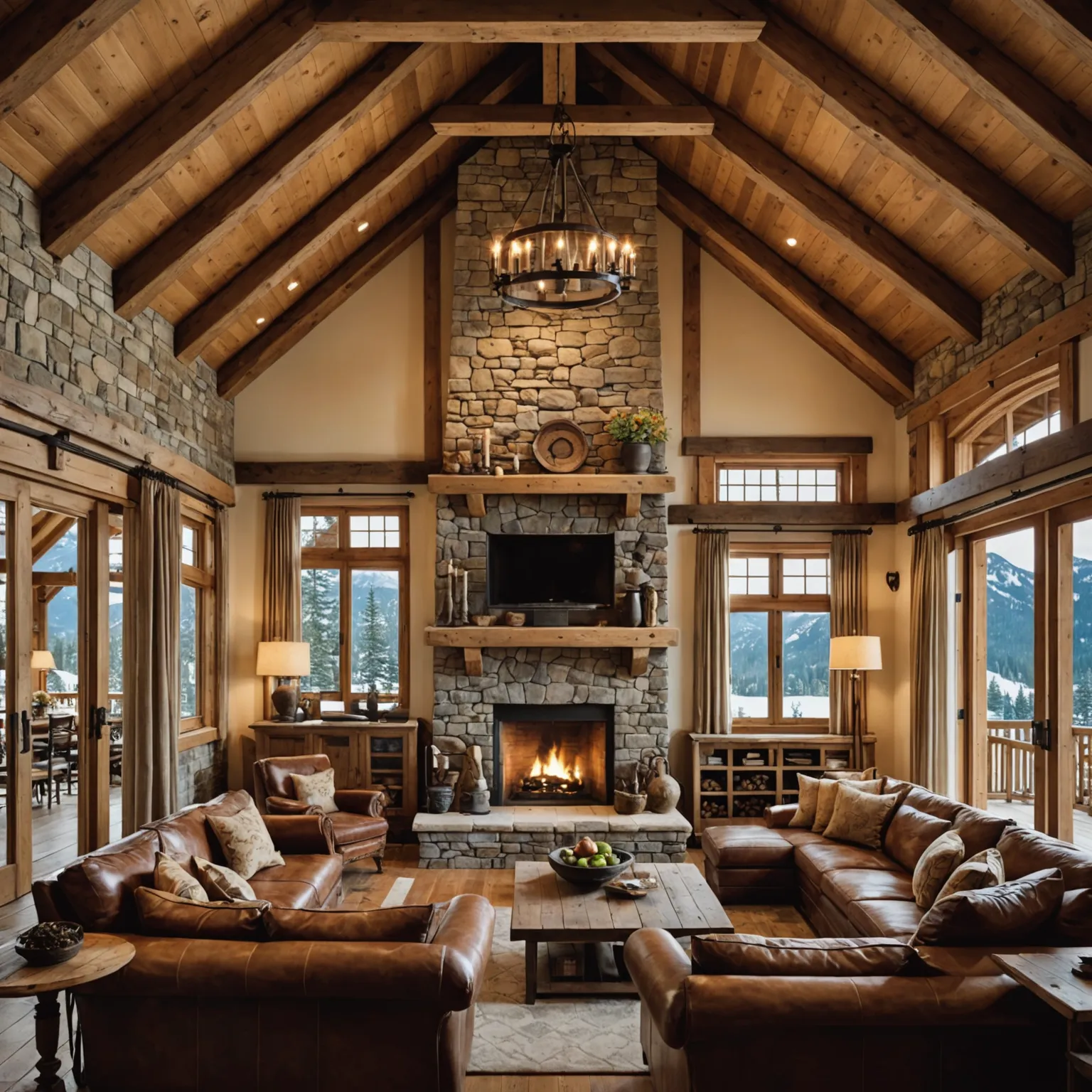
Chalet fireplaces are defined by their solid, grounded construction. They visually anchor the room and create a sense of stability. This effect is achieved through wide portals, thick stone layers, and low, confident proportions.
Simple geometry works best. Straight lines and restrained forms support the calm nature of the style. Excessive ornamentation often feels out of place and distracts from the material itself.
Scale matters. A fireplace that is too small disappears, while an oversized one overwhelms the space. The dimensions should always relate to ceiling height and room volume.
Practical considerations are equally important. Easy access for cleaning, proper heat protection, and safe clearances should be part of the architectural design from the beginning.
Selecting natural stone for the fireplace
The character of a chalet fireplace is shaped by the stone itself. Its surface should remain natural, with visible layers and color transitions. Materials like natural quartzite stone perform well under high temperatures and preserve their appearance.
Structural stability is critical. Stones with weak internal structure may crack or discolor over time. In chalet interiors, such flaws become immediately noticeable.
Color tones are usually warm and muted. Soft gray, beige, and earthy shades blend naturally with wood and textiles. Strong contrasts rarely support the intended atmosphere.
Stone format also influences perception. Large slabs create a monolithic feel, while smaller elements add rustic character. The choice depends on the overall interior concept.
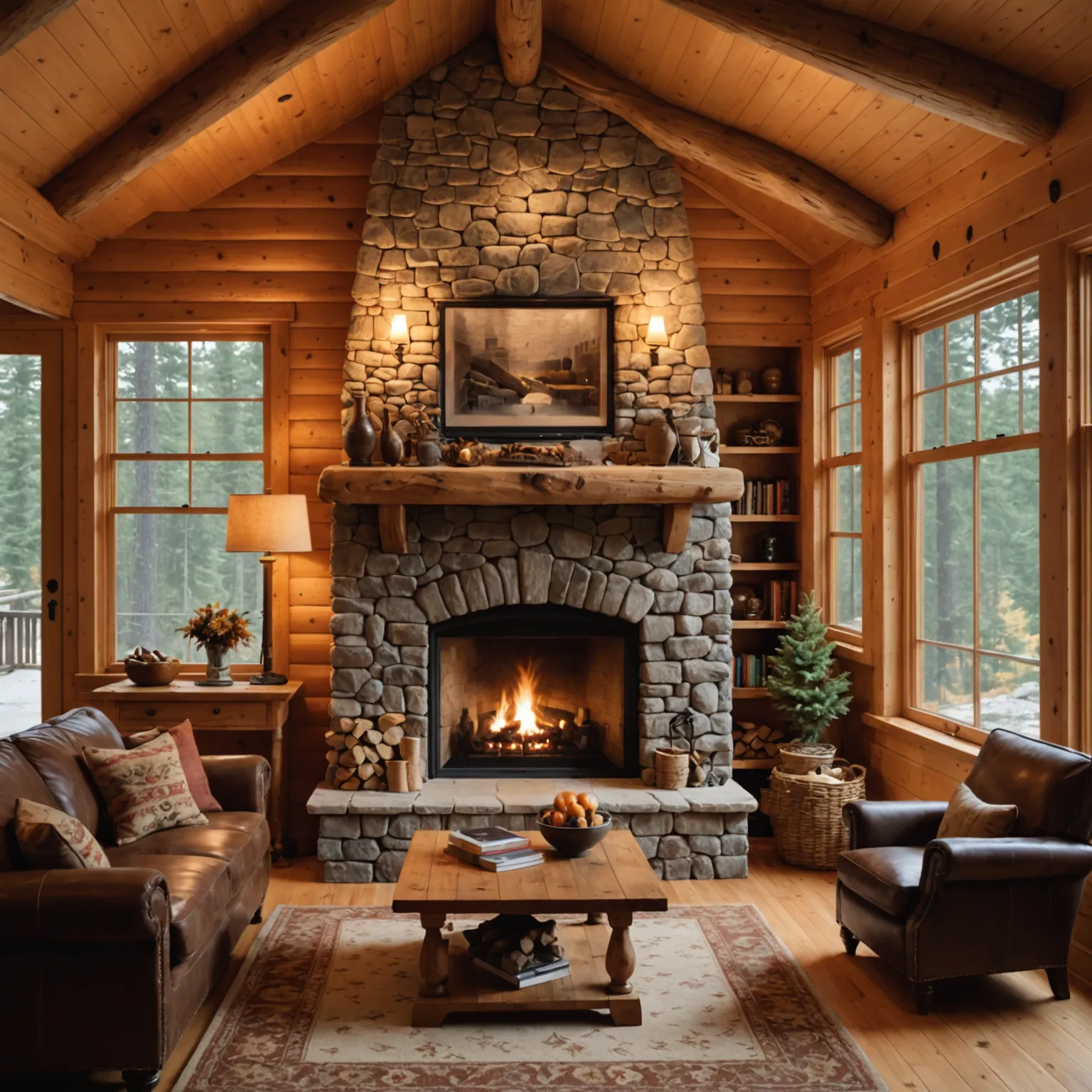
Experienced installers note that chalet fireplaces look best when the stone surface is left as natural as possible, without excessive polishing or artificial effects.
Integrating a chalet fireplace into a modern interior
A modern interior does not conflict with chalet style when contrasts are balanced correctly. The fireplace becomes a visual anchor against clean walls and minimal furniture. This contrast enhances both elements.
Combining warm stone with cooler materials such as concrete, metal, or glass adds depth. The fireplace remains the emotional core without dominating the space.
Lighting plays a key role. Soft, indirect light highlights the stone texture and creates evening comfort. Harsh lighting flattens the material and reduces its impact.
In open-plan layouts, fireplaces often serve as zoning elements. In such cases, stone cladding solutions that look consistent from multiple angles are especially effective.
Functionality and fireplace types
Before choosing stone, it is important to define the fireplace type. Wood-burning fireplaces offer the most authentic chalet experience but require proper chimneys and regular maintenance.
Electric models are easier to install and maintain but lack the sensory depth of real fire. Gas fireplaces provide a compromise, combining convenience with controlled flame.
Placement influences functionality. Corner fireplaces save space, while central designs emphasize symmetry. Each option has technical and visual limitations.
Regardless of type, safety standards must be respected. Heat resistance and correct installation determine long-term reliability.
Maintaining a chalet-style fireplace
Natural stone does not require complex maintenance, but consistency matters. Over time, soot and dust settle into surface pores, altering appearance.
A gentle seasonal cleaning is usually sufficient. Harsh chemical cleaners should be avoided, as they may damage the stone surface.
Joint inspection is also important. Maintaining grout integrity prevents moisture penetration and extends service life.
Proper care preserves both visual quality and the comfort the fireplace provides.
Common mistakes during selection
Relying solely on photographs is a frequent mistake. Stone behaves differently under real lighting conditions and spatial context.
Cost-cutting on materials often leads to visible wear or safety concerns. In chalet interiors, such compromises are immediately noticeable.
Incorrect proportions disrupt spatial harmony. The fireplace should support the room, not overpower it.
Ignoring professional advice often results in unnecessary revisions later.
Comparison of popular stone solutions
| Material | Heat resistance | Visual character |
|---|---|---|
| Quartzite | High | Deep natural texture |
| Sandstone | Medium | Warm earthy tones |
Practical advice: always view stone samples in real lighting conditions before making a final decision.
Case example: in a countryside home near Kyiv, a quartzite fireplace became the visual center of the living area while maintaining a calm, balanced atmosphere.
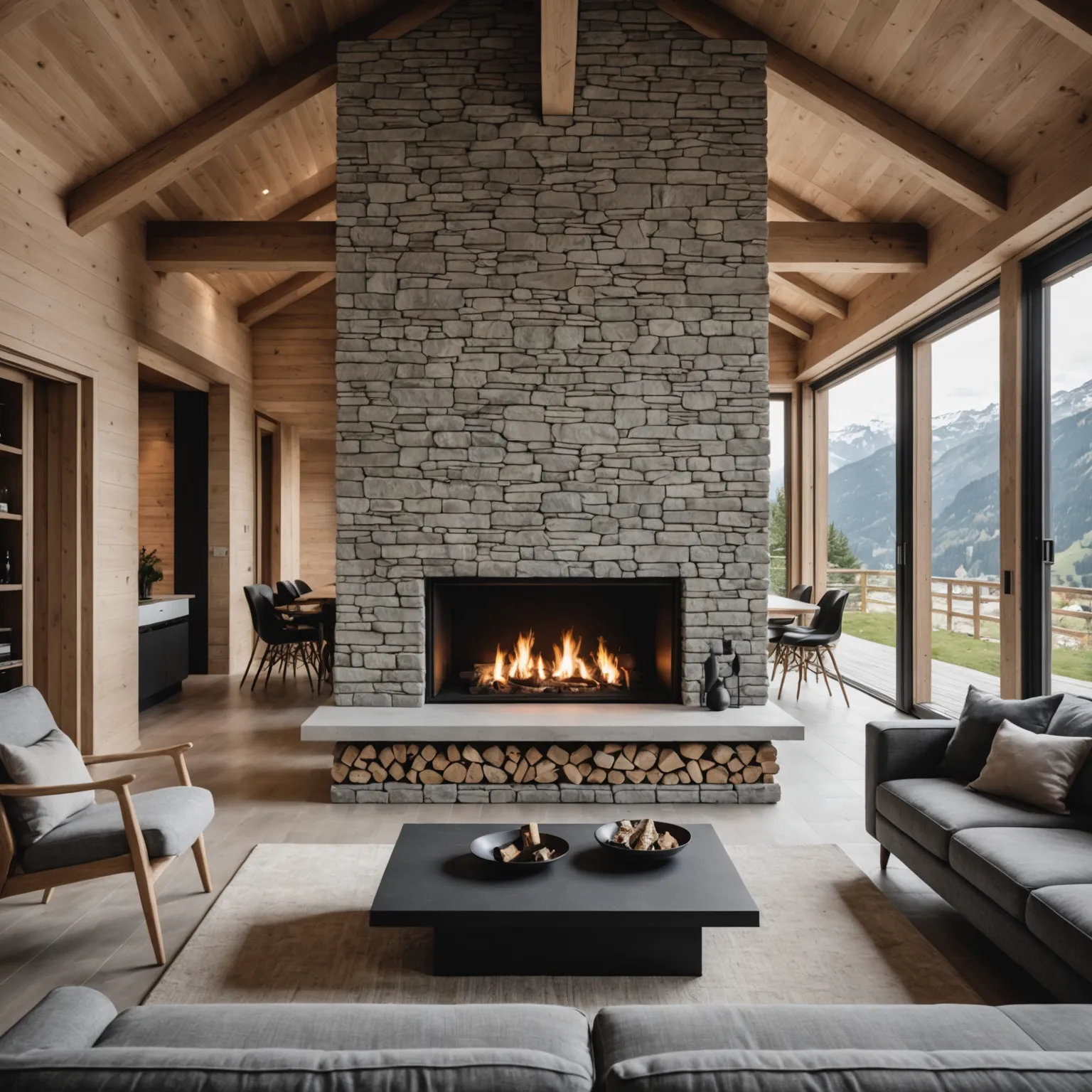
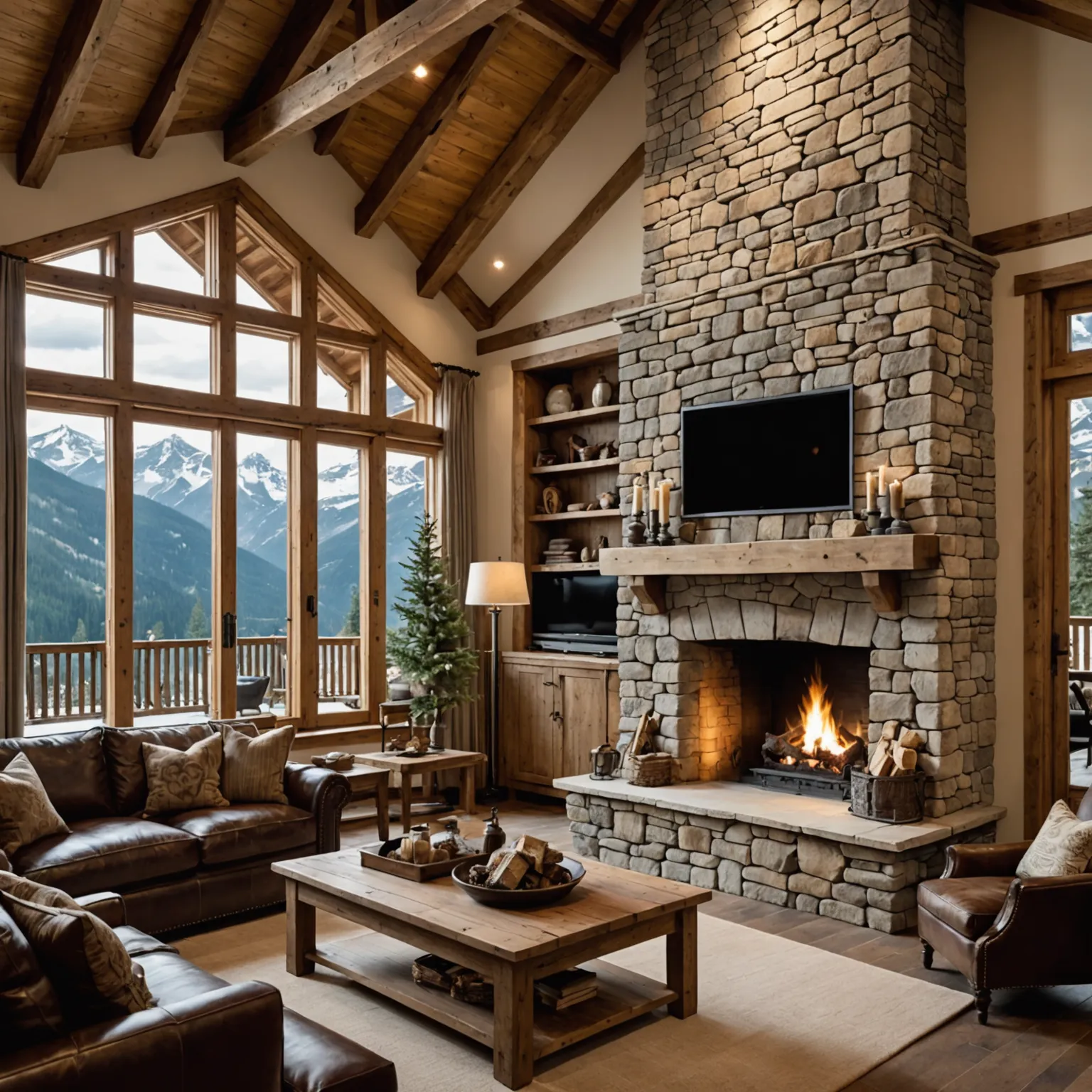
- Chalet fireplaces rely on solid, grounded architecture.
- Natural stone ensures thermal stability and authenticity.
- Balanced contrasts define successful modern integration.
FAQ
Can chalet-style fireplaces work in urban apartments?
Yes, when adapted in scale. Compact stone fireplaces with restrained portals can function as accents without overwhelming limited space.
Which stone performs best under high heat?
Quartzite and granite offer strong thermal resistance and maintain color stability during prolonged heating.
Can fireplaces be combined with underfloor heating?
Yes, but heat distribution must be calculated carefully to avoid localized overheating.
What affects the cost of stone fireplace cladding?
Price depends on stone type, format, and installation complexity. For accurate estimates, consultation via +380(50)433-01-01 is recommended.
Is special maintenance required?
Routine cleaning and joint inspection are usually sufficient. Aggressive chemicals should be avoided.
Does lighting affect stone appearance?
Lighting strongly influences texture perception. Warm indirect light enhances depth, while cold light flattens surfaces.
Should the fireplace be the main focal point?
In large spaces, yes. In smaller rooms, corner placement often provides better balance.
Where can materials be selected and ordered?
Material selection and support are available via the official website, with detailed contact information and delivery conditions.