Kiev, ave. Lobanovsky, 14


 +3 80 (50) 433-01-01
 Video
Video 3D Tour
Slate in Interior Design: Selection and Installation Tips
During a home renovation, the choice of finishing materials quickly moves from aesthetics to practicality. Slate often raises doubts because of its pronounced natural texture and its difference from standard tile finishes. It is usually considered cautiously, especially for living spaces rather than technical areas. At this stage, it is important to understand where slate truly performs well and what problems it actually solves in interior design.
In practice, slate is most often selected for areas with higher loads and regular contact with moisture. Entryways, kitchens, bathrooms, and staircases are the main zones where it is applied. The stone tolerates daily use, temperature changes, and humidity without losing its structure. Most issues arise not from the material itself, but from incorrect format selection or surface treatment.
Slate in interior design is primarily a structural solution, not just a decorative one. Its texture immediately defines the character of the space and does not work well with random combinations. For this reason, understanding the properties of the stone, its application zones, and installation requirements is essential before purchase. This approach helps achieve predictable results without costly rework.
Slate in interior design: selection and installation tips: the main challenge lies in choosing the right texture and application area. Natural slate provides a wear-resistant surface with a natural feel and minimal maintenance. The homeowner gains a material that remains visually stable under long-term use.
Where slate works best in residential interiors
Slate is most commonly used in areas where resistance to mechanical stress and moisture is critical. In entryways, it withstands constant contact with shoes, dirt, and water without surface degradation. In bathrooms, the stone provides a safe surface due to its naturally textured finish. With proper treatment, it remains comfortable in everyday use.
In kitchens, slate is applied to floors, backsplashes, and accent walls. It handles steam, temperature fluctuations, and everyday spills well. When protected with suitable sealers, it tolerates standard household cleaning products. Visually, slate pairs well with wood, metal, and restrained cabinet finishes.
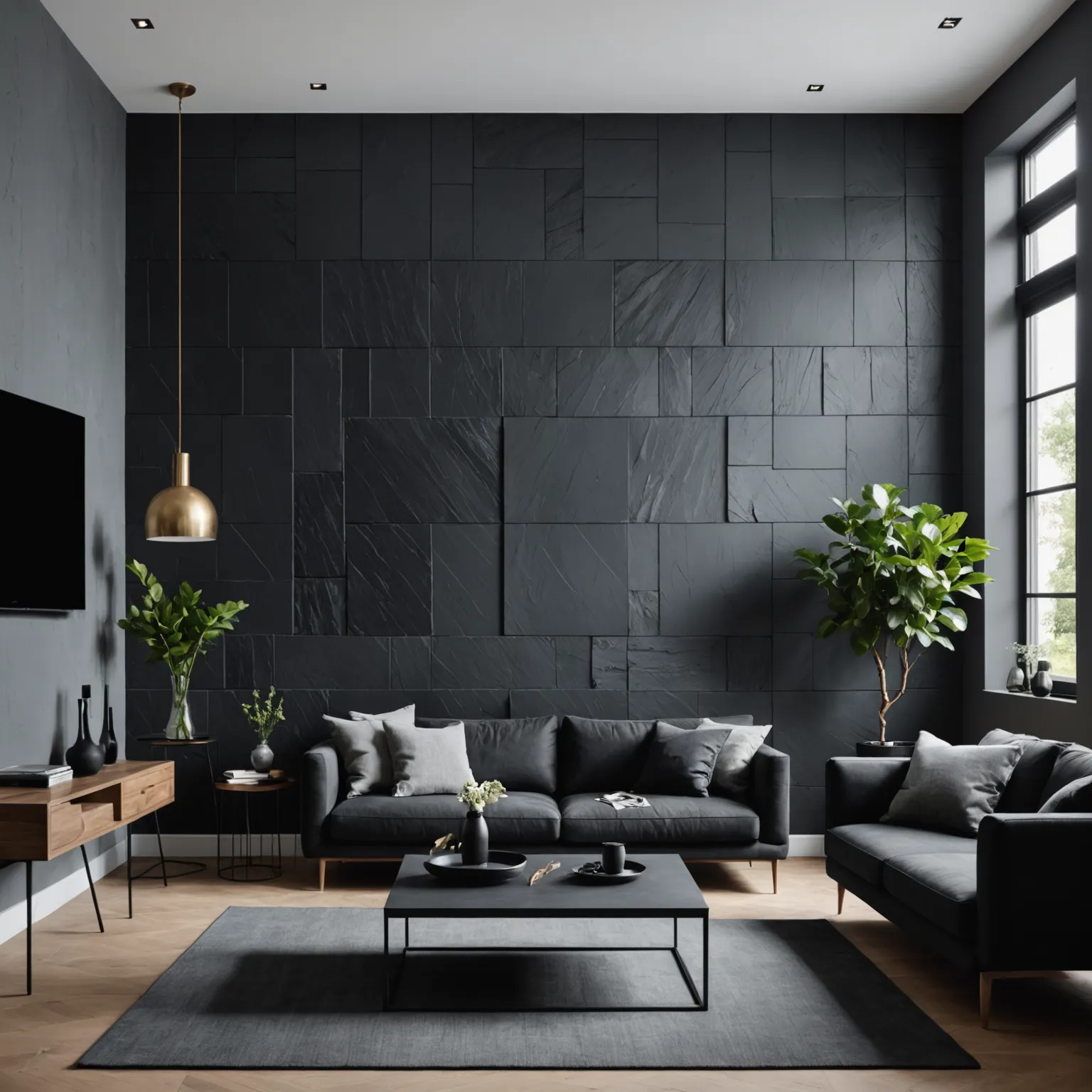
In living spaces, slate is usually applied in a more controlled way. Fireplaces, niches, and feature walls are the most common examples. Here, the stone acts as an accent rather than a dominant surface. This approach preserves balance between natural texture and spatial comfort.
Slate is also well suited for staircases and level transitions due to its durability and slip resistance. It maintains stability even under heavy foot traffic. However, tile thickness and substrate type must be considered in advance. These factors directly affect long-term performance.
Texture and color: what to consider when choosing slate
Slate features a layered structure that defines its visual appearance. Depending on processing, the surface may be more textured or relatively smooth. For interiors, controlled textures are typically preferred to avoid excessive roughness. This is particularly important in smaller spaces.
The color range of slate includes dark gray, graphite, brown, and subtle green tones. Color selection should always consider lighting conditions and the overall interior palette. In areas with limited natural light, overly dark stone may visually weigh down the space. Balanced tones usually provide better results.
It is important to understand that slate does not have a uniform pattern. Each tile differs slightly in shade and veining. This is a natural characteristic of stone rather than a flaw. Such variation helps the surface age more gracefully over time.
Before purchase, evaluating slate in a full batch rather than a single sample is recommended. This provides a clearer sense of the finished surface. In some interiors, slate is combined with materials such as natural marble elements to soften the overall visual effect.
Surface processing and its impact on daily use
The type of surface processing directly affects how slate performs in everyday conditions. Natural split finishes preserve maximum texture but require careful selection of application areas. They are better suited for floors and transitional spaces. In living rooms, they are typically used sparingly.
Honed slate offers a calmer appearance and easier maintenance. The surface becomes less porous, reducing the absorption of stains. This option is commonly chosen for walls and kitchen backsplashes. Visually, it aligns well with contemporary interior styles.
Additional sealing treatments help stabilize color and simplify cleaning. Sealers reduce moisture absorption without altering the stone’s structure. This is especially relevant for areas exposed to water. Proper treatment extends the material’s visual consistency.
Surface choice should always reflect the intended use and level of traffic. There is no universal solution. In this respect, slate follows similar principles to materials like travertine for interior applications, where surface properties define practical performance.
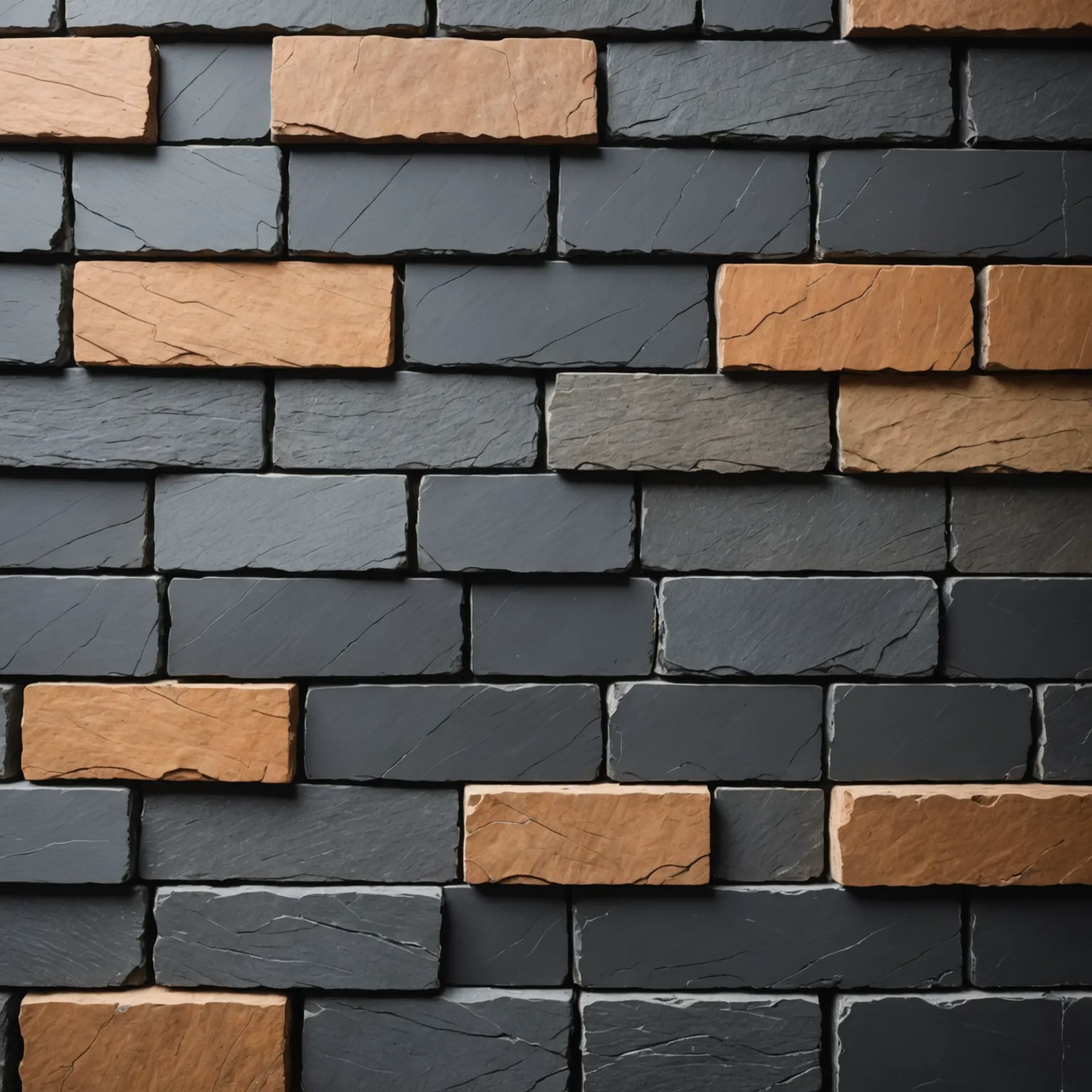
Installer observation: interiors that use slate selectively, without overwhelming the space, tend to retain a clean and balanced appearance for many years.
Effective slate selection starts with understanding usage conditions rather than focusing solely on color. The stone performs best when treated as a structural material, not just a decorative finish. This mindset allows its properties to be used without sacrificing comfort. In complex areas, designers sometimes apply slate cladding tiles in varying thicknesses and formats.
Most issues with slate appear during installation rather than selection. The stone behaves differently from ceramic tile and requires specific preparation methods. Ignoring these details can lead to uneven surfaces and visual inconsistency. Installation should always be treated as a technical phase.
Substrate preparation for slate installation
The substrate must be stable and level, even when working with textured stone. Height variations complicate installation due to differing tile thicknesses. Concrete bases and cement screeds are commonly used. Proper cleaning and priming are essential.
In wet areas, waterproofing is strongly recommended. Bathrooms and kitchens particularly benefit from an additional moisture barrier. This reduces the risk of delamination and mineral deposits. Skipping this step often leads to premature defects.
For wall applications, load-bearing capacity must be assessed. Slate has substantial weight, especially in larger formats. Lightweight partitions may require reinforcement or alternative solutions. These factors should be evaluated before material purchase.
Substrate quality directly affects joint appearance. A flat plane produces a calm and cohesive surface. This is especially noticeable in minimalist interiors. Here, slate functions as an architectural feature.
Adhesives and joint formation
Elastic adhesives designed for natural stone are used for slate installation. Standard tile adhesives may not support the stone’s weight and structure. The adhesive must compensate for minor substrate movement. This reduces cracking risk.
Adhesive and grout color selection is particularly important with thin tiles. Dark slate may show through unsuitable compounds. All installation materials should match the stone’s color profile. This detail is often overlooked.
Joints are typically wider than those used for ceramic tile. This allows for natural edge irregularities. Narrow joints highlight imperfections rather than conceal them. Optimal width is determined during dry layout.
Low-absorption grout is recommended. It resists staining and maintains consistent color over time. This significantly simplifies maintenance in high-traffic areas.
Common mistakes during slate installation
One frequent mistake is skipping preliminary layout. Without it, color and thickness distribution becomes uneven. The finished surface may appear chaotic. Correcting this afterward is extremely difficult.
Another issue is avoiding protective sealers. Untreated slate absorbs moisture and stains more readily. This is especially noticeable in kitchens and entryways. Sealing prevents this without altering appearance.
Weight is also often underestimated. Installing slate on walls without reinforcement can cause detachment over time. The problem may not be immediately visible. Load calculations are essential.
In some cases, slate is used where it is not functionally appropriate. Bedrooms and soft-finish interiors may not benefit from its presence. Alternative materials may provide better balance.
When alternative materials make sense
In interiors focused on soft textures and minimal tactile contrast, slate can feel excessive. In such cases, it is used selectively or limited to vertical surfaces. For example, slate roofing and cladding formats work well on walls but are not always ideal for floors.
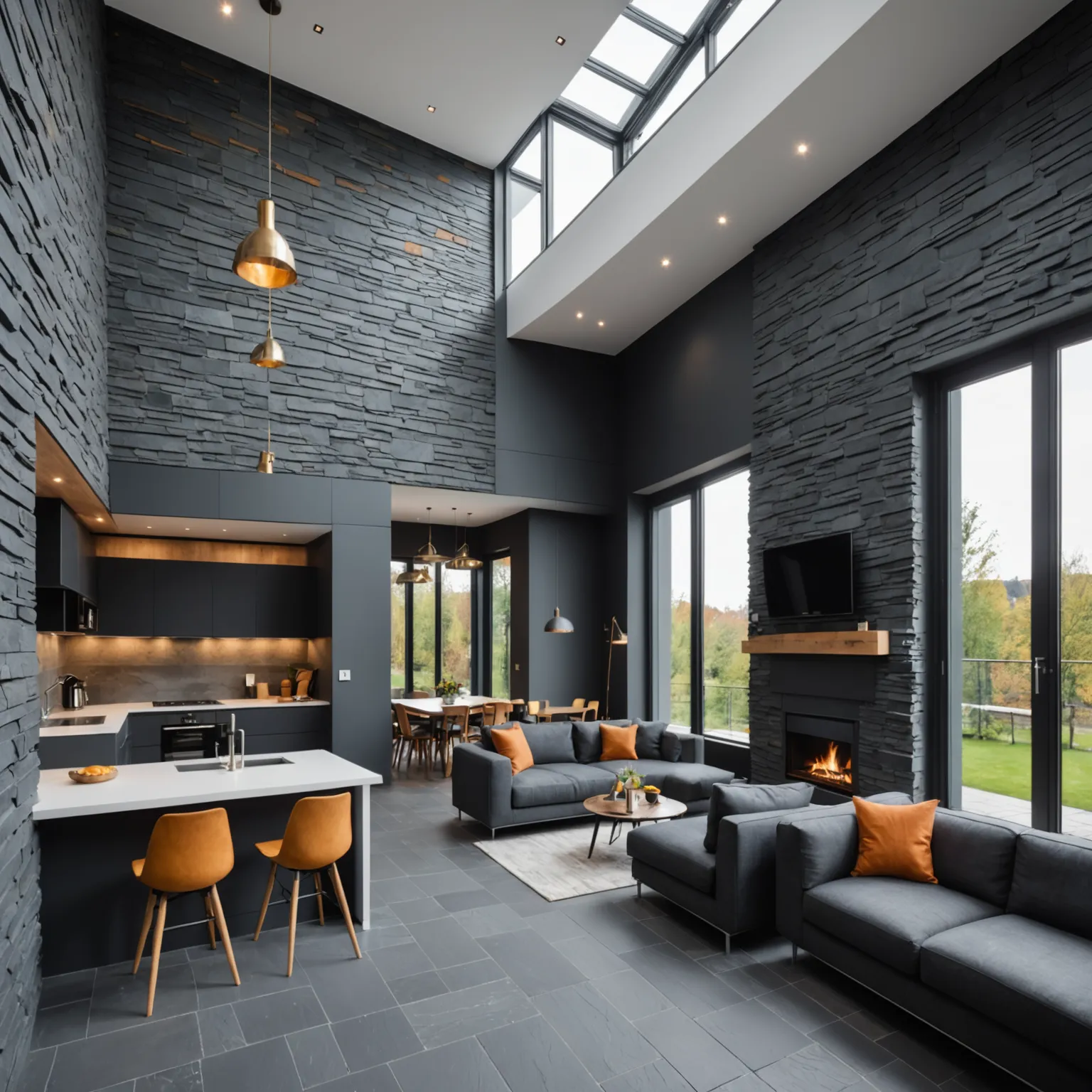
Maintaining slate in residential spaces
Daily slate maintenance is straightforward. Regular damp cleaning with neutral detergents is sufficient. Aggressive chemicals are avoided. Abrasive products should not be used.
Protective sealers are typically renewed every few years. This is especially relevant for floors and work areas. The process is simple and time-efficient. It helps preserve color depth.
Local stains should be addressed promptly. While slate resists most household spills, prolonged exposure is undesirable. This approach keeps maintenance minimal.
With proper care, slate retains its appearance for decades. It does not fade or lose texture. This long-term stability is one of its main advantages.
Slate compared to other materials
| Criteria | Slate | Ceramic Tile | Laminate |
|---|---|---|---|
| Moisture resistance | High | High | Limited |
| Wear resistance | Very high | Medium | Low |
| Tactile feel | Natural texture | Smooth surface | Warm, artificial |
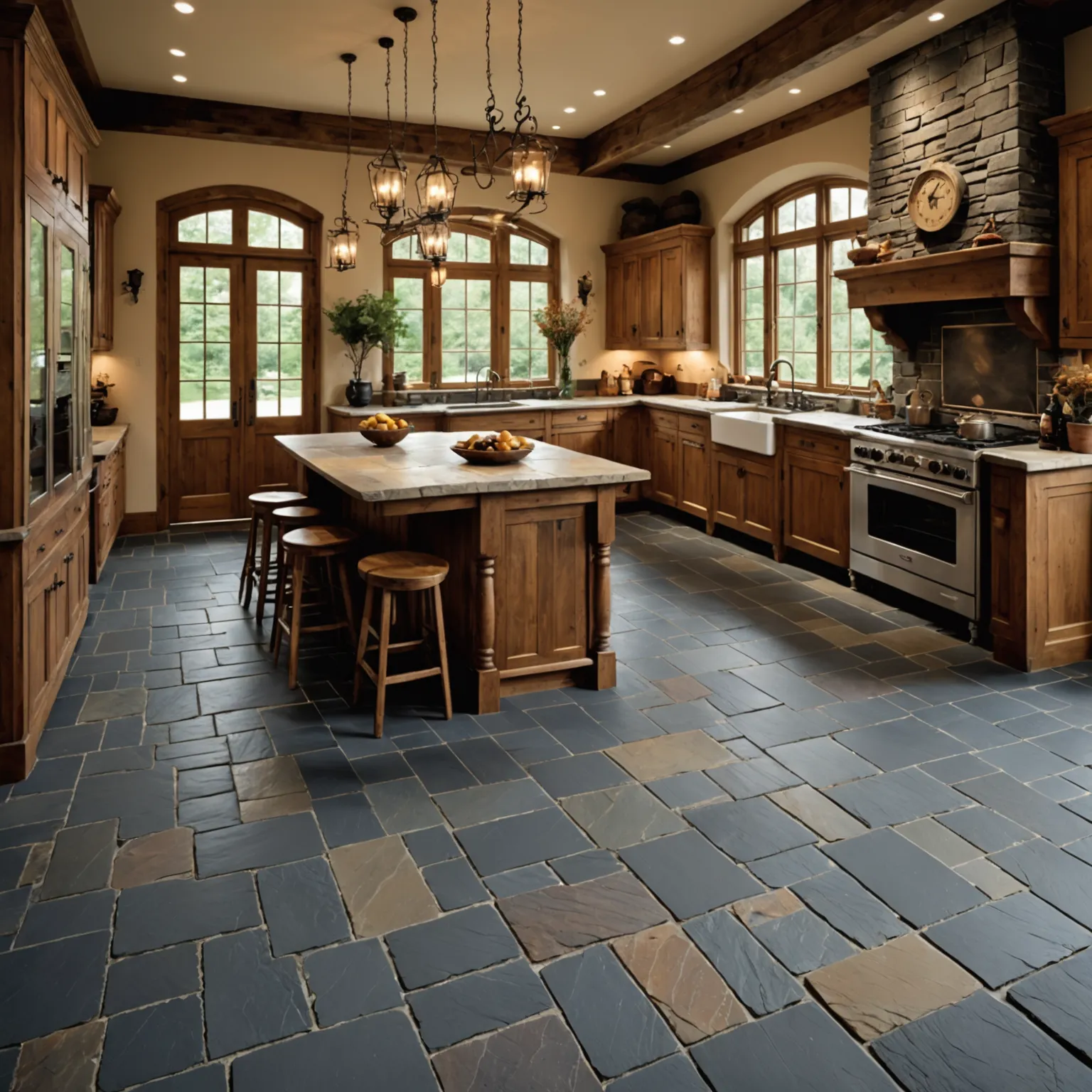
Practical advice: test a sealer on a small area before full application to see how color and texture depth change.
Mini case: in an open-plan apartment, slate was used only in the entry zone and kitchen backsplash. After seven years, the surface retained its color with minimal visible wear.
- Slate requires a stable, level substrate.
- Surface processing defines maintenance needs.
- Sealing simplifies long-term use.
- The material suits high-traffic areas best.
FAQ
Is slate suitable for apartment flooring?
Slate works well for apartment floors when the correct format and surface finish are selected. It offers strong resistance to wear and moisture but requires a properly prepared substrate and suitable adhesive. Entryways and kitchens are the most common areas. Bedrooms use slate less frequently.
Does slate need to be sealed?
Sealing is recommended, especially for floors and work surfaces. It reduces moisture absorption and staining while keeping the appearance unchanged. In dry, low-use areas, sealing may be optional.
Can slate be installed over underfloor heating?
Slate is compatible with underfloor heating systems when proper installation methods are followed. Elastic adhesives and expansion joints are essential. Sudden temperature changes should be avoided. Proper setup ensures long-term stability.
How is slate different from other natural stones?
Slate has a layered structure and pronounced texture. Compared to marble, it is less slippery and more moisture-resistant. However, its appearance is more raw and natural. Selection depends on interior requirements.
How demanding is slate maintenance?
Slate maintenance is relatively simple. Regular cleaning and occasional resealing address most concerns. Harsh chemicals are avoided. For everyday use, the material remains practical.
Can slate be combined with other materials?
Slate combines well with wood, metal, and glass. It is also paired with other stone types when balanced carefully. Excessive use can overwhelm a space. Moderation is key.
How do you calculate the required amount of slate?
Slate quantity is calculated by area with an additional 10–15 percent allowance. Extra material accounts for cutting and thickness variation. Complex layouts may require a higher margin. Consultation is available at +380(50)433-01-01.
Where is slate not recommended?
Slate is not always suitable for children’s rooms or soft-finished bedrooms. It can feel visually heavy in such spaces. Lightweight partitions without reinforcement also limit its use. Alternative materials may be more appropriate.